

For IT professionals and system administrators tasked with managing thousands of endpoints, the Apple ecosystem presents a unique duality. While Macs, iPads, and iPhones are lauded for their security and user experience, the administrative overhead required to manage them at scale has historically been cumbersome. Apple Business Manager (ABM) and Apple School Manager (ASM) serve as the bedrock of modern enterprise deployments, yet the web-based interfaces of these portals often prove insufficient for the high-velocity demands of modern IT departments.
The landscape is shifting, however, thanks to a new native macOS application: ASBMUtil. By leveraging the official APIs Apple introduced last year, ASBMUtil is bridging the gap between raw data and actionable insights, offering a streamlined, desktop-native experience that replaces the tedious manual workflows of the past.
Main Facts: A Paradigm Shift for Mac Admins
ASBMUtil, developed by Rod Christiansen, represents a significant leap forward for organizations heavily invested in Apple hardware. Historically, interacting with Apple’s backend services required either navigating a slow, click-heavy web portal or writing complex custom scripts to interface with the Apple Business API.

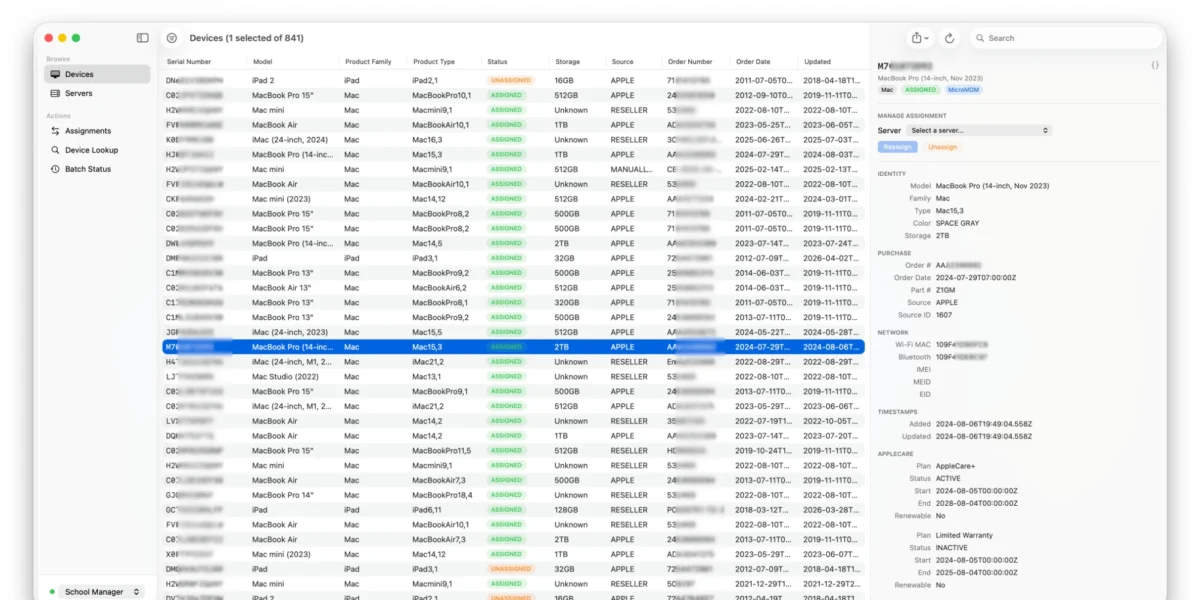
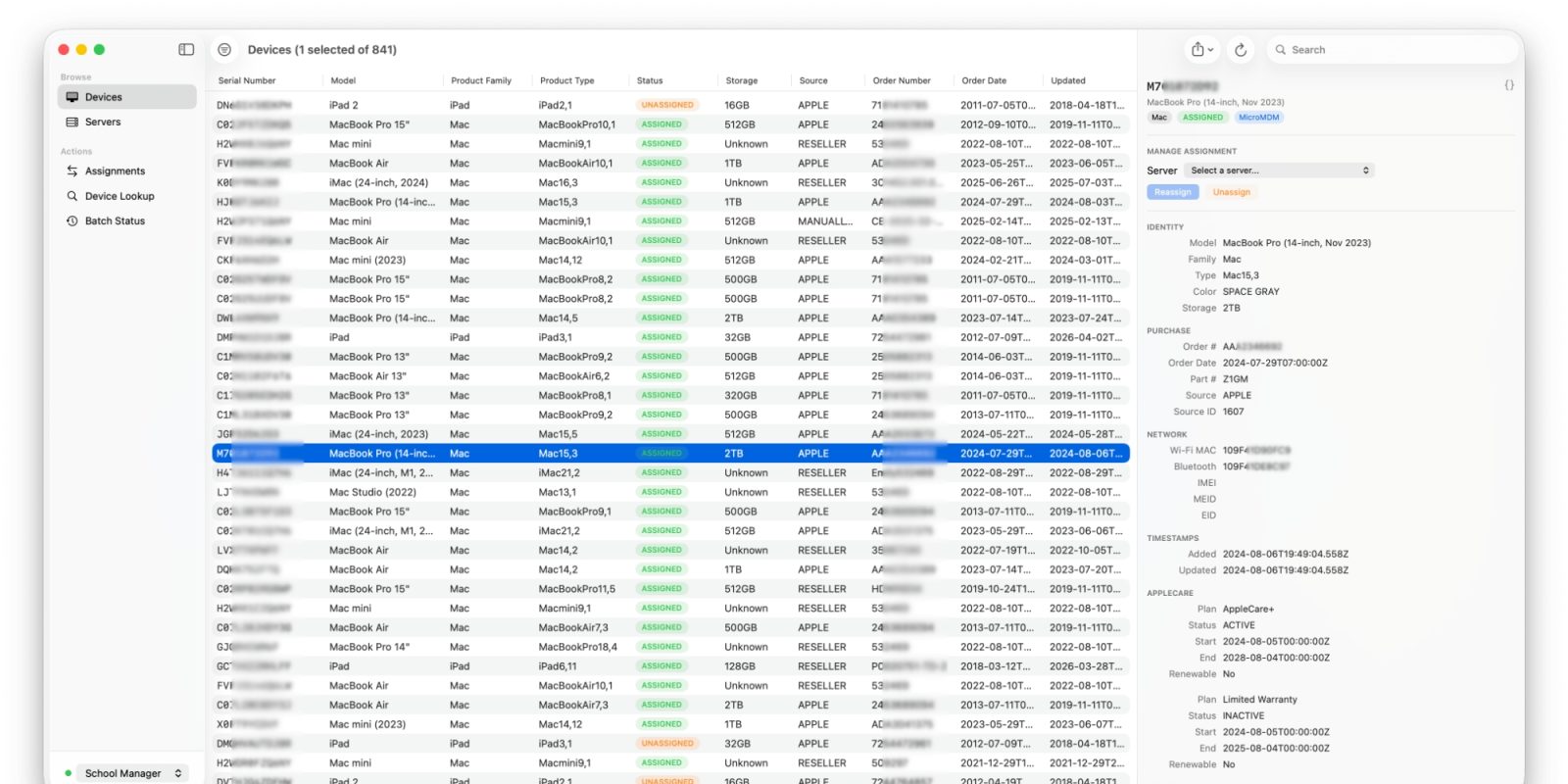
ASBMUtil changes this by providing a native SwiftUI front-end that translates complex JSON data into an intuitive, table-based interface. The application allows administrators to view their entire fleet—ranging from Macs and iPads to Apple TVs and Vision Pro headsets—within a single, unified window. With a simple click on any device, a sidebar reveals comprehensive metadata, including serial numbers, order statuses, AppleCare coverage, and specific hardware identifiers like MAC addresses.
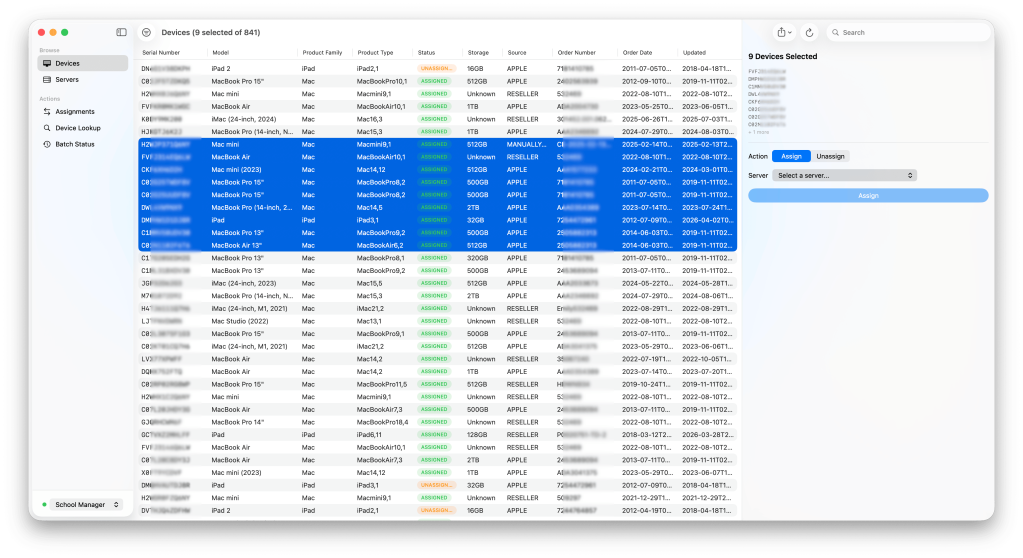
Perhaps most importantly, the app democratizes the power of the API. Admins no longer need to be software developers to harness automation; they can perform bulk actions, such as reassigning devices to different MDM servers, directly through a right-click menu. By bringing the API to the desktop, ASBMUtil transforms a task that once required hours of manual labor into one that takes mere seconds.
Chronology: The Evolution of Apple Enterprise Management
To understand the importance of ASBMUtil, one must look at the timeline of Apple’s enterprise evolution:
- Pre-2023: IT departments relied almost exclusively on the web-based dashboards of Apple Business Manager and Apple School Manager. These portals were functional for small-scale deployments but became bottlenecks for enterprises managing tens of thousands of devices.
- Early 2023: Apple officially released the Apple Business API, signaling a shift in their strategy. This move opened the door for third-party developers to build tools that interact directly with Apple’s servers, bypassing the constraints of the web portal.
- Late 2023 – Early 2024: As the API matured, Apple released version 1.3 (AppleCare lookups) and 1.4 (enhanced network interface support). This allowed developers to pull more granular data, such as Bluetooth and Ethernet MAC addresses, which are vital for network security and inventory management.
- April 2026 (The Present): Rod Christiansen launches ASBMUtil, incorporating the latest API 1.5 standards. This latest iteration allows for complex array formats, enabling the system to recognize devices with multiple network interfaces, such as those with both Wi-Fi and built-in Ethernet.
Supporting Data: Why Native Apps Outperform Web Portals
The efficiency gains provided by ASBMUtil are rooted in the limitations of the standard web interface. In a typical enterprise environment, an administrator might need to verify the AppleCare status of 500 newly arrived iPads. In the web portal, this requires navigating through pages, searching by serial number, and manually recording results.
ASBMUtil drastically reduces this latency through three key technical advantages:
- Direct Data Synchronization: By communicating directly with the API, the app bypasses browser rendering delays. The information displayed is live and accurate to the latest server-side update.
- Multidimensional Sorting: The app’s table-based architecture allows for complex filtering. Admins can sort by device type, serial number, or management assignment, making it trivial to identify "stray" devices that are not correctly assigned to the appropriate MDM server.
- API 1.5 Compliance: The inclusion of API 1.5 support is a major technical milestone. Older tools often struggle with modern devices that possess multiple network interfaces (e.g., a Mac with both Wi-Fi and a Thunderbolt-to-Ethernet adapter). ASBMUtil’s ability to parse these arrays ensures that inventory reports are 100% accurate, preventing "orphan" devices in the database.
Official Responses and Developer Insight
While Apple has not issued a formal press release regarding specific third-party tools, the company’s decision to open the API to developers serves as a de facto endorsement of this ecosystem. Apple’s documentation now explicitly encourages the use of these APIs for "automated, scalable device management."
Rod Christiansen, the creator of ASBMUtil, has framed the project as a labor of love for the IT community. On his development blog, he emphasizes that the goal of the application is not to replace full-scale Mobile Device Management (MDM) solutions like Mosyle, but to act as a "surgical tool" for administrators.
"The web portal is a blunt instrument," says the development community at large. "ASBMUtil is the scalpel." By focusing on the specific pain points of inventory management and assignment, the app has quickly gained traction among sysadmins who prioritize efficiency and clean code.
Implications for the Future of Apple IT
The rise of ASBMUtil has profound implications for how organizations will approach Apple device management in the coming years.
1. The Rise of "API-First" Management
We are moving away from an era where IT admins are "button-clickers" in a browser. The success of ASBMUtil suggests that the future of IT management is API-first. As Apple continues to add features to its enterprise API, we can expect a wave of native applications that offer specialized workflows, such as automated compliance reporting, hardware refresh scheduling, and lifecycle auditing.
2. Reducing the "Human-in-the-Loop" Factor
Manual data entry is the primary source of error in enterprise IT. By allowing tools like ASBMUtil to handle bulk assignments and metadata retrieval, the margin for human error is significantly reduced. This leads to more reliable inventory tracking and, consequently, better security. When an administrator knows exactly which device has which MAC address, network security protocols can be enforced with precision.
3. The Role of Specialized Toolkits
For a long time, the industry was dominated by "all-in-one" platforms. While comprehensive solutions like Mosyle remain essential for the actual deployment, configuration, and protection of devices, the emergence of targeted utilities like ASBMUtil proves that there is a demand for a "modular" IT toolkit. Admins are increasingly building a customized stack of applications that handle specific facets of the job, allowing for a more agile management strategy.

4. Enterprise-Grade Scalability
As Apple continues to capture more of the enterprise market share, the sheer volume of devices being managed is reaching a breaking point for legacy management techniques. Tools that rely on the native macOS experience—utilizing SwiftUI and local caching—are inherently more scalable than those dependent on the variable performance of web browsers.
Conclusion: A Must-Have for the Modern Admin
ASBMUtil is more than just a convenience; it is a testament to how far Apple’s enterprise ecosystem has come. By providing a clean, fast, and native way to interact with Apple Business and School Manager, it empowers IT professionals to reclaim their time from tedious administrative tasks.
For those currently struggling with the limitations of the web portal, transitioning to a native tool like ASBMUtil is a logical next step. It offers a cleaner view of the fleet, faster response times for bulk operations, and a level of technical depth that simply cannot be achieved in a standard browser environment. As the line between enterprise software and native macOS applications continues to blur, ASBMUtil sets the standard for what IT management tools should look like in the modern age.

For administrators interested in implementing this, the latest version is available via GitHub. Whether you are managing ten devices or ten thousand, the time saved in manual lookup and assignment will pay dividends in your day-to-day operations.












No comments yet. Be the first to join the conversation!