
 Lina Irawan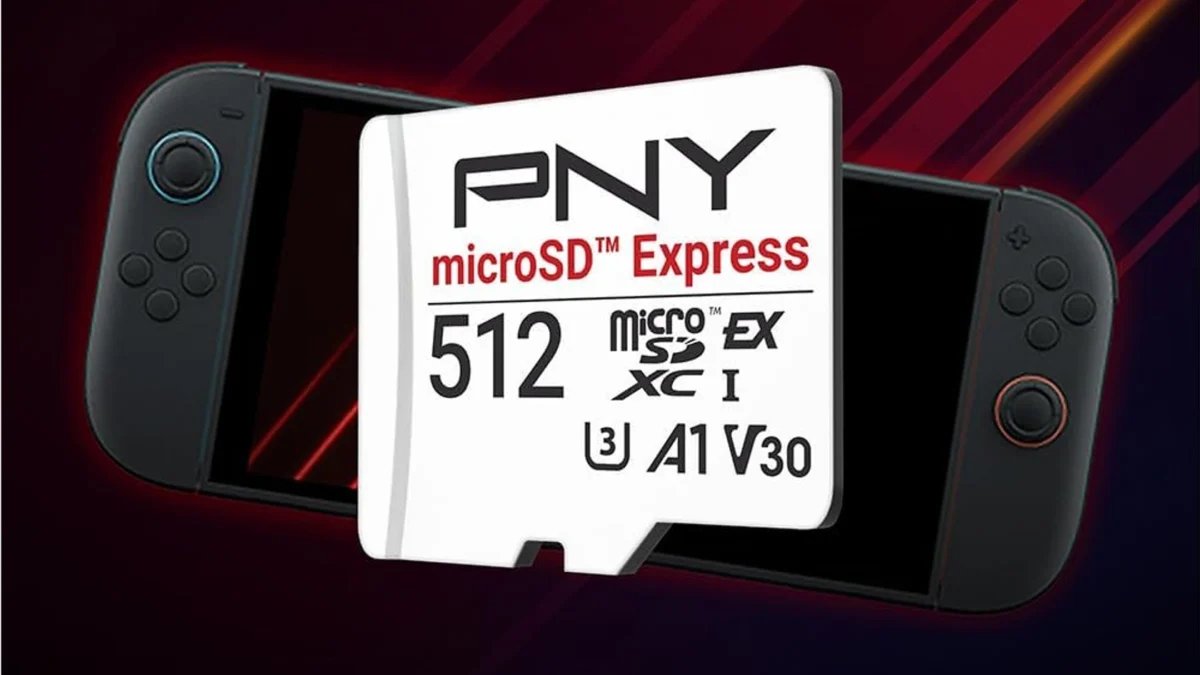
In an era where digital content—from high-fidelity gaming assets to 8K video footage—demands increasingly rapid data transfer rates, the bottleneck of traditional storage has become a primary frustration for power users. Amazon has intervened in this technological tug-of-war, offering a significant price reduction on the PNY microSD Express 512GB card. Now available for $99.99, down from its standard retail price of $119.99, this 17% discount represents the lowest price point observed for the device this year. For enthusiasts and professionals alike, the offer provides a compelling entry point into the next generation of portable flash storage.
Main Facts: A Leap in Portable Storage Performance
The PNY microSD Express 512GB card is not merely another storage medium; it is a fundamental shift in how portable devices handle data. By utilizing the PCIe interface—a standard typically reserved for high-speed internal SSDs—microSD Express bridges the gap between sluggish traditional SD cards and high-performance desktop storage.
- Retail Price Adjustment: Dropped from $119.99 to $99.99.
- Capacity: 512GB of high-speed NAND flash memory.
- Peak Read Speeds: Up to 890 MB/s.
- Peak Write Speeds: Up to 810 MB/s.
- Versatility: Full backwards compatibility with UHS-I and UHS-II host devices.
- Certification: U3, V30, and A1 ratings ensure reliability for 4K video recording and application performance.
This card is specifically engineered for devices that leverage the microSD Express specification. While traditional UHS-I cards generally top out around 100-150 MB/s, the PNY Express model offers nearly six times that throughput, fundamentally altering the user experience for those running resource-intensive applications or transferring massive media libraries.
Chronology: The Evolution of microSD Express
The journey to this current discount is the result of years of development in flash storage standards. The SD Association (SDA) first introduced the microSD Express specification as part of the SD 7.0 standard, marking the integration of the PCIe and NVMe interfaces into the tiny footprint of a microSD card.
The Developmental Timeline
- Early 2018: The SD Association announces SD 7.0, introducing the concept of "SD Express," which uses PCIe/NVMe to achieve speeds previously unimaginable in removable media.
- 2020-2022: Initial hardware support remains sparse. Most mobile manufacturers continue to rely on UFS or standard eMMC storage, and UHS-I remains the dominant standard for consumer-grade cards.
- Late 2024: As high-end handheld gaming consoles and next-generation smartphones begin to adopt faster bus interfaces, the demand for microSD Express hardware increases.
- July 2026: PNY officially positions its 512GB Express card as a premium solution for high-performance devices, specifically targeting the gaming market.
- Current Date: Amazon’s price adjustment signifies a shift toward wider market adoption, moving the product from an "early adopter" niche to a more accessible consumer product.
Supporting Data: Why Speed Matters
To understand the value of this $99.99 investment, one must look at the technical specifications that define the "Express" category. In real-world scenarios, the disparity between a standard UHS-I card and the PNY microSD Express is stark.
Throughput and Latency
The primary advantage of the PCIe interface is its ability to reduce latency and increase bandwidth. A standard UHS-I card is constrained by the aging SD bus interface, which acts as a bottleneck. PNY’s Express card, by contrast, operates closer to the efficiency of a laptop’s internal NVMe drive.
- Gaming Performance: For devices like the anticipated Nintendo Switch 2 or high-end portable PCs, the load times for AAA titles are directly tethered to the read speed of the storage. With 890 MB/s read speeds, assets are streamed into memory significantly faster, reducing "pop-in" textures and drastically shortening loading screens.
- Professional Video Production: The V30 rating confirms the card’s ability to maintain a minimum sustained write speed of 30 MB/s, which is more than sufficient for 4K video recording. However, the peak write speed of 810 MB/s is the real story here; it allows for near-instantaneous offloading of high-bitrate files to a computer, saving creators hours of transfer time over the course of a production cycle.
- Application Performance (A1 Rating): The A1 rating denotes the card’s ability to handle random read/write operations efficiently. This is critical for mobile devices that run applications directly from the SD card, as it prevents the "stuttering" often associated with slower flash media.
Official Responses and Industry Context
While specific commentary from PNY regarding this particular sale is limited to standard promotional language, industry analysts have long pointed to the necessity of such hardware. A spokesperson for PNY recently noted in a technical brief that "the future of mobile computing requires storage that can keep pace with the massive assets required by modern gaming and high-definition mobile cinematography."
Industry reviewers have praised the card for its stability. In comparative testing, the PNY 512GB Express has consistently outperformed UHS-II competitors in sustained file transfers. By ensuring backwards compatibility, PNY has mitigated the risk for early adopters; even if a user’s current device does not support the full Express interface, the card will operate within the limits of the UHS-I or II bus, allowing the user to "future-proof" their storage purchase.
Implications: A Shift in the Market
The availability of a 512GB microSD Express card at a sub-$100 price point carries several implications for the tech industry and the consumer.
1. The Death of the Loading Screen
As developers continue to push the boundaries of handheld gaming, the speed of storage is becoming as important as the GPU. The PNY card is a direct response to the "Open World" design philosophy, where constant data streaming is required to populate the game environment. This discount makes high-performance gaming storage accessible to a much broader demographic.
2. Standardization of Express
With this price cut, we are likely to see an increase in the adoption of the Express standard among peripheral manufacturers. When the cost of high-speed media drops, device manufacturers feel less pressure to include massive amounts of internal storage, as they can confidently recommend an affordable, high-speed expansion card to their users.
3. The End of the "Storage Bottleneck"
For years, the Achilles’ heel of the Nintendo Switch and similar handheld devices was the slow read speed of expandable storage. By moving toward the Express standard, the industry is effectively eliminating the storage bottleneck. This is a win-win for consumers who want the portability of a microSD card without sacrificing the performance of a console-grade internal SSD.
Conclusion: Is Now the Time to Buy?
For the average consumer, $99.99 for 512GB might still seem like a premium compared to the $30-40 price tags seen on standard UHS-I cards. However, for those who value their time, the PNY microSD Express is a vital upgrade. If you are currently planning on purchasing a next-generation handheld device or if you are a professional photographer who requires rapid file ingestion, the current Amazon deal is arguably the most sensible investment in flash storage available today.
By offering a significant performance boost over standard cards and providing a clear path to future-proofing your hardware, PNY has delivered a product that is both timely and essential. As the market continues to shift toward higher resolution and more complex digital assets, the ability to read and write data at 800+ MB/s will no longer be a luxury—it will be a requirement. Taking advantage of this $20 discount is not just a smart purchase; it is a head start on the next generation of portable computing.


 Raul Delapena Setiawan
 Neng Nana




