

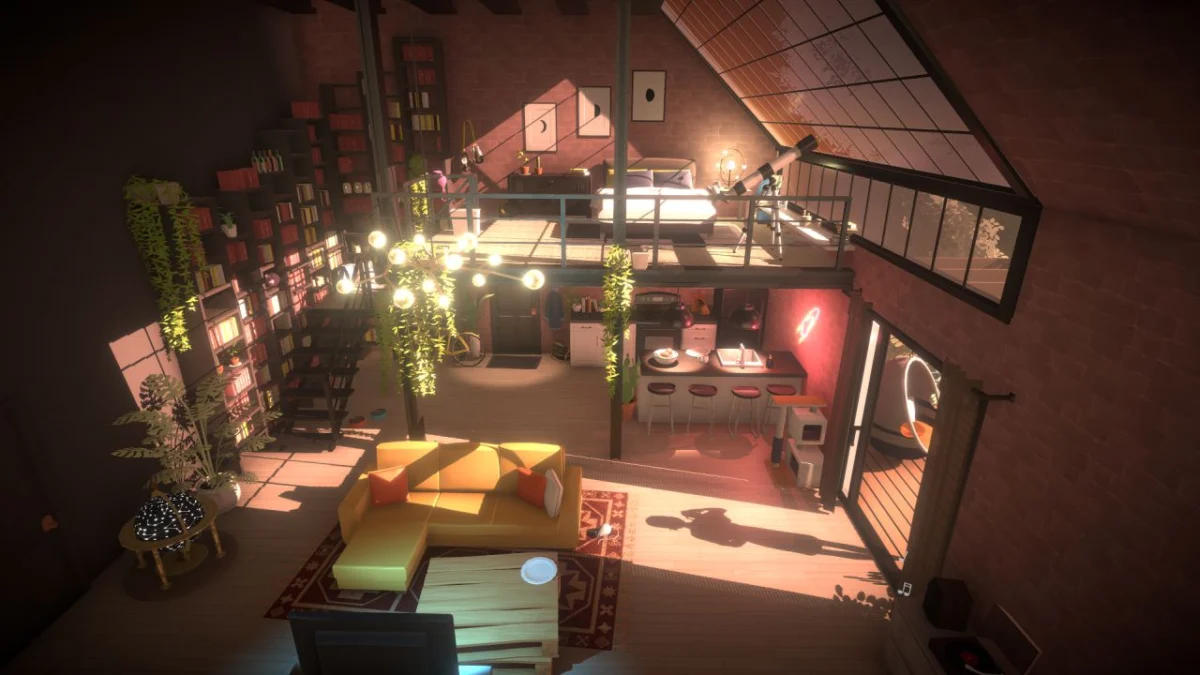
For decades, the life-simulation genre has existed under the long, singular shadow of The Sims. Electronic Arts’ juggernaut has defined the virtual domestic experience since the turn of the millennium, establishing a business model that has become both a staple of the industry and a persistent point of contention among its most dedicated players. However, as the genre approaches a potential inflection point, an indie challenger is stepping into the ring with a philosophy that directly attacks the "expansion pack fatigue" currently plaguing the community.
Paralives, the highly anticipated life-simulation game from Paralives Studio, is preparing to enter Early Access on May 25th. Ahead of this milestone, the developers have unveiled a development roadmap that promises a radical departure from the industry’s traditional monetization strategies—specifically by pledging to include core gameplay pillars like seasons, weather, and pets as free updates rather than paid expansions.
The Main Facts: A New Approach to Development
The core appeal of Paralives lies in its promise of deep customization, fluid building tools, and, crucially, a consumer-friendly development cycle. The recently released roadmap acts as a mission statement for the studio. From the initial Early Access launch in late May through September, the team has committed to a "stability-first" phase. This period will focus exclusively on performance optimization, rigorous bug squashing, and refining the game’s core mechanics based on direct player feedback.
The most significant takeaway for the gaming public, however, is the studio’s commitment to post-launch content. While many AAA publishers utilize a "base game plus DLC" model—where features that feel essential to the human experience (like rain, snow, or household companions) are sold as separate, often pricey, add-ons—Paralives is taking a different route. By explicitly stating that major content drops like seasons and pets will be delivered as free updates throughout the two-year Early Access period, the developers are positioning themselves as a pro-consumer alternative to the established market leader.
A Chronological Breakdown of the Road Ahead
The Paralives development timeline is designed to foster trust with an audience that has grown skeptical of "early access" titles that remain in development purgatory for years.
Phase 1: Foundation and Optimization (Q2 2024 – Q3 2024)
The immediate priority following the May 25th launch is the refinement of the existing engine. Given the complexity of simulation games—which require tracking the needs, social interactions, and environmental states of multiple AI agents simultaneously—performance is paramount. The studio has signaled that they will be listening closely to the community’s "Quality of Life" requests during these first four months.
Phase 2: The First Major Milestone (Q4 2024)
While the studio has remained tight-lipped regarding the specific content of the Q4 update, they have characterized it as the first "major" release. This window is expected to provide the first glimpse of how the studio intends to expand the game’s scope beyond the initial launch features.
Phase 3: The Two-Year Expansion Horizon (2025 – 2026)
Over the subsequent two years, the roadmap transitions from infrastructure to content saturation. The inclusion of pools, weather systems, changing seasons, and pet integration are explicitly listed as free components of this roadmap. This transparency serves as a direct rebuttal to the industry-standard practice of gating such content behind paywalls.
Supporting Data: The Economics of Life Simulation
To understand why this roadmap is making waves, one must examine the fiscal history of the genre. Since the release of The Sims 4 in 2014, the base game has been supplemented by dozens of "Expansion Packs," "Game Packs," and "Stuff Packs." A player wishing to own the "complete" experience—including weather (Seasons), pets (Cats & Dogs), and various lifestyle enhancements—can easily spend hundreds of dollars.
For the average consumer, this creates a "pay-to-play" barrier where the base game often feels like an incomplete shell. Paralives is capitalizing on this sentiment. By promising these features for free, the studio is betting that a lower barrier to entry and a more generous value proposition will cultivate a larger, more loyal player base. This is a classic "disruptor" strategy: identify a pain point in the market leader’s offering (high cost of essential features) and solve it to gain rapid market share.
Official Responses and Studio Philosophy
The developers behind Paralives have been vocal about their desire to create a game that feels like a collaborative effort with the community. In their official communications, they have emphasized that the roadmap is not just a list of features, but a promise of transparency.
"We want players to feel that their purchase of Paralives is an investment in a living, growing project," a representative from the studio stated. While they have been careful not to name competitors directly, the implicit comparison to the "EA model" is impossible to ignore. By choosing to release seasonal content for free, they are essentially arguing that certain aspects of life simulation are foundational, not optional. If the game is a simulation of life, the argument goes, then the weather and the presence of animals are not "expansions"—they are the baseline.
Implications for the Genre and the Competition
The arrival of Paralives could force a significant shift in how The Sims handles its future development. Competition in the life-simulation space has been dormant for years, leaving the market leader little incentive to change its pricing models or development priorities. With Paralives offering a player-friendly, transparent, and feature-rich alternative, the pressure on major publishers to justify their high costs will increase.
The "Expansion Fatigue" Factor
The gaming industry is currently seeing a trend where players are becoming increasingly vocal about "monetization fatigue." Whether it is live-service shooters or simulation games, the demand for value-for-money has never been higher. If Paralives succeeds, it will prove that there is a sustainable, profitable way to manage a long-term simulation game without resorting to aggressive micro-transaction strategies.
Technical and Design Challenges
However, the roadmap is not without its risks. Delivering complex systems like weather and pet AI for free requires a robust, scalable engine and a development team capable of maintaining long-term production. If the studio misses its targets or if the free updates feel under-baked compared to paid counterparts, the community goodwill could evaporate quickly. Furthermore, the studio must ensure that the game remains stable as they add these layers of complexity, as simulation games are notoriously prone to "feature creep" and performance degradation.
The Future of Life-Sims
The success of Paralives will likely be measured by its ability to foster a creative community. Much of The Sims’ longevity is owed to its modding scene and the community’s ability to build and share custom content. By aligning their roadmap with community desires, Paralives is positioning itself to capture the next generation of life-sim players who are looking for a more equitable relationship between the developer and the user.
Conclusion: A Turning Point for Players
As we look toward May 25th, the gaming community finds itself at an interesting crossroads. Paralives is more than just a new title; it is a test case for a different way of doing business in the simulation genre. If the studio can deliver on its promises, they won’t just be launching a game—they will be setting a new standard for the industry.
For the players who have spent years navigating the expensive, often frustrating world of premium expansion packs, Paralives represents a glimmer of hope. Whether this roadmap will hold up under the pressure of real-world development remains to be seen, but for now, the message is clear: the simulation genre is finally evolving, and the players are ready for a change. Those interested in keeping tabs on the project can already wishlist the game on Steam, marking the beginning of a new chapter in virtual life.












No comments yet. Be the first to join the conversation!