

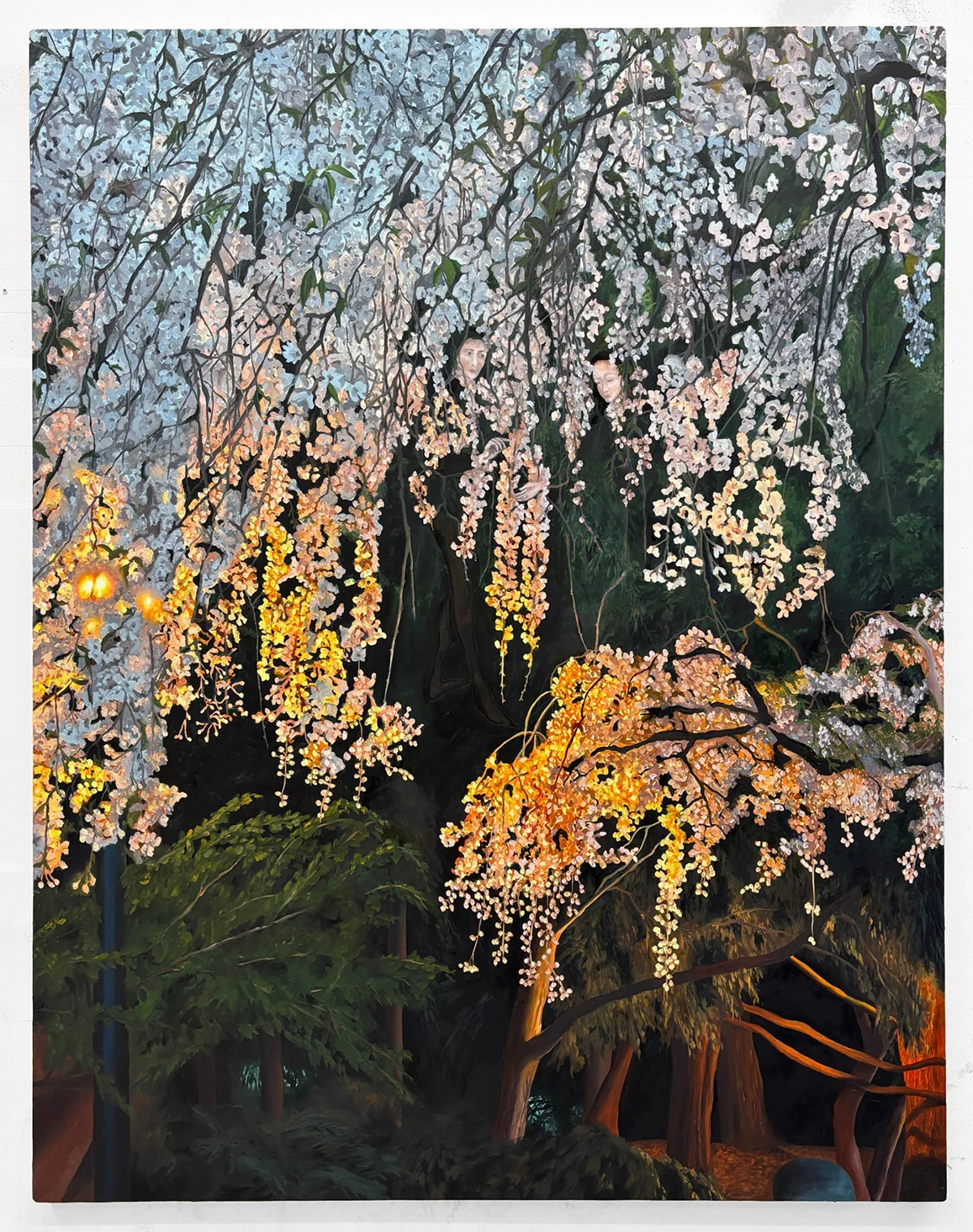
In the contemporary art landscape, few painters manage to navigate the liminal space between the hyper-familiar and the deeply unsettling with as much precision as Kelsey Shwetz. A Canadian-born, Brooklyn-based artist and Columbia University faculty member, Shwetz has spent the last several years carving out a niche that challenges the viewer’s perception of reality. Her work—a rigorous dialogue between observational truth and the fluidity of abstraction—does not merely depict scenes; it deconstructs the very act of looking.
The Genesis of a Vision: Artistic Chronology
Kelsey Shwetz’s journey into the upper echelons of the contemporary art world is marked by a consistent intellectual curiosity. Educated at Columbia University, where she earned her Master of Fine Arts, Shwetz quickly distinguished herself not only as a practitioner but as an educator. Currently, she serves as a painting instructor at her alma mater, a role that allows her to synthesize the technical rigors of classical representation with the conceptual freedom of modern abstraction.
Her artistic trajectory has been characterized by a move away from static, singular-point perspectives toward more complex, multi-layered visual experiences. In her early works, one can trace an interest in the "domestic gaze"—how we inhabit and consume the spaces we call home. Over the past five years, this focus has evolved into a sophisticated exploration of light as a structural element. By treating illumination as a physical, molding force rather than a mere aesthetic overlay, Shwetz has shifted her practice from simple documentation to a sophisticated orchestration of atmosphere.
The Mechanics of Sight: Analyzing the Shwetz Method
To understand Shwetz’s work, one must first understand her preoccupation with the "interventions" that disrupt our field of vision. Whether it is the harsh glow of a smartphone screen cutting through a darkened bedroom or the unnatural cast of a streetlamp bleeding through a window curtain, Shwetz is fascinated by the tension between interiors and exteriors.
The Organizing Force of Light
Shwetz herself notes, "Light functions as a primary organizing force throughout the work." This is evident in the way she segments her canvases. By utilizing domestic illumination, nocturnal lamplight, and the mediated, artificial glow of digital devices, she carves the image into distinct, often conflicting, zones of visibility and shadow.
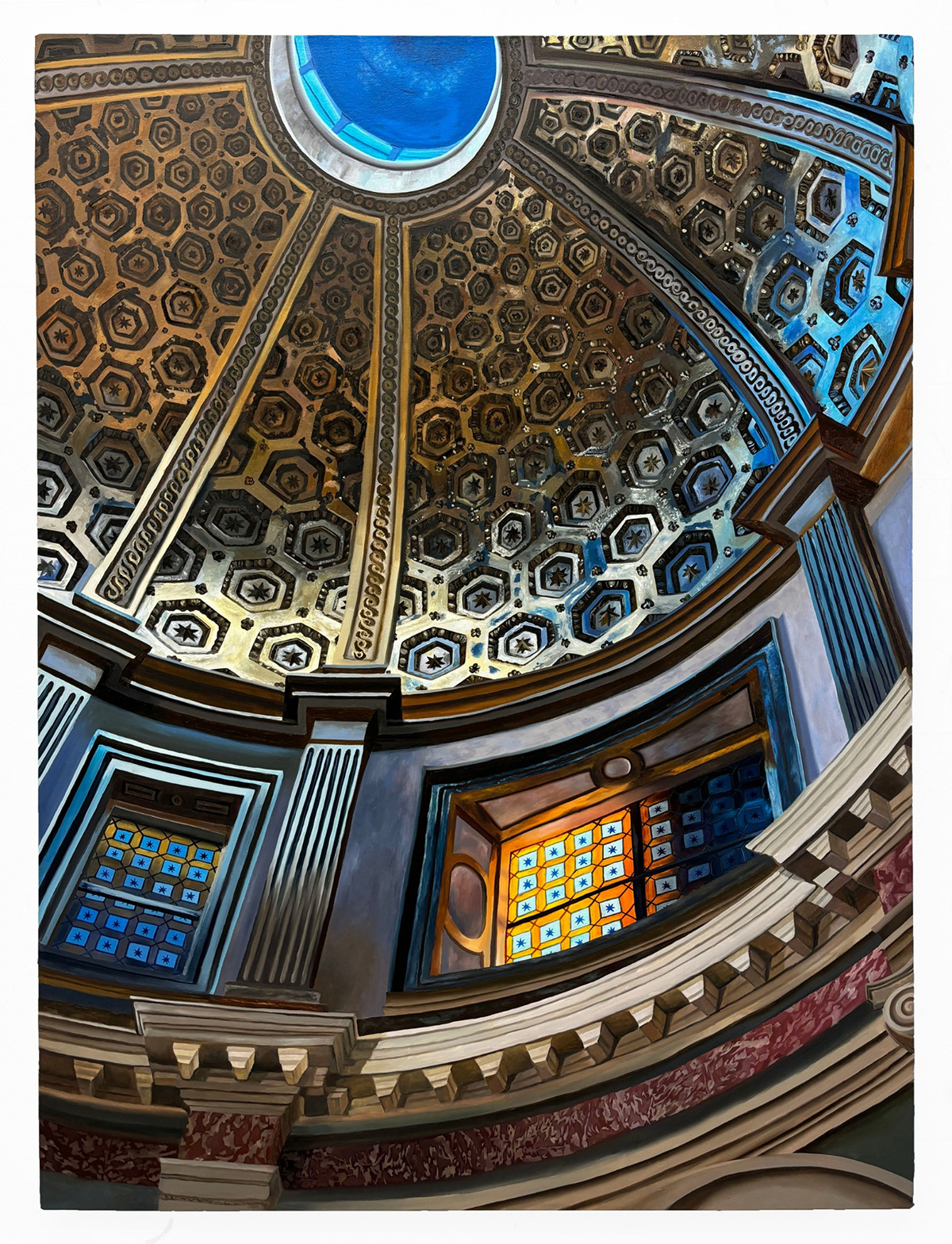
This approach serves a dual purpose. On a technical level, it allows for a dynamic interplay of color and value that keeps the eye moving across the canvas. On a conceptual level, it serves as a metaphor for the modern human experience: we are constantly living in multiple realities—the physical space we inhabit and the digital or remembered spaces we carry with us.
The Unsettled Viewer
The hallmark of a Shwetz painting is the feeling of recognition followed by a sudden, jarring sense of displacement. When interiors bleed into exteriors—where a landscape might be embedded in the architecture of a room—the viewer is forced to abandon a stable point of view. This "partial visibility" is deliberate. By obscuring certain details while highlighting others, Shwetz forces the viewer to fill in the gaps with their own memory and attention. The painting becomes a collaborative act between the artist’s physical description and the viewer’s subjective experience.
Supporting Data: The Impact of Observational Reality
While Shwetz’s work is deeply personal, it resonates within a broader trend in contemporary painting—a return to figurative "unsettling." Art historians often categorize this movement as a synthesis of New Objectivity and surrealist abstraction. Data from recent gallery exhibitions and art market analyses suggest that collectors are increasingly seeking out works that bridge the gap between technical skill and psychological depth.
The pedagogical influence of Shwetz at Columbia University also suggests a shift in the academic training of the next generation of painters. By emphasizing the "gaze" as a mutable, unstable entity, she is contributing to a pedagogical framework that values the conceptual "why" of a painting as much as the technical "how."
Professional Perspectives and Critical Reception
Critics have frequently lauded Shwetz for her ability to maintain a sense of "painterly logic" even when the subject matter seems to dissolve. Her work is not abstract in the traditional sense; rather, it is hyper-real in a way that acknowledges the subjectivity of the human eye.
In a recent critique, industry observers noted that Shwetz’s success lies in her refusal to provide easy answers. In an era of high-definition photography and instant visual consumption, she provides a "slow" image—one that requires the viewer to stand in front of it, wait for their eyes to adjust to the shadows, and ultimately engage with the ambiguity of the scene. Her refusal to fully resolve her compositions is seen as a deliberate challenge to the digital age’s demand for clarity and speed.
Implications: The Future of the Domestic Gaze
The implications of Shwetz’s work for the wider art world are significant. As we move further into an age where our physical environments are inextricably linked with the digital, the way we "see" our surroundings is changing. Shwetz’s work acts as a visual record of this transition. By embedding screens, reflections, and conflicting light sources into the domestic sphere, she is documenting the erosion of the boundary between the private self and the mediated public world.
Furthermore, her work suggests that the future of figurative painting lies in this middle ground—a space where the artist acknowledges that truth is not a singular, fixed point, but a shifting landscape shaped by light, memory, and the limitations of human perception.
Beyond the Canvas: A Broader Creative Ecosystem
The artistic community surrounding figures like Shwetz is currently experiencing a period of revitalization. As we look at the current state of the industry, it is clear that artists are looking for new ways to document the human experience.
For those looking to deepen their engagement with the arts, several initiatives are currently shaping the landscape:

- The 2025 Photo Awards: Following the lead of artists who push the boundaries of perception, the recent 2025 Photo Awards have highlighted a new generation of creators exploring the intersection of technology and nature. With five winners and twenty shortlisted photographers, the awards serve as a barometer for how we define "truth" in imagery today.
- Archiving Talent: Publications like the Tomorrow’s Talent 5 book provide a crucial service in archiving this creative surge. By compiling the work of over 60 artists into a larger, more comprehensive format, these volumes act as a physical record of the current zeitgeist, ensuring that the visual dialogues occurring in studios like Shwetz’s are preserved for future study.
- Community Engagement: Platforms that offer "secret" or direct-to-audience communication channels are becoming increasingly important for artists to bypass traditional gatekeepers. These newsletters and open-call platforms create a decentralized network of support, allowing for a more diverse range of voices to enter the conversation.
Conclusion
Kelsey Shwetz stands at a fascinating intersection of tradition and innovation. By utilizing the language of observational painting to explore the psychological complexities of modern life, she provides a lens through which we can better understand our own fractured perspectives. Her work is a reminder that the most compelling art does not necessarily provide the clearest view; instead, it provides the most honest one.
As she continues to influence students at Columbia and exhibit her work on an international stage, Shwetz remains a vital figure for anyone interested in the future of painting. Her work demands that we look closer, stay longer, and embrace the discomfort of not quite knowing what we are seeing. In that act of lingering, we find the core of the human experience—a beautiful, luminous, and perpetual state of unsettled wonder.










No comments yet. Be the first to join the conversation!