Nana
Nana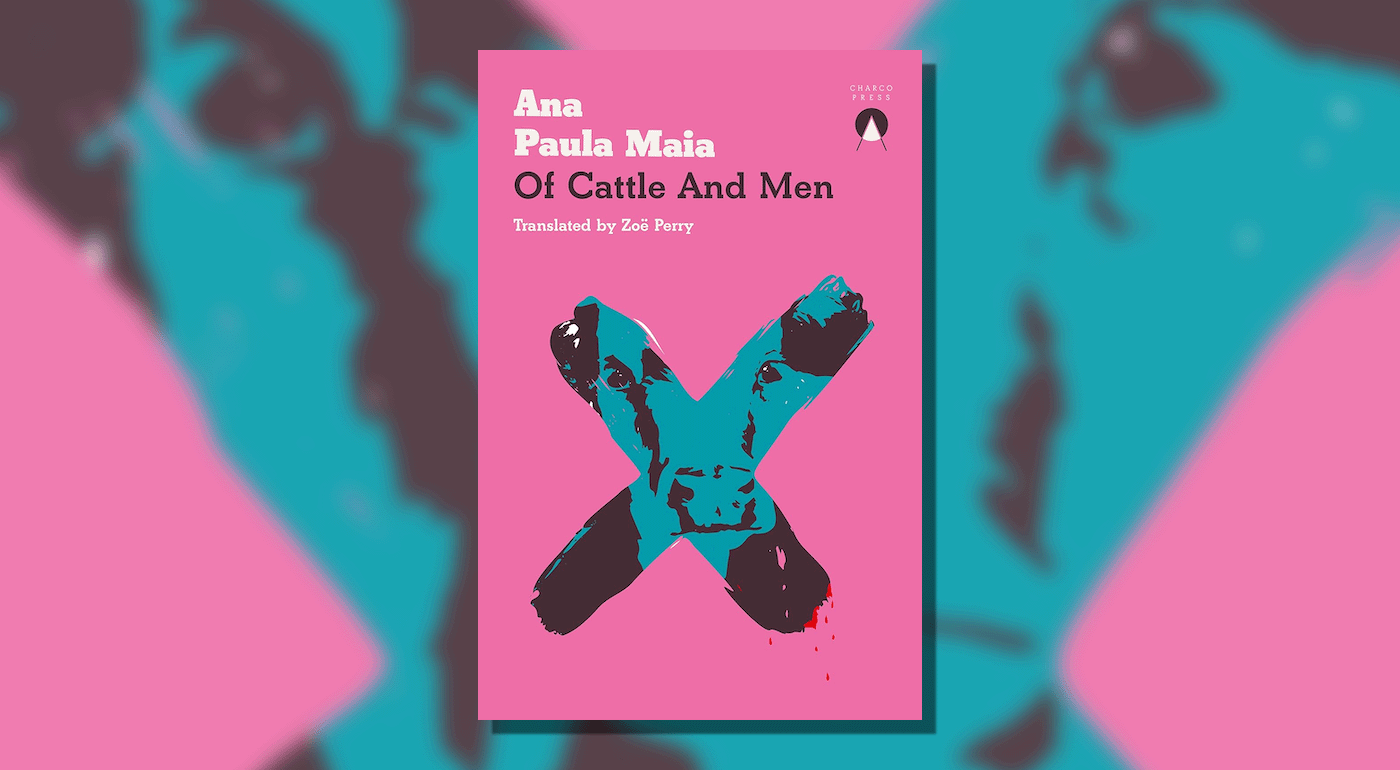
“Somebody’s got to do the dirty work. Other people’s dirty work. Nobody wants to do that sort of thing. That’s why God put guys like you and me on this earth.”
This grim pronouncement sets the stage for Of Cattle and Men, a chilling, visceral entry into the world of contemporary Brazilian speculative fiction. Originally published in 2013 by the acclaimed author Ana Paula Maia, the novel has recently found a new life in English translation through Charco Press. As part of a larger, interconnected literary landscape, the book serves as a harrowing examination of labor, existential decay, and the blurred lines between human and animal suffering.
The Geography of Desolation: The Setting
The narrative is anchored in the most forgotten, sun-bleached depths of the Brazilian hinterlands. Here, the Rio das Moscas—the "River of Flies"—serves as the grim artery of the region. It is a waterway choked with the biological detritus of the industry that sustains the area: the slaughterhouses. The river, once a source of life, now acts as a dumping ground for human and animal remains, rendering the local fish toxic and transforming the landscape into a post-industrial wasteland.
At the center of this grim ecosystem is Edgar Wilson, a man defined by his profession: a stun operator at a local slaughterhouse. Wilson is not a character of grand aspirations or dramatic outbursts. He is a man of profound, almost meditative stoicism. His daily ritual involves the mechanical, yet strangely reverent, dispatching of cattle. He harbors no malice toward the beasts; rather, he possesses a preternatural, empathetic understanding of them. He prays for their souls as he delivers the singular, lethal blow. Wilson is a cog in a machine that requires the systematic erasure of life, and he performs his duty with a detachment that is as chilling as it is efficient. He does not seek redemption, nor does he question the moral necessity of his labor. To him, the work simply exists, and someone must do it.
A Disturbance in the Herd
The atmospheric tension of the novel shifts when the natural order begins to fracture. The cattle, typically docile, begin to display inexplicable, unsettling behavior. They stop facing north and turn toward the west. This subtle, geometric shift in the herd’s orientation acts as a harbinger of a deeper, systemic rot.
When the cattle begin to throw themselves off cliffs in a collective, suicidal frenzy, the community is forced to confront the possibility that the land itself has become inhospitable. The animals are not just reacting to predators; they are responding to a poisoned environment where life, even at the biological level, seems to be failing. Fish with glowing eyes, stillborn calves, and a landscape steeped in a cycle of unending violence form the backdrop of this dystopian reality.
The characters—Edgar Wilson, the struggling laborer Burunga who risks his life to buy his daughter reading glasses, and the defensive men of Milo’s slaughterhouse—are all trapped in a microcosm of hopelessness. Yet, Maia is careful not to paint them as entirely devoid of humanity. Even the most hardened figures, like the foreman Bronco Gil, display flickers of compassion, often triggered by the sight of the impoverished women and children who gather at the gates of the slaughterhouse, begging for the scraps of meat that the industry rejects.
The Chronology of Maia’s Brutal Universe
Ana Paula Maia has constructed an expansive, interconnected universe that centers on the figure of Edgar Wilson. While Of Cattle and Men stands perfectly well on its own, it is part of a broader, haunting tapestry of fiction.
The Published Works
- Of Cattle and Men (2013): The foundational text, now available via Charco Press.
- On Earth as it is Beneath (2017): A standalone companion piece that expands on the themes of labor and mortality within the same bleak, rural setting.
- Saga of Brutes (2014-2016): A trilogy of novels published as a single volume by Dalkey Archive Press, which delves deeper into the societal decay and physical toll of these industries.
- Trilogia do Fim (Trilogy of the End): The most recent evolution of Maia’s work. The first installment, Bury Your Dead, is scheduled for an English release via Charco Press in 2026. This series pushes the narrative into an explicitly apocalyptic territory, exploring the final collapse of the social order.
The screen adaptation of Bury Your Dead, starring the acclaimed actor Selton Mello, has brought further visibility to the series. Mello, known for his roles in the Oscar-winning I’m Still Here and the recent Anaconda reboot, brings a haunting, nuanced portrayal of Edgar Wilson to the screen, cementing the character’s status as a modern icon of existential fatigue.
Translation: The "Exoticism" Debate
As with many works translated from the Global South into English, the reception of Of Cattle and Men has sparked a critical dialogue regarding translation methodology. Because Brazilian Portuguese is a language of nuance and hierarchy, the choice of how to translate honorifics becomes a political act.
Critics have noted that the translation often opts to retain terms like "Senhor" or "São" instead of opting for their English equivalents, "Mr." or "Saint." While some argue this preserves the "cultural flavor" of the original text, others—including native speakers—point out that these words are perfectly functional in English and that keeping them in the original language serves only to "exotify" the work for an English-speaking audience.
When a text treats common nouns like senhor as if they possess an untranslatable, mystical significance, it creates an unnecessary distance between the reader and the source material. The goal of literary translation should be to bridge the gap between cultures, not to highlight the "foreignness" of the source. The hope remains that future translations of Maia’s upcoming Trilogia do Fim will adopt a more direct approach, allowing the raw power of the narrative to transcend the linguistic barriers without relying on the crutch of exoticization.
Implications for Speculative Fiction
Of Cattle and Men is a vital, if unsettling, contribution to the canon of speculative fiction. It moves away from the high-tech tropes of traditional dystopias and grounds its horror in the visceral, mundane reality of industrialization and environmental collapse.
The implications of Maia’s work are profound:
- Labor and Dehumanization: Maia explores how the industrialization of death—the slaughterhouse—inevitably erodes the humanity of the workers.
- Environmental Nihilism: The poisoned rivers and erratic behavior of the cattle serve as a metaphor for the Anthropocene, where the natural world is not merely being exploited but is actively rejecting the human presence.
- The Persistence of Empathy: Perhaps the most radical element of the book is the persistence of empathy in an environment designed to extinguish it. The small, quiet acts of kindness between the characters are not enough to save the world, but they are essential to the preservation of the self.
As we look toward the 2026 release of the Trilogy of the End, it is clear that Ana Paula Maia is one of the most important voices in contemporary global literature. She does not offer easy answers or comforting resolutions. Instead, she invites the reader to sit in the dark, to observe the blood as it flows into the river, and to witness the quiet, desperate humanity of those tasked with the "dirty work" of our modern world.
Whether read as a standalone experience or as a part of the grander, apocalyptic arc of the Edgar Wilson cycle, Of Cattle and Men is a reminder that there is always more to the story—and that sometimes, the most profound truths are found in the most desolate places.

 Layla Zulfa
 Sagoh
Sagoh