


In the high-stakes world of artificial intelligence, few moments have been as pivotal as the early, frantic scramble for computing power. Long before OpenAI became a household name—and years before the $10 billion partnership that would define the modern AI landscape—the organization was a nascent research lab with big ambitions and a desperate need for infrastructure.
New documents emerging from the ongoing legal battle between Elon Musk and OpenAI have peeled back the curtain on the late 2017 negotiations between OpenAI and Microsoft. The revelations provide a rare, unfiltered look at a time when Microsoft executives viewed OpenAI not as a strategic partner, but as a risky, potentially volatile entity that was simultaneously a burden on their resources and a threat to their brand.
The Dota 2 Catalyst: A Technological Flex
To understand the friction of 2017, one must first understand the milestone that triggered it: OpenAI Five. In August 2017, OpenAI achieved a significant technical breakthrough by developing a bot capable of defeating professional human players in the complex MOBA (Multiplayer Online Battle Arena) game, Dota 2.
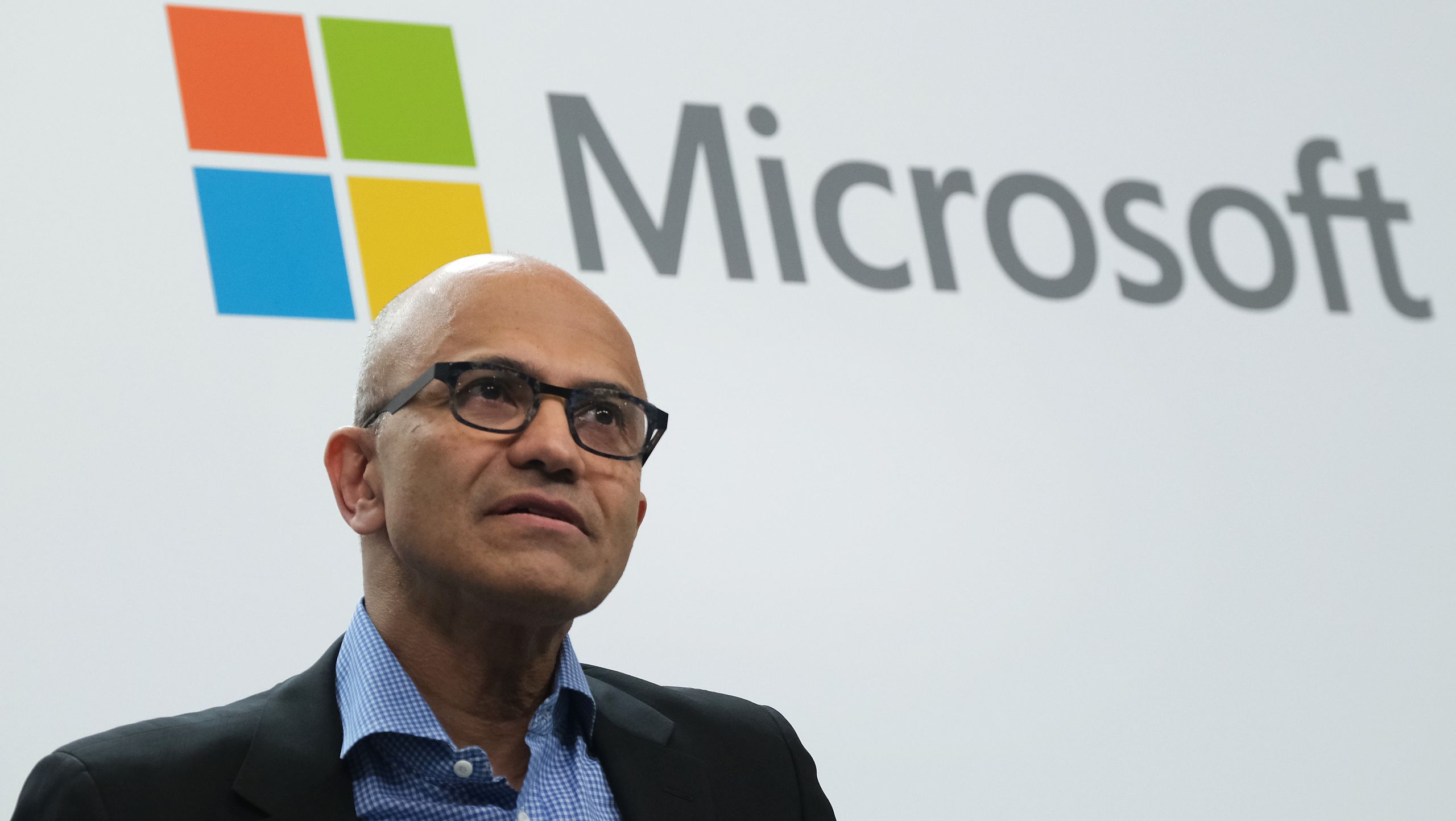
While the accomplishment was a massive leap for reinforcement learning, it was also a massive drain on hardware. The sheer amount of GPU-hours required to train these agents to "crush" human champions was astronomical. As the legal documents reveal, this achievement was not just a product of engineering genius; it was facilitated by a personal intervention from Elon Musk. Recognizing that the project was stalling due to resource constraints, Musk personally contacted Microsoft CEO Satya Nadella to secure heavily discounted access to Microsoft’s Azure cloud computing platform.
Nadella, seemingly swept up in the excitement of the milestone, emailed Sam Altman on August 11, 2017: "Just wanted to pass on my Congrats on the win today!" But behind the celebratory tone, a storm was brewing within Microsoft’s executive offices.
A Chronology of Internal Skepticism
The internal correspondence among Microsoft’s leadership during late 2017 and early 2018 paints a portrait of a company deeply conflicted about its relationship with OpenAI.
- August 2017: Following the Dota 2 win, OpenAI approaches Microsoft for an extension and expansion of their computing deal.
- Late 2017: Nadella forwards the request to his inner circle, including Brett Tanzer, Jason Zander, Eric Horvitz, and Jason Graefe. His note—"I know we have been on this road before"—signals a clear fatigue regarding the "sweetheart" pricing model they had previously extended to the startup.
- Early 2018: Internal debates intensify. Microsoft executives begin to formally question the "undifferentiated" nature of the deal. They worry that they are essentially subsidizing OpenAI’s research without receiving enough in return to justify the deep discounts.
The emails reveal that the primary driver for keeping the deal alive was not necessarily an belief in OpenAI’s immediate profit potential, but a fear of losing face and market position.
The "Fear of Missing Out" and the AWS Threat
The internal deliberations at Microsoft were defined by a classic "fear of loss" scenario. Executive Kevin Scott, in particular, was vocal about the optics of the situation. He outlined various "what-if" scenarios, ultimately concluding that the greatest danger was not in the cost of the GPUs, but in the potential for public relations disaster.
"I am concerned about the PR downside of us not funding them, and having them storm off to Amazon in a huff and shit-talk us and Azure on the way out," Scott noted.
This sentiment was echoed by Jason Zander, who framed the dilemma as a strategic necessity: "My worst-case scenario is having them ditch Azure for AWS… and then land with some big new innovation that is shared with our competition."

For Microsoft, the deal was a defensive moat. They were not just paying for OpenAI’s research; they were paying to keep the startup within their ecosystem, effectively preventing a rival cloud provider like Amazon Web Services (AWS) from gaining a competitive edge by hosting the most promising AI research lab on the planet.
The Philosophical Divide: "Human-AI Collaboration" vs. "Crushing Humans"
Perhaps the most fascinating aspect of these leaked communications is the philosophical divide between Microsoft’s researchers and OpenAI’s trajectory.
Harry Shum, a key figure in Microsoft’s AI strategy at the time, was openly dubious about the "AGI" (Artificial General Intelligence) claims coming from the OpenAI camp. He observed that OpenAI’s work was bifurcated: "They worked on two main streams: gaming like Dota 2, and learning from observation with robots. Sam is all about gaming and beating human champions, perhaps motivated by DeepMind."
Eric Horvitz offered a more nuanced, if critical, perspective. He suggested that Microsoft should attempt to steer OpenAI toward "human-AI collaborations" rather than the adversarial "AI-versus-human" models. He speculated that the focus on Dota 2 was less about scientific utility and more about Elon Musk’s personal brand of alarmism. "I had the feeling that the two phases of Dota work are motivated by a need to show how AI can crush humans, as part of Elon Musk’s interest in demonstrating why we should all be concerned about the power of AI," Horvitz wrote.
This distinction is telling. Microsoft was focused on the commercial and collaborative utility of AI—tools that could "extend human intellect"—while they viewed OpenAI’s early work as a provocative, perhaps even dangerous, demonstration of AI as a competitive, dominant force.

The Shift: From Skepticism to $10 Billion
The skepticism expressed in these 2017 emails makes the eventual 2019 and 2023 investments all the more jarring. How did a company that was once so wary of OpenAI’s "undifferentiated" value proposition end up betting its entire future on the startup?
The answer lies in the evolution of the AI market. By 2019, the potential of large language models (LLMs) began to manifest in ways that Dota 2 bots never could. The $1 billion investment in 2019 was a strategic pivot; by 2023, the $10 billion infusion signaled a total alignment. Microsoft ceased viewing OpenAI as a tenant to be managed and began treating it as the engine of their entire product suite, from Bing to Office 365.
Implications for the Modern AI Landscape
The legacy of these emails is a cautionary tale about the intersection of corporate ego, massive infrastructure costs, and the unpredictable trajectory of deep learning.
- The Infrastructure Moat: These documents prove that the AI race was, from the very beginning, a war of attrition. The companies that won were the ones that could provide the most compute at the lowest cost. Microsoft’s Azure was the backbone that allowed OpenAI to survive its early "burn" phase.
- The "Good Guy" Narrative: It is ironic that in 2017, Microsoft—often cast as the corporate behemoth—was the party advocating for "human-centric" AI, while OpenAI was fixated on competitive dominance. Today, the roles are often reversed in the public imagination, with OpenAI pushing for rapid development and Microsoft scrambling to maintain ethical guardrails.
- The Cost of Innovation: The "undifferentiated" GPU deal mentioned in the emails highlights the massive hidden costs of AI. When startups talk about "innovation," they are often talking about the raw, brute-force consumption of electricity and hardware that only cloud giants can provide.
As the legal spat between Musk and Altman continues, these documents serve as a reminder that the giants of today’s AI industry were once just players in a high-stakes poker game, where the chips were GPUs, the table was the cloud, and the players were terrified that their competitors would hold the winning hand.
Microsoft’s early hesitation, now exposed, highlights the fragility of the foundations upon which our current AI reality is built. They didn’t initially fall in love with the technology; they fell in love with the idea of not being left behind.









No comments yet. Be the first to join the conversation!