Basiran
The landscape of spatial computing is undergoing a significant transformation, moving beyond productivity tools and enterprise applications to become a sanctuary for digital preservation. With the latest update to the Retrocade application on Apple Vision Pro, developers have bridged the gap between cutting-edge hardware and the foundational era of gaming. By integrating the original 1980s version of Tetris alongside a curated selection of 12 classic arcade titles, Retrocade is successfully positioning the Apple Vision Pro as the ultimate destination for retro-gaming enthusiasts who demand an authentic, immersive experience.
Main Facts: A New Frontier for Classic Gaming
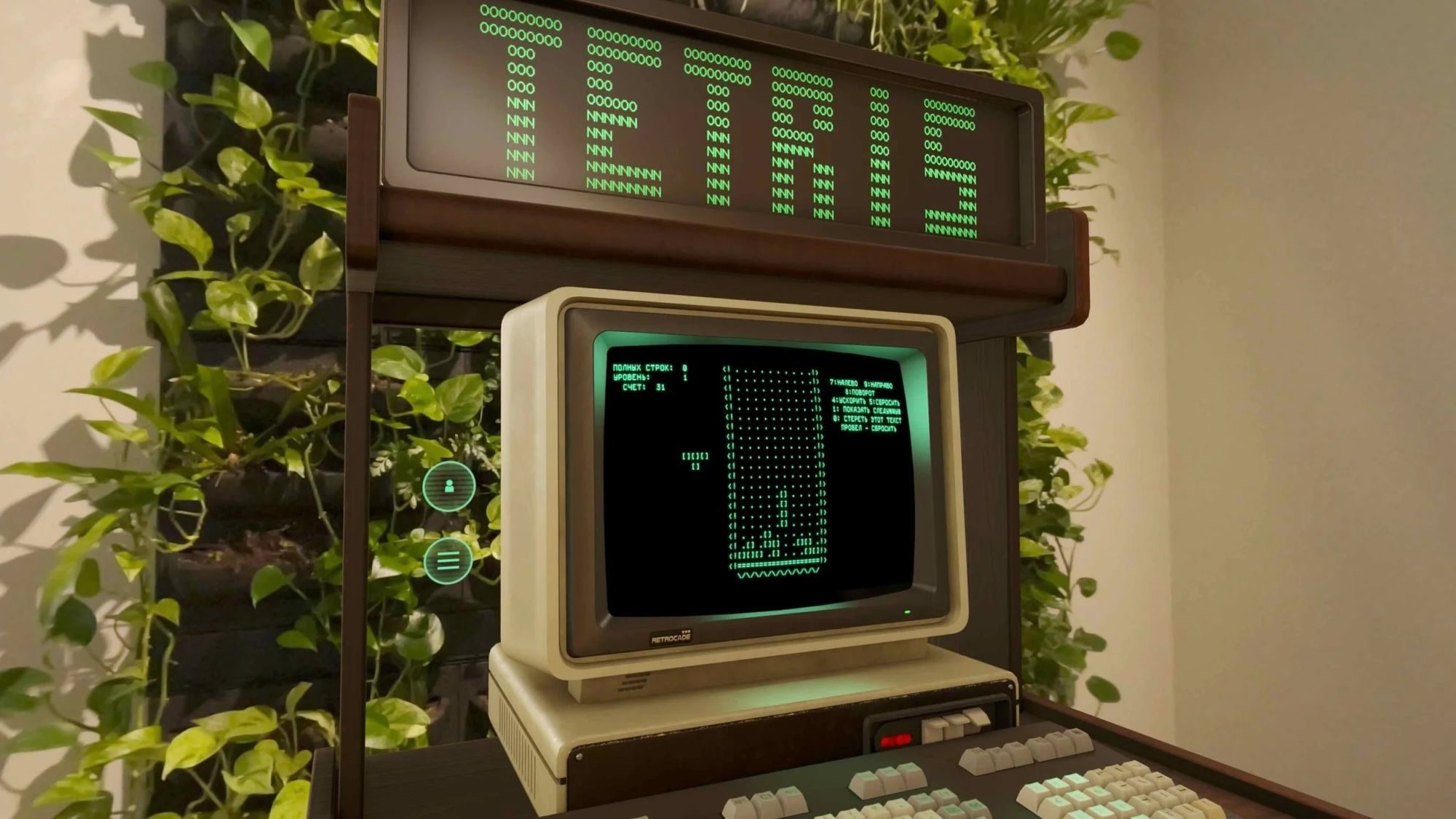
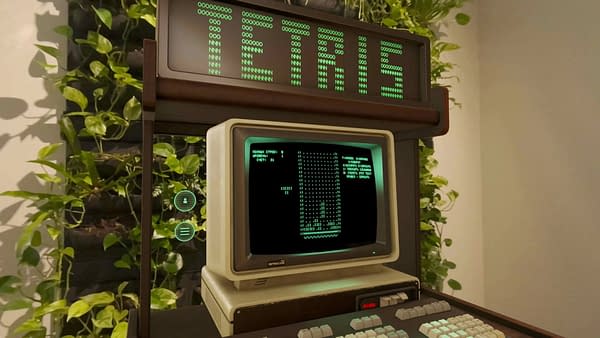
The core of this update lies in the elevation of Tetris from a hidden "Easter egg" located within the application’s virtual back office to a featured, front-and-center title. Users can now experience the game in its most primitive and iconic form: running on an authentic representation of 1980s PC hardware, complete with the characteristic monochrome green monitor glow that defined the early days of personal computing.
Beyond Tetris, the update introduces a dozen additional arcade titles. While the specific list of the 12 games focuses on the golden age of arcade cabinets, the collective impact is intended to transport players back to the mid-1980s. By leveraging the spatial computing capabilities of the Apple Vision Pro, Retrocade does not simply present these games on a 2D screen; it places the player inside a meticulously reconstructed Japanese arcade environment. This environment serves as a digital museum piece, capturing the neon-soaked atmosphere, the ambient lighting, and the distinct acoustic profile of a 1980s game center.
Chronology: From Hidden Secret to Mainstream Feature
The evolution of Retrocade on the Apple Vision Pro platform reflects a strategic pivot toward user demand for historical authenticity.
- Initial Launch: When Retrocade first arrived on the visionOS platform, it was lauded for its ability to simulate the feeling of sitting in front of a CRT monitor. During this initial phase, Tetris was available only to those who explored the virtual environment, tucked away as an internal secret.
- The Development Phase: Recognizing that the "back office" placement was limiting access to one of the most significant games in history, developers began working on a full integration. This required not only software optimization for the Vision Pro’s unique interface but also the creation of an environment that could properly house such a legendary title.
- The 1980s Japanese Arcade Initiative: In early 2026, the developers began designing a specialized environment that mirrored the Japanese arcade culture of the 1980s. This was not merely an aesthetic choice; it was a response to the historical reality that many of the games featured in the app originated from this specific geography and time period.
- Current Update: As of the latest patch, the environment is fully implemented. Players can now walk through a virtual space that feels like a teleportation device, shedding the sterile environment of their own living rooms for the immersive neon aesthetic of a retro Tokyo arcade.
Supporting Data: The Convergence of Hardware and Nostalgia
The success of this update rests on the technical synergy between the Apple Vision Pro’s display technology and the aesthetic requirements of 8-bit and 16-bit gaming.
The Spatial Advantage
Traditional gaming on a flat monitor often fails to capture the "vibe" of arcade gaming. The Apple Vision Pro changes this by using spatial audio and high-resolution depth mapping to make the virtual arcade cabinet feel tangible. When a player interacts with Tetris on the green-monitor PC simulation, the high pixel density of the Vision Pro’s micro-OLED displays allows for a crisp, authentic rendering of the scanlines and the phosphor-decay glow of vintage screens.
The 12 Titles and the "Golden Age"
The 12 newly added titles, combined with the primary Tetris experience, represent the "Golden Age" of arcade gaming (roughly 1978–1985). By focusing on this specific window, Retrocade creates a cohesive historical narrative. Analysts note that these titles are not just games; they are cultural artifacts. By keeping them within a controlled, themed environment, the developers ensure that the user experience is focused on preservation rather than just consumption.
Official Responses and Developer Philosophy
In statements accompanying the release, the development team emphasized that their primary mission has always been the celebration of the foundational titles that shaped the modern gaming industry.
"Our goal was never to simply create an emulator," a spokesperson for the Retrocade team noted. "We wanted to create a time capsule. By moving Tetris to the main menu and creating the Japanese arcade environment, we are acknowledging that these games are not just software—they are experiences that defined a generation. The Apple Vision Pro allows us to strip away the distractions of the modern world and let players exist solely in that 1980s headspace."
The developers also addressed the "Easter egg" transition, explaining that the community’s reaction to finding Tetris in the back office was so overwhelmingly positive that it necessitated a more robust and accessible implementation. "The users told us what they wanted," the team added. "They didn’t want to hunt for the classics; they wanted to sit down and play them as if they had just walked into a shop in Shinjuku forty years ago."
Implications: The Future of Virtual Preservation
The integration of Tetris and the creation of a dedicated Japanese arcade environment in Retrocade have significant implications for the future of digital gaming and the role of VR/AR headsets.
Gaming as Digital Heritage
The gaming industry has long struggled with the "preservation problem." As older hardware dies out, original games often become unplayable. By recreating these environments in high-fidelity spatial computing, developers are effectively archiving these experiences. If a user can experience the exact lighting, sound, and interface of a 1980s arcade within a headset, the need for physical space to house aging, fragile cabinets diminishes.
Spatial Computing as a Gaming Platform
This update serves as a compelling argument for the Apple Vision Pro’s value proposition. While some critics have argued that the headset lacks a "killer app," Retrocade is making a strong case that "digital tourism"—specifically for gaming history—is a viable and desirable use case. The ability to transform a home office into a neon-lit, 1980s-inspired arcade is a level of immersion that a standard television or PC monitor cannot replicate.
The Community Effect
Finally, the community-driven development of Retrocade—where features are moved from hidden secrets to front-page content based on user feedback—suggests a new model for software updates in the XR (Extended Reality) space. It signals that users are not just looking for more games, but for more context. They want to know where these games came from, what it felt like to play them, and how they fit into the broader tapestry of cultural history.
As Retrocade continues to expand, it is clear that the platform is moving toward becoming the definitive virtual home for gaming history. With the addition of Tetris and the new environment, the developers have successfully proven that the past, when rendered with enough care and technical prowess, has a very bright future in the era of spatial computing. For players who remember the glow of the green monitor, or for those who simply want to experience the birth of modern gaming culture, the latest Retrocade update is an essential installation.


 Sagoh
Sagoh
 Ammar Sabilarrohman