Asro
Asro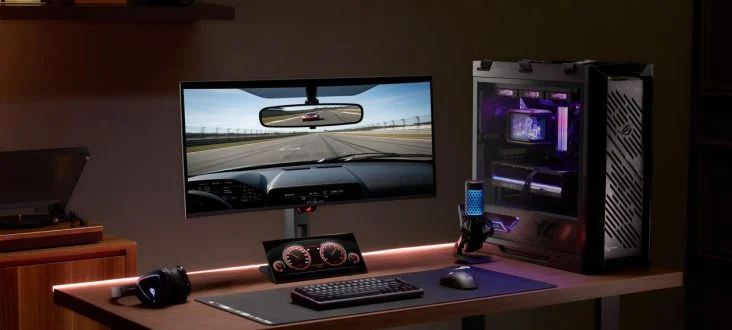
By [Your Name/Journalistic Staff]
Updated: 5 hours ago
Asus continues to fortify its position as a dominant force in the high-end peripheral market, announcing two distinct additions to its Republic of Gamers (ROG) Strix lineup this month. The newly unveiled ROG Strix OLED XG34WCDMS and the ROG Strix XG129C represent two vastly different approaches to the modern desktop experience: one a high-performance, immersive ultrawide gaming beast, and the other a specialized, utilitarian productivity tool designed to augment the user’s workflow.
These releases arrive at a pivotal moment in the hardware industry, where the demand for specialized display configurations—ranging from professional eSports immersion to "streamer-style" telemetry monitoring—is reaching an all-time high.
Main Facts: The New ROG Arsenal
The announcement centers on two monitors that target polar opposite user segments.
The ROG Strix OLED XG34WCDMS is the flagship of the announcement. Designed for enthusiasts seeking the pinnacle of visual fidelity, it employs a 34-inch curved ultrawide panel. The integration of "Tandem QD-OLED" technology marks a significant shift, promising higher brightness levels and longevity compared to traditional OLED panels. With a WQHD resolution (3440 x 1440), a rapid 280Hz refresh rate, and an industry-leading 0.03ms GTG response time, the XG34WCDMS is clearly positioned to dominate both competitive gaming and cinematic media consumption.
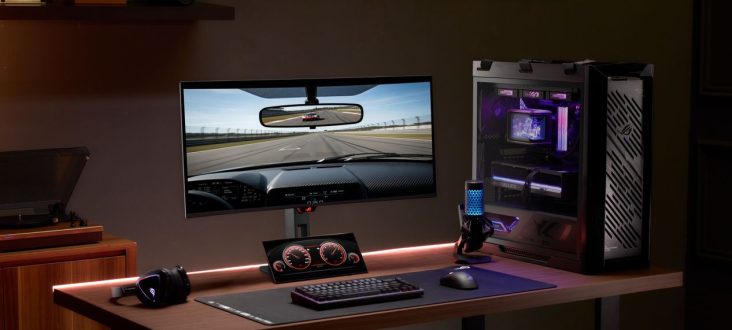
Conversely, the ROG Strix XG129C is a niche-market marvel. Measuring just 12.3 inches, this secondary touchscreen display is not designed for primary gaming. Instead, it serves as a sophisticated hardware-monitoring dashboard. With a 1920 x 720 resolution and an ultra-wide 24:9 aspect ratio, it is the perfect companion for users who want to keep an eye on system thermals, frame rates, or chat windows without sacrificing the screen real estate of their primary monitor.
Chronology of Development: From Concept to Consumer
Asus’s strategy over the last eighteen months has been characterized by a aggressive push into the OLED market. Early in 2024, the industry saw the initial wave of QD-OLED adoption, but consumers expressed concerns regarding burn-in and text clarity.
- Phase 1 (Q1-Q2 2024): Asus conducted extensive R&D into "BlackShield Film" and pixel-layout optimization. This period was dedicated to solving the long-standing "fringing" issues associated with OLED sub-pixel arrangements, leading to the development of the "ROG Stripe Pixel" technology featured in the XG34WCDMS.
- Phase 2 (Q3 2024): The conceptualization of the XG129C began as a response to the growing trend of "desk-setup" aesthetics on social media, where users utilized small secondary screens to display AIDA64 sensor data.
- Phase 3 (November 2024): Final certification and display widget integration. Asus finalized the firmware support for the DisplayWidget Center, ensuring both monitors could be controlled via a single software suite.
- Phase 4 (Current Month): Official announcement and launch window confirmation.
Supporting Data: Technical Specifications and Performance Metrics
The XG34WCDMS: A Performance Titan
The XG34WCDMS is built for those who refuse to compromise. The 1800R curvature provides an enveloping field of view, critical for simulation and open-world gaming.
- Display Tech: Tandem QD-OLED
- Refresh Rate: 280Hz
- Response Time: 0.03ms (GTG)
- Color Accuracy: 99% DCI-P3 gamut coverage
- Compliance: VESA DisplayHDR 500 True Black
- Connectivity: 1x DisplayPort 1.4, 1x HDMI 2.1, 1x USB-C (15W PD)
The introduction of the "BlackShield Film" is particularly notable. By applying this specialized coating, Asus has addressed the common complaint that OLED panels appear "washed out" under bright, ambient office lighting. Furthermore, the ROG Stripe Pixel arrangement significantly improves text rendering, a persistent bugbear for OLED users who use their gaming monitors for office productivity.
The XG129C: The Productivity Powerhouse
The XG129C is a marvel of form factor engineering. Its 24:9 aspect ratio is specifically tailored to fit under a primary monitor or to the side of a keyboard.
- Panel: 12.3-inch IPS Touchscreen
- Resolution: 1920 x 720
- Touch: 10-point capacitive
- Software Bundle: 1-year AIDA64 Extreme license (valued at €59.95)
- Connectivity: Hybrid-signal USB-C (single cable for power and video), HDMI 1.2
The decision to bundle AIDA64 Extreme is a strategic win for Asus. By providing the software required to populate the "ROG SensorPanel" interfaces, Asus creates a seamless "out-of-the-box" experience for enthusiasts who would otherwise spend hours configuring third-party software.
Official Responses and Strategic Vision
In statements provided during the announcement, Asus engineers emphasized that the "monitor ecosystem" is no longer just about the primary display.
"The modern gamer is a multi-tasker," a company representative noted. "They are often streaming, managing Discord, monitoring hardware health, and playing a game simultaneously. The XG34WCDMS handles the visual immersion, while the XG129C handles the data management."
Asus has also doubled down on its commitment to its DisplayWidget Center. By unifying the firmware updates and color profiles of both monitors under one application, the company is aiming to reduce the "driver fatigue" often associated with managing multiple displays from different manufacturers.
Implications: Changing the Landscape of Desk Setups
The arrival of the XG129C, in particular, signals a broader trend in the PC peripheral market: the "modular desktop." For years, users have resorted to DIY hacks—such as mounting tablets or repurposed old smartphone screens—to act as system monitors. Asus is now validating this trend by offering a premium, hardware-native solution.
The OLED Transition
The XG34WCDMS serves as a testament to how far OLED technology has come. With a 280Hz refresh rate and high-speed response times, it effectively bridges the gap between the color richness of an IPS panel and the raw speed of a TN panel, all while maintaining the infinite contrast ratio that only OLED can provide.
The "Single-Monitor" Limitation
It is worth noting the context of these releases alongside other industry news. As reported recently regarding the limitations of "Xbox Mode" on Windows—which may restrict gamers to single-monitor configurations in certain high-performance scenarios—the secondary screen market becomes even more relevant. If software-level OS changes begin to penalize multi-monitor setups, having a dedicated hardware-driven secondary display (like the XG129C) that connects via USB-C/HDMI independently of the primary GPU output could become a vital work-around for power users.
Conclusion
Asus has successfully targeted two distinct pain points in the current PC gaming market. The XG34WCDMS is a sophisticated upgrade for the enthusiast who demands top-tier visual performance, while the XG129C is a clever, functional addition for the user who wants to streamline their digital workspace.
As the lines between work, play, and content creation continue to blur, the hardware that supports these activities must evolve. With these two new monitors, Asus is ensuring that whether the user is immersed in a virtual world or monitoring the internal vitals of their liquid-cooled rig, they have the tools to do so with maximum efficiency and clarity. Whether these products will set a new standard for the industry remains to be seen, but for now, they stand as the new benchmark for the ROG Strix series.

 Ali Ikhwan
 Asep Darmawan