

TOKYO — The delicate architecture of global energy security is undergoing a profound transformation as Japan—the world’s fourth-largest importer of crude oil—scrambles to adapt to an effective, ongoing blockade of the Strait of Hormuz. With a significant portion of the nation’s energy lifeline under threat, Tokyo is aggressively diversifying its shipping corridors and procurement geography, moving away from a historic over-reliance on Middle Eastern transit routes.
The crisis, which has seen critical maritime chokepoints restricted, has forced a tactical retreat for many shipping operators. New data suggests that tanker fleets, previously tethered to the traditional Persian Gulf routes, are now charting longer, more complex paths to ensure the steady flow of liquefied natural gas (LNG) and crude oil to Japanese industrial hubs, such as the terminal at Himeji.
The Geopolitical Context: A Chokepoint Under Pressure
The Strait of Hormuz, a narrow waterway between Oman and Iran, serves as the world’s most important oil artery. Through this transit point, approximately 20% of the world’s petroleum consumption flows daily. For Japan, the dependency is existential; historically, upwards of 90% of Japan’s crude oil imports have passed through this strait.
The current "effective blockade" represents a systemic risk to the Japanese economy, which remains heavily dependent on fossil fuels despite a push for renewable integration. The uncertainty surrounding regional stability has moved energy security from the periphery of government policy to the very center of the Cabinet’s national security agenda.
Chronology of the Crisis: Tracking the Disruption
The current maritime volatility did not emerge in a vacuum, but the escalation of transit restrictions has created a cascading effect on global logistics.
- Mid-April: Initial reports of increased naval activity and localized maritime harassment near the Strait of Hormuz began to emerge. Shipping insurance premiums spiked, forcing operators to reconsider the risk-to-reward ratio of passing through the chokepoint.
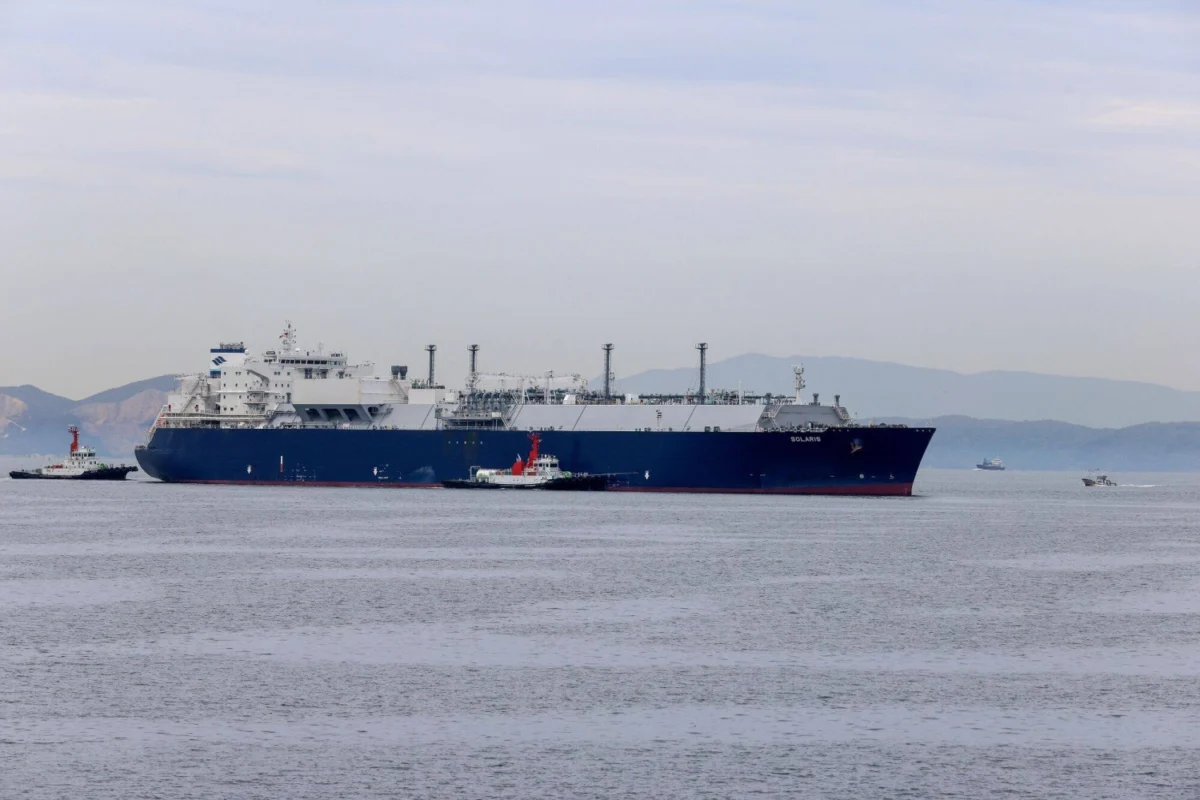
- April 22: The tanker Solaris was documented near the Himeji LNG terminal, serving as a visual marker of the shifting logistics landscape. During this period, intelligence reports indicated that commercial shipping companies were beginning to issue internal directives to avoid the strait entirely.
- Late April to Early May: Systematic rerouting began in earnest. Analysts noted that tankers were extending their voyages by thousands of miles, opting to bypass the strait via alternative, albeit longer, oceanic corridors.
- Tuesday, May 10: Data analysis conducted by Professor Hidenori Watanabe of the University of Tokyo provided the most concrete evidence of the scale of the shift. By 8:00 a.m., monitoring of ship-location data, including proprietary feeds from Marine Traffic, confirmed that at least 15 tankers originating from the Middle East and North Africa were circumventing the traditional route to reach Japanese ports.
Supporting Data: The Logistics of Diversion
The logistical burden of these changes cannot be overstated. When a tanker avoids the Strait of Hormuz, it typically incurs significant delays and increased fuel consumption. Professor Watanabe’s analysis highlights a critical pivot in maritime behavior:
"What we are seeing is not merely a temporary detour, but a fundamental reassessment of the ‘path of least resistance’ for energy carriers," Watanabe noted. "The data shows a clear divergence from historical patterns. Operators are prioritizing the physical security of the cargo over the economic efficiency of the transit time."
Current shipping logs indicate that while the volume of oil reaching Japan has remained relatively stable, the "time-to-market" for these shipments has increased by approximately 15% to 20% for vessels originating in the upper Persian Gulf. The use of specialized tracking data allows the Japanese Ministry of Economy, Trade and Industry (METI) to monitor these vessels in real-time, providing a semblance of control in an otherwise unpredictable market.
Strategic Diversification: Beyond the Middle East
Faced with the fragility of the Middle Eastern supply chain, the Japanese government is accelerating its "Source Diversification Initiative." For years, Japan has discussed reducing its reliance on the Persian Gulf, but the current blockade has provided the necessary impetus for concrete action.
The Pivot to the United States
Japan has significantly increased its engagement with U.S. energy exporters. The U.S. shale revolution has transformed America into a net exporter of crude and LNG, providing Japan with a stable, albeit more expensive, alternative to Middle Eastern supply. By increasing long-term purchase agreements with U.S. terminals, Japan aims to create a "buffer" that can be tapped into when regional tensions in the Middle East escalate.

The Russian Energy Dilemma
Despite the complex geopolitical landscape surrounding the ongoing conflict in Ukraine and international sanctions, Japan remains locked in a delicate dance regarding Russian energy projects. Projects such as Sakhalin-2 continue to be of vital interest to Japan’s energy security. Tokyo is currently navigating the narrow path of complying with G7 sanctions while ensuring that its energy infrastructure—particularly LNG supply—is not compromised by a sudden withdrawal from Russian markets.
Official Responses and Policy Implications
The Japanese government, under Prime Minister [Current Prime Minister], has emphasized that "energy security is national security." In a recent briefing, officials from METI confirmed that the government is in constant communication with major shipping conglomerates to ensure that the nation’s strategic petroleum reserves remain at high capacity.
"We are monitoring the situation with the utmost gravity," a government spokesperson stated. "The government is working in tandem with the private sector to ensure that the diversion of shipping routes does not lead to a domestic supply crunch or an unreasonable surge in retail energy prices."
Economic Consequences
The primary concern for policymakers is the "inflationary spillover." Higher shipping costs, driven by increased bunker fuel usage and higher insurance premiums for "high-risk zones," are being passed down the supply chain. Japanese manufacturers, who already face high electricity costs, are bracing for a prolonged period of energy-induced margin compression.
Foreign Policy Shifts
The blockade has also necessitated a more robust naval presence. While Japan’s Self-Defense Forces are constrained by constitutional limitations, the government has intensified its diplomatic efforts within the "Quad" (U.S., Japan, India, Australia) to ensure the freedom of navigation in international waters. Japan is increasingly framing the Strait of Hormuz issue not as a localized conflict, but as a challenge to the "Free and Open Indo-Pacific" (FOIP) vision.
The Road Ahead: Long-term Resilience
The current crisis serves as a stark reminder of Japan’s structural vulnerabilities. As the world transitions toward greener energy sources, the transition period remains fraught with the dangers of the old world’s reliance on fossil fuels.
Experts suggest that the current rerouting strategies are likely to become the "new normal" if the Strait of Hormuz remains unstable. In the long term, this may force Japan to invest more heavily in:
- Renewable Infrastructure: Accelerating the rollout of offshore wind and hydrogen energy to reduce the total volume of imported hydrocarbons.
- Strategic Storage: Expanding the capacity of domestic oil and gas reserves to withstand longer periods of supply chain disruption.
- Regional Cooperation: Strengthening energy-sharing agreements with regional partners like South Korea and Taiwan to create a collective "energy security bloc."
As the Solaris and other vessels continue their redirected journeys toward Japanese ports, the message is clear: the era of assuming unrestricted access to global energy chokepoints is over. For Japan, the strategy of the future will be defined by redundancy, agility, and a cold-eyed recognition of the new, fragmented geopolitical reality.
Reporting by our Energy Desk; data analysis provided by the University of Tokyo.











No comments yet. Be the first to join the conversation!