Iffa Jayyana
In an industry defined by the relentless pursuit of raw silicon power, Aorus—the gaming sub-brand of Gigabyte—has thrown a curveball that has left tech enthusiasts scratching their heads. The reveal of "Project Cielo," a modular concept gaming PC, represents a radical departure from the traditional desktop tower. By eschewing the standard monolithic aesthetic for a stacked, triangular design, Aorus is attempting to redefine what a gaming PC can be. However, as the dust settles on the initial reveal, the industry is left with a pressing question: Is Project Cielo a visionary leap into a mobile, cloud-integrated future, or is it a solution in search of a problem?
Main Facts: Deconstructing the Project Cielo Architecture
At its core, Project Cielo is not a traditional PC in the sense of a high-performance desktop. Instead, it is a tripartite modular system designed for "on-the-go" gaming, a concept that sits uncomfortably between a home console and a mobile workstation.
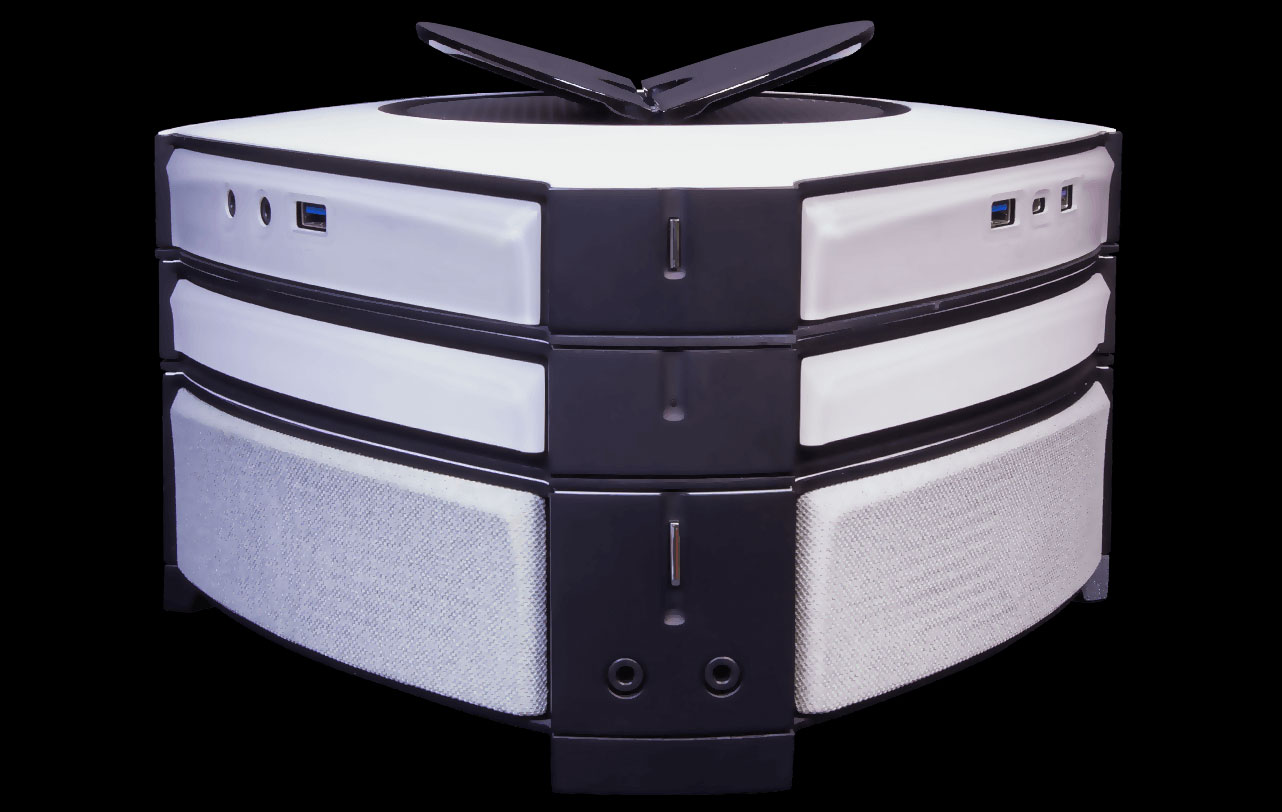
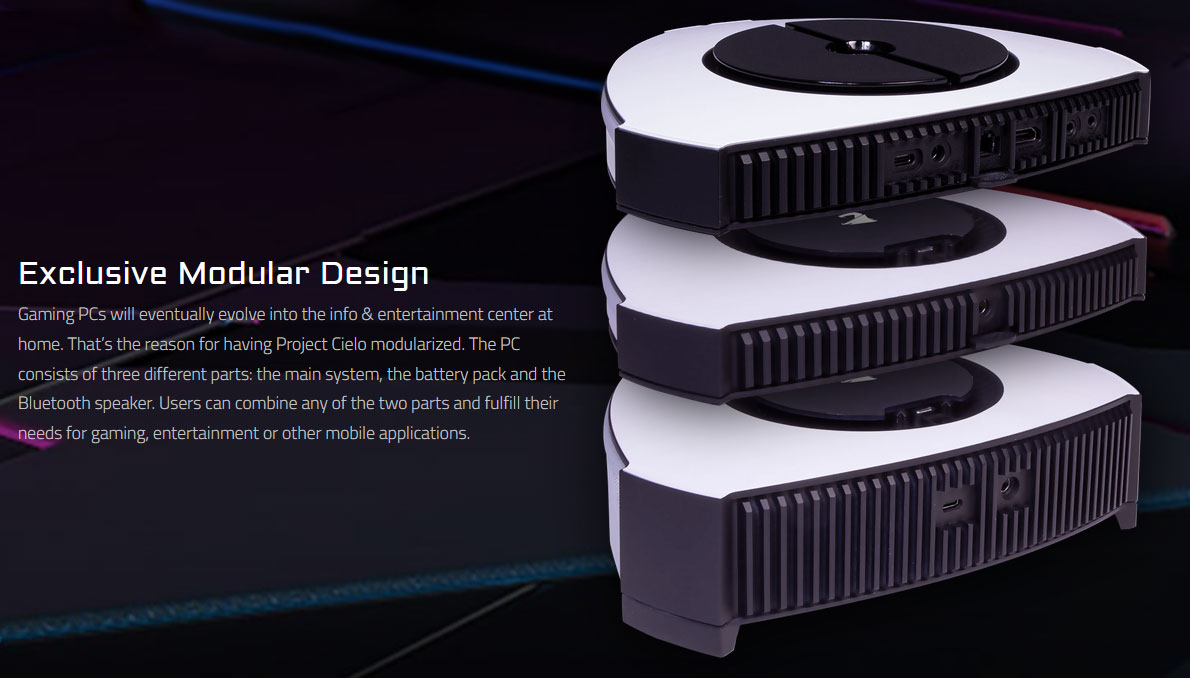
The structure is physically distinct, utilizing a vertical stacking mechanism that separates the hardware into three functional layers:
- The Main System Unit (Top): This module contains the primary computing hardware. Notably, it features "angel cake" wing-like structures, which serve as a 5G antenna array.
- The Battery Pack (Middle): Aimed at facilitating portable use, this module provides the necessary power to run the system away from a wall outlet.
- The Bluetooth Speaker (Bottom): A dedicated audio module intended to provide high-fidelity sound without the need for external peripherals.
Unlike modular concepts of the past—such as the Razer "Project Christine," which aimed to allow users to hot-swap discrete graphics cards and CPUs—Aorus’ vision is focused on lifestyle modularity. Aorus explicitly states that users can combine any two of the three parts to fulfill specific needs, whether for gaming, media consumption, or mobile productivity. This implies that the "PC" component is, in some configurations, entirely optional, shifting the focus from internal processing power to external connectivity and multimedia utility.
Chronology: The Road to the Concept Reveal
The unveiling of Project Cielo in late 2021 was sudden, arriving without the typical cycle of leaks or teasers that usually precede a major Gigabyte announcement.
- Mid-October 2021: Aorus released a formal press statement outlining the vision behind Project Cielo. The company positioned the device as a "preview of the future of gaming," emphasizing its 5G capabilities as its primary selling point.
- Post-Reveal Analysis: Almost immediately following the announcement, tech journalists and hardware enthusiasts began to pick apart the lack of technical specifications. With no mention of CPU architecture, GPU performance, or memory capacity, the conversation shifted rapidly from "what can it do?" to "why does it exist?"
- The Current Stasis: Since the initial reveal, Aorus has maintained a relative silence regarding the progression of the project. While the concept was intended to spark a dialogue about 5G integration in high-performance computing, it has largely been relegated to the annals of "concept hardware that may never see a production line."
Supporting Data: The 5G Gaming Paradigm
The crux of the Aorus argument is the integration of 5G connectivity as a replacement for raw, localized processing power. Aorus justifies this by citing the limitations of traditional wired or 4G wireless networks. In their official press materials, they argue that "5G makes PC gaming on the go possible by offering greater bandwidth, ultra-low latency, and near-instant access to cloud gaming."
The 5G Argument vs. Reality
While 5G technology is objectively faster than its predecessors, its application in a gaming desktop environment is fraught with variables.
- Latency: Even with 5G’s "near-instant" claims, jitter and signal instability in mobile environments remain significant hurdles for competitive gaming.
- Bandwidth Caps: Modern AAA gaming involves massive data transfers. Using a 5G connection to stream high-fidelity content puts users at the mercy of cellular data caps, a factor Aorus conveniently omitted from their promotional copy.
- The "Why" Factor: The most glaring data point missing from the Aorus strategy is the comparison to existing mobile hardware. If the goal is portability and 5G connectivity, the market already offers a mature solution: the high-end gaming laptop. Laptops offer integrated screens, keyboards, and battery systems that are far more cohesive than a modular, stacked desktop tower.
Official Responses and Industry Reception
Aorus has been careful to frame Project Cielo as a "concept," which provides them with a tactical retreat should the project fail to gain traction. In their PR outreach, the company focused on the freedom of the hardware: "Users can combine any of the two parts and fulfill their needs for gaming, entertainment or other mobile applications."
The industry reception, however, has been largely skeptical. Critics have pointed out that the modularity seems arbitrary. Why would a user want to carry a separate, proprietary Bluetooth speaker module when Bluetooth audio is a standard feature on virtually every computing device made in the last decade? The "angel cake" wings, while visually striking, add bulk that feels antithetical to the goal of "mobile gaming."
The lack of technical specs has been interpreted by many as a sign that the hardware inside is secondary to the "lifestyle" branding Aorus is attempting to cultivate. By prioritizing the aesthetic of modularity over the utility of it, Aorus has inadvertently created a device that feels like a prop from a science fiction film rather than a functional piece of engineering.
Implications: Does Project Cielo Represent the Future?
If we take Project Cielo as a serious attempt at forecasting the future of gaming PCs, the implications are somewhat alarming for the traditional enthusiast. It suggests a pivot away from the DIY, high-performance desktop market that Gigabyte built its reputation on.
1. The Death of the Localized Desktop
If manufacturers begin to prioritize cloud-based, 5G-connected modular units, the importance of the GPU and the local CPU begins to wane. This would fundamentally change the PC hardware landscape, moving it closer to the console/streaming model where hardware is disposable and the "gaming experience" is a service provided via a subscription.
2. The Modular Mirage
Project Cielo highlights the "Modular Mirage" that has haunted the tech industry for years. Many companies believe that users want to customize their hardware by stacking modules, but the history of the industry—from the Google Ara phone to the modular PC concepts of the 2010s—shows that consumers prefer integrated, reliable systems. The complexity of manufacturing three separate modules that must communicate with each other flawlessly is an engineering nightmare that rarely results in a better user experience.
3. The Identity Crisis
Perhaps the most significant implication is the identity crisis at Aorus. As a brand historically synonymous with high-octane performance and heavy-duty thermal management, pivoting toward a "lifestyle" product that relies on cloud gaming feels like an admission that the traditional gaming PC market has hit a plateau.
Conclusion: A Concept Best Left on the Drawing Board
Project Cielo is a fascinating study in design, but as a functional piece of hardware, it leaves much to be desired. It attempts to solve problems that don’t exist—such as the need for a separate, modular Bluetooth speaker—while ignoring the fundamental needs of the gaming community, such as high-performance cooling, upgradeability, and reliability.
If the "future of gaming" involves carrying a three-part tower around to connect to a 5G cloud server, then the future is likely to be met with significant resistance. Aorus has successfully created a conversation piece, but until they can demonstrate a tangible benefit over a standard gaming laptop or a desktop PC, Project Cielo will likely remain a curiosity of the 2021 era.
For now, enthusiasts will keep their eyes on CES and future trade shows, hoping that Aorus returns to the drawing board to focus on what they do best: pushing the boundaries of local silicon performance, rather than chasing the cloud with a stack of modules that nobody asked for.


 Basiran
 Layla Zulfa