

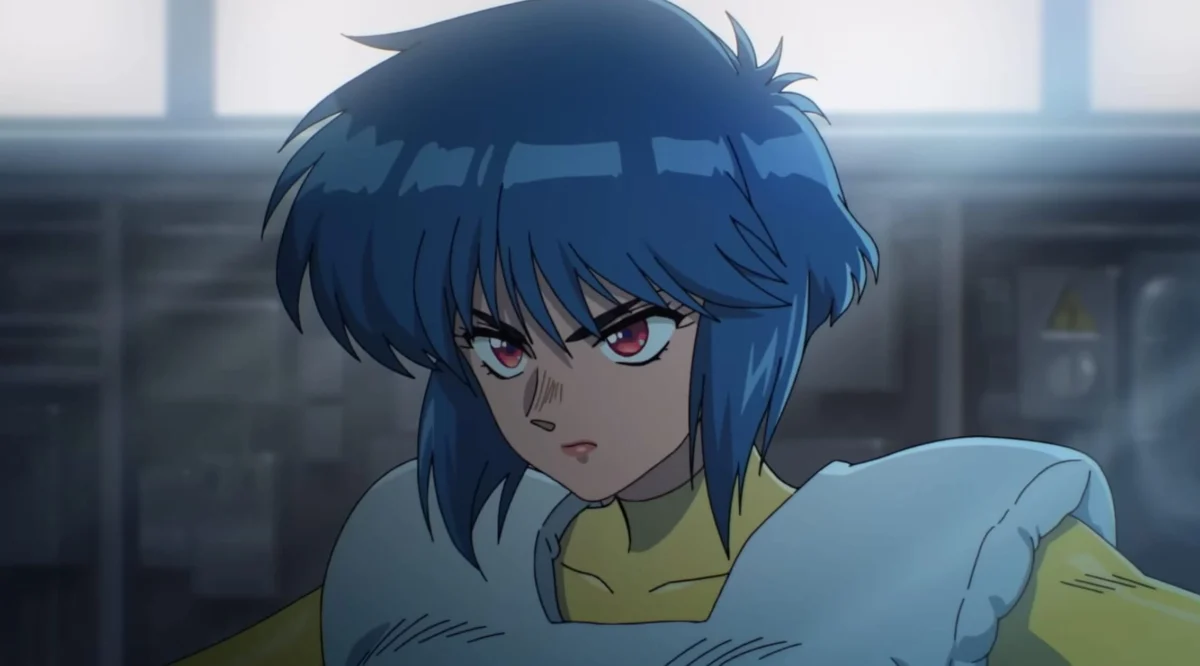
For over three decades, the name Ghost in the Shell has been synonymous with existential dread, high-concept philosophy, and the haunting, rain-slicked aesthetics of Mamoru Oshii’s 1995 masterpiece. To global audiences, the story of Major Motoko Kusanagi is a somber meditation on the soul’s place within a machine-dominated society. However, a seismic shift is coming this July. With the premiere of the new 2026 television adaptation, audiences are set to discover that the source material—the original 1988–1990 manga by Masamune Shirow—is a beast of an entirely different nature.
As the industry prepares for this fresh interpretation, fans of the 1995 film must brace themselves: the "Ghost" you think you know is about to become a lot more human, a lot more chaotic, and significantly more irreverent.
The Core Facts: A Return to the Source
The upcoming 2026 anime, produced by the acclaimed studio Science SARU, marks a departure from the atmospheric gravitas that defined the franchise’s cinematic legacy. While the 1995 film took the philosophical skeletons of Shirow’s manga and draped them in a shroud of existential melancholy, the new series aims for a direct, faithful adaptation of the manga’s original tone.
The primary divergence lies in the medium’s DNA. While Oshii utilized the source material to explore the "ghost" (the soul) in the "shell" (the body), Shirow’s manga was a dense, sprawling exploration of near-future geopolitics, technological saturation, and raw, punk-infused rebellion. The 2026 series will bring this version of the Major to life: a character who is less of a brooding philosophical vessel and more of a tactical, sarcastic, and deeply human operative living in a world where the extraordinary has become mundane.
Chronology of a Cyberpunk Legend
To understand the significance of this adaptation, one must look at the timeline of the franchise’s evolution:
- 1988–1990: The original Ghost in the Shell manga is serialized in Young Magazine, introducing the world to Section 9, the Major, and the complex, interconnected nature of the Net.
- 1995: Mamoru Oshii’s feature film is released, stripping away much of the manga’s humor and complex world-building to focus on a singular, refined philosophical narrative.
- 2002–2005: Ghost in the Shell: Stand Alone Complex expands the universe, blending episodic procedural elements with long-form political drama, bridging some of the gap between the manga and the films.
- 2017: A live-action Hollywood adaptation attempts to synthesize various elements of the franchise, though it faces criticism for its lack of thematic cohesion.
- 2026 (July): The new Science SARU series premieres, promising a "true-to-manga" aesthetic, characterized by softer, more expressive character designs and a return to the original’s irreverent spirit.
Irreverence and Humanity: The New Major
One of the most immediate shocks for returning fans will be the characterization of Major Motoko Kusanagi. In the 1995 film, the Major is an enigma—a stoic, distant figure who views her existence through a lens of profound alienation.

In the manga, and by extension the upcoming 2026 series, the Major is vibrant, witty, and occasionally "goofy." Shirow’s art style often utilized "chibi-adjacent" or exaggerated facial expressions—tongues sticking out, jaws dropping in mock frustration—to break the tension of high-stakes missions. This version of Kusanagi is a seasoned professional who isn’t afraid to complain about paperwork or the need for a stiff drink after a long day of cyber-warfare. This shift is vital; it grounds the high-concept sci-fi in a relatable human reality, reminding the viewer that even in a world of cyborgs, people are still just people.
The "Garbageman" Paradox: Horror vs. Cynicism
The best litmus test for the difference between the cinematic and literary versions of the story is the infamous "Garbageman" subplot. In the 1995 film, the scene where a sanitation worker discovers his entire domestic life—his wife, his children, his memories—is a fabrication, is a masterclass in horror. The camera lingers, the music swells, and the audience is forced to confront the terrifying fragility of human consciousness.
In the manga, however, the sequence is treated with a jarring, almost dark-comedy efficiency. The character acknowledges the horror of his situation, but the narrative quickly pivots to his life post-revelation, where he cracks jokes about his "divorce." It is a moment of pure Masamune Shirow cynicism: the idea that in a future where memory is hackable, one must develop a thick skin and a sense of humor to survive. The 2026 series is expected to embrace this tonal whiplash, challenging the viewer to find the humor in the existential void.
The Explicit Nature of Cyberpunk Freedom
The 2026 adaptation also faces the task of navigating the manga’s more adult themes. The original work is a quintessential punk text, championing bodily autonomy, sexual liberation, and the rejection of societal norms. While the 1995 film used the Major’s nudity as a symbol of her detachment from biological constraints, the manga uses it as a statement of total personal freedom.
In chapters like "Junk Jungle," the manga explores the fluidity of human sexuality in a post-human world, including scenes that are explicit and challenging by mainstream standards. These moments are not merely "fan service"; they are deep-world-building exercises. They illustrate a future where high-intensity sensory experiences are shared and where traditional notions of intimacy have been entirely discarded in favor of digital and physical liberation.
While it is unlikely the 2026 anime will reach the raw, explicit intensity of the source material—given television broadcasting standards—it is expected to maintain the thematic core: that in the future, the body is a commodity and the soul is the only thing that truly belongs to the individual.

Implications: A New Era for Science SARU
The choice of Science SARU to helm this project is a signal of intent. Known for their experimental visual styles and their ability to capture the kinetic energy of their source material, the studio is uniquely positioned to handle the "nonchalant" nature of Shirow’s world.
The primary challenge for the 2026 production team will be convincing the audience that this "normalization" of the bizarre is a feature, not a bug. In Oshii’s films, the world was a strange, foreign landscape that we, the viewers, were peering at through a window. In the 2026 series, the world is meant to be lived in. By framing cyber-terrorism and memory-hacking as everyday, mundane inconveniences, the series invites the audience into a more immersive, albeit cynical, vision of the future.
Official Stance and Production Outlook
Production committees have remained tight-lipped regarding specific plot points, but promotional materials suggest a visual fidelity to the 1988 character designs. There is a palpable sense of excitement within the industry that this series will finally provide the "missing link" for fans who have only experienced the franchise through the lens of the feature films.
By avoiding the temptation to make Ghost in the Shell a purely philosophical treatise, the 2026 series has the potential to revitalize the brand. It promises to be a series that is as comfortable with a high-octane gunfight as it is with a moment of sarcastic banter in a dive bar.
As we look toward July 2026, the message is clear: expect the unexpected. The Major is coming back, but she isn’t the ghost you remember. She is something much more complex, much more human, and significantly more ready to embrace the chaos of a digitized world. Whether this transition will be embraced by a fanbase raised on the somber tones of the 90s remains to be seen, but one thing is certain—the conversation around Ghost in the Shell is about to be rewritten, one line of code at a time.












No comments yet. Be the first to join the conversation!