Muslim
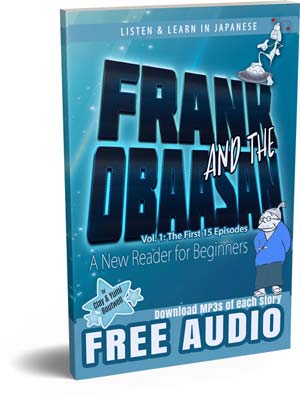
In an era where language learning resources are often confined to dry textbooks and repetitive audio drills, a unique pedagogical experiment has emerged from the creative team at The Japan Shop. Frank and the Obaasan, a narrative-driven Japanese reader designed specifically for beginners, has captured the imagination of students by blending high-concept science fiction with the grounded, everyday realities of life in Japan. The project, which offers its first five episodes for free, serves as both an entertaining story and a robust bridge to language fluency for those who have mastered hiragana but find themselves struggling to transition into practical, conversational Japanese.
The Premise: An Unlikely Encounter in Fukui
The story begins with a premise that defies traditional language-learning tropes. The protagonist, Frank, is not a typical exchange student or a corporate salaryman; he is a genuine, extraterrestrial being. During a botched intergalactic reconnaissance mission, Frank’s spacecraft suffers a catastrophic failure, resulting in a crash landing in the quiet Japanese prefecture of Fukui.

Bereft of his advanced technology, supplies, and his command of the local language, Frank is forced to navigate the complexities of human interaction. His only guide in this strange, new world is Obaasan, a quintessential no-nonsense Japanese grandmother who balances a sharp wit with a mysterious, perhaps even supernatural, level of patience. As Frank attempts to fix his ship, he must simultaneously learn the nuances of Japanese etiquette, the culinary mystery of natto, and the profound cultural importance of simple hydration.
Chronology of the Narrative: From Crash Landing to Cosmic Confusion
The progression of Frank and the Obaasan follows a structured, episodic format that mirrors the cognitive development of a language learner.
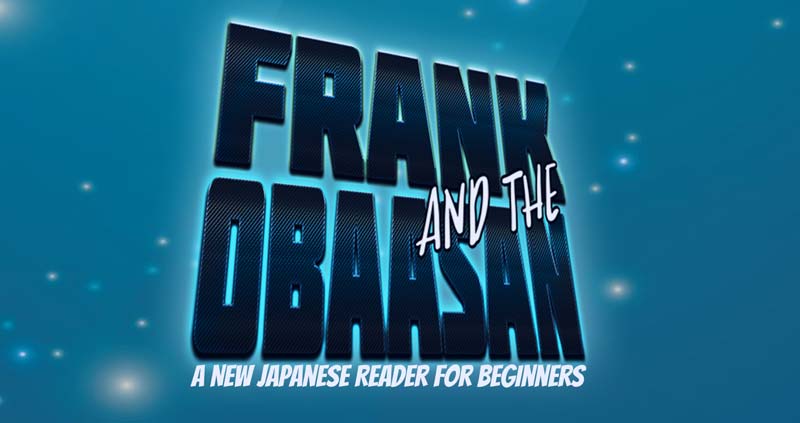
- Episode One: The Encounter. The narrative introduces the core conflict. Frank lands, faints from the stress of his situation, and is discovered by Obaasan. The dialogue here is foundational, focusing on basic greetings and status checks.
- Episode Two: Mizu, the Best Thing in the Universe. Frank experiences his first taste of "Earth-drink," also known as water. This episode serves to introduce descriptive vocabulary and the concept of simple inquiry.
- Episode Three: Sushi is Not Human. The comedy deepens as Frank, still struggling with his understanding of earthly life, encounters a plate of sushi and attempts to initiate a polite conversation with it, only to be corrected by his mentor.
- Episode Four: Sushi is Something to Eat. The story moves from existential confusion to practical application. Frank learns that sushi is sustenance rather than a sentient being, leading to a humorous misunderstanding about the nature of "friendship" and food.
- Episode Five: Frank is Not from America. The scope of the narrative expands as the duo visits a neighbor. The social pressure of the encounter forces Frank to reveal his true identity—as an alien from outer space—leading to a comedic climax that leaves both ladies stunned.
Supporting Data: Why Narrative-Driven Learning Works
Educational linguists have long championed the "Input Hypothesis," which suggests that students acquire language best when they are exposed to "comprehensible input"—content that is just slightly above their current level of proficiency. Frank and the Obaasan utilizes this methodology by providing:
- Contextualized Vocabulary: Instead of memorizing isolated word lists, students learn terms within the framework of a scene. The word for "water" (mizu) is taught through the act of drinking it, creating a stronger neural association.
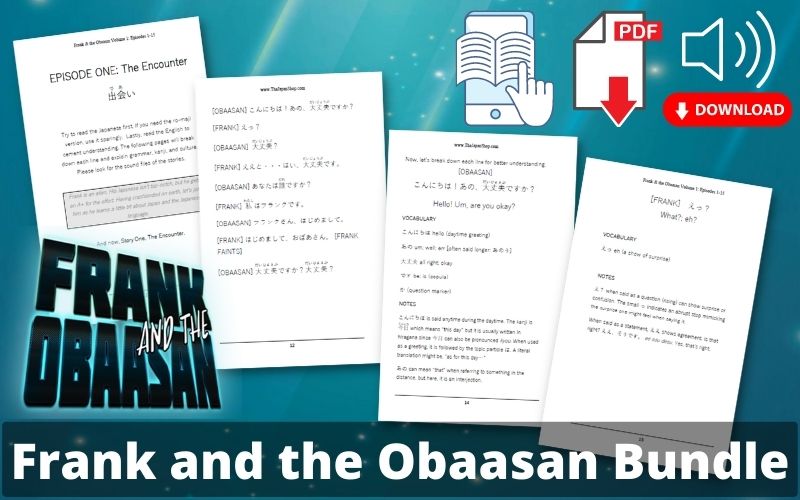
- Line-by-Line Breakdown: Each chapter features the original Japanese text followed by English translations and detailed grammatical notes. This ensures that the student is never left guessing about the structure of a sentence.
- The Makoto+ Integration: For those seeking a deeper dive, the content is linked to the "Makoto+ Sentence Explorer." This digital tool allows learners to isolate specific sentences from the stories, explore their grammatical components, and review vocabulary in a systematic, digital environment.
By utilizing this tiered approach, the reader moves the student from basic recognition of hiragana to an understanding of fundamental grammatical patterns and particles, all while maintaining a narrative pace that keeps the learner engaged.
Official Perspectives: The Philosophy Behind the Project
The creators at The Japan Shop have been vocal about the necessity of making language learning "the fun way." In their view, the biggest barrier to fluency is not the difficulty of the Japanese language itself, but the monotony of the materials provided to beginners.
"If a student is bored, they stop learning," says a representative from the project team. By introducing a character as eccentric as Frank, the curriculum designers have turned the act of studying into an act of consumption. The student is no longer just "studying Japanese"; they are "finding out what happens to Frank next." This shift in motivation is critical for adult learners who often struggle to maintain consistency in their studies.
The inclusion of the Beri-Beri- Shoshinsha (Very, Very Beginner) bundle and the Shogun-level membership options reflects a tiered approach to supporting the community. The project provides multiple avenues for access, recognizing that learners have different financial capacities and commitment levels. Whether it is a free account to test the waters, or a full membership providing access to all episodes and interactive tools, the ecosystem is built to scale with the learner’s ambition.
The Implications for Language Education
The success of Frank and the Obaasan suggests a broader shift in the digital education landscape. As AI and automated translation tools become more prevalent, the value of learning a language is increasingly tied to the experience of the language rather than just the utility of it.
The story of an alien in Japan serves as a brilliant metaphor for the language learner: like Frank, the student is an outsider trying to decode the social and linguistic signals of a culture that feels entirely alien to them. By identifying with Frank’s mistakes—his confusion over sushi, his social faux pas with neighbors, and his earnest attempts to use correct honorifics—students feel less intimidated by their own errors.
Furthermore, the pedagogical integration of these stories with the Makoto+ platform demonstrates the power of "blended learning." It moves away from the binary choice of either "using an app" or "reading a book," instead offering a unified experience that combines the portability of digital tools with the narrative depth of traditional literature.
Conclusion: A New Frontier for Beginners
Frank and the Obaasan is more than a simple reader; it is a testament to the idea that humor and storytelling are the most effective vessels for knowledge. For the beginner struggling with the vast complexity of Japanese grammar and the daunting prospect of learning kanji, Frank offers a relatable, hilarious, and ultimately encouraging companion.
As the story continues to unfold, it remains a vital resource for those looking to bridge the gap between "knowing the alphabet" and "speaking the language." Whether you are a student of linguistics, a lover of Japanese culture, or simply someone who enjoys a good science-fiction farce, the journey of this crash-landed alien provides a unique and effective path toward mastering one of the world’s most beautiful and complex languages. For those ready to start their own journey, the first five episodes are currently available for free, offering an open door into the delightful, and occasionally chaotic, world of Frank and his very terrestrial mentor.


 Neng Nana
 Asro
Asro