


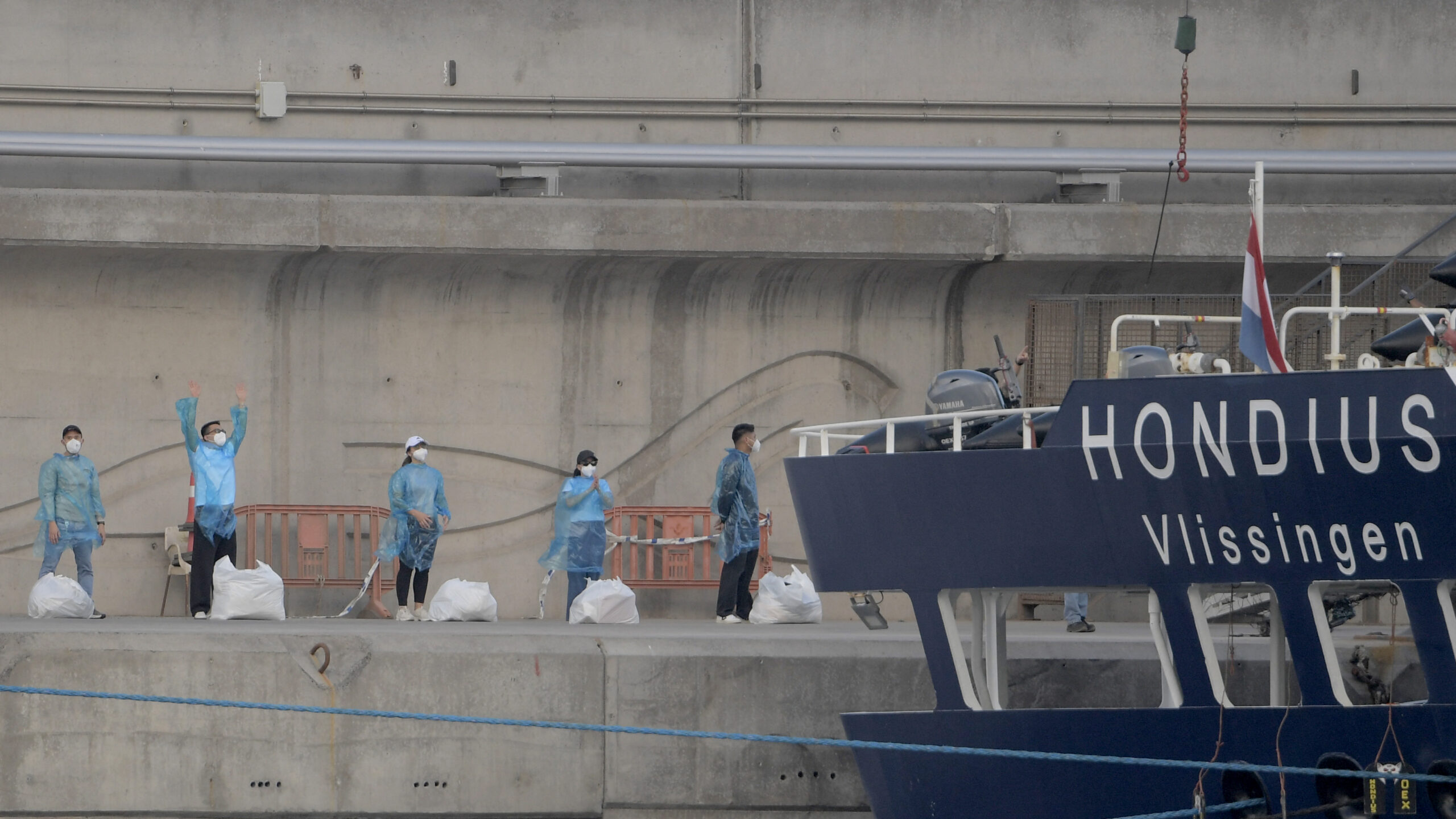
The maritime world and public health officials are currently navigating an unprecedented medical emergency as the cruise ship MV Hondius undergoes a high-stakes evacuation in the Canary Islands. Following a suspected outbreak of the Andes hantavirus—a rare and potentially lethal pathogen—the vessel, which had been adrift in a state of medical uncertainty, docked at the port of Granadilla de Abona on Tenerife this past weekend to offload its passengers and crew.
The situation has prompted an international coordination effort involving the World Health Organization (WHO), Spanish health authorities, and the United States Department of Health and Human Services (HHS). As the final passengers disembark, the focus has shifted from maritime logistics to stringent biocontainment, as officials work to ensure that a virus traditionally transmitted by rodents does not establish a foothold in human-to-human transmission chains across multiple continents.
The Chronology of the Outbreak
The MV Hondius saga began in late April 2026, when reports of unexplained respiratory distress began appearing among passengers. While cruise ships are notorious for the rapid spread of norovirus or influenza, the identification of hantavirus sent shockwaves through the medical community.
Historically, hantaviruses are contracted through direct contact with rodent excreta or inhalation of aerosolized particles from infected droppings. However, the Andes virus (ANDV) is a clinical outlier: it is the only known hantavirus capable of human-to-human transmission. When the first cases appeared on board, it became clear that the confined environment of the ship had facilitated a transmission pathway rarely seen outside of close-contact family settings.
By the time the ship reached Tenerife, the outbreak tally had reached nine confirmed cases. Tragically, three of those individuals—a Dutch couple and a German national—have succumbed to the illness. The ship, which carried 147 people, is now being managed by 30 remaining crew members who are tasked with navigating the vessel back to its home port in Rotterdam, Netherlands, under strict quarantine protocols.
Supporting Data: The Challenge of Detection
The complexity of this outbreak is compounded by the diagnostic ambiguity inherent in the Andes virus. During the disembarkation process, health officials identified a French citizen who tested positive for the virus, underscoring the ongoing risk.
Perhaps most concerning for international authorities is the case of a US passenger who tested "mildly positive" upon arrival in the United States. The WHO has officially categorized this result as "inconclusive" while awaiting further confirmation. This ambiguity highlights the limitations of current real-time PCR (polymerase chain reaction) testing for hantaviruses.
Medical experts explain that these tests look for snippets of viral genetic material. A "mildly positive" result often refers to the cycle threshold (Ct value). If a signal appears only after 35 or more cycles of amplification, it may indicate a very early infection, a fading late-stage infection, or, in some cases, laboratory contamination. Because the stakes—intensive care, mechanical ventilation, and potential mortality—are so high, officials are forced to treat these ambiguous results with the same severity as a confirmed case, leading to the deployment of high-level biocontainment resources.
Official Responses and Repatriation Protocols
The United States response, coordinated by the HHS and the Centers for Disease Control and Prevention (CDC), has been swift. Eighteen individuals—17 US citizens and one dual British-US national—were transported via a specialized, non-commercial repatriation flight directly to Omaha, Nebraska.
The choice of Omaha was strategic. The Nebraska Medical Center is home to the nation’s only National Quarantine Unit and a National Biocontainment Unit (NBU). Upon arrival, the passengers were subjected to rigorous screening. Two individuals were transported in specialized biocontainment units: one for the "mildly positive" test result and another who presented with symptoms. Officials noted that the threshold for "symptoms" in this context is intentionally broad, covering even minor ailments like nasal congestion, to prevent any potential spread.
In a press briefing held on Monday morning, federal and Nebraska state officials clarified the logistics of the landing. While an earlier social media post from the HHS incorrectly stated that only 17 people had been returned, officials confirmed the total is 18. Of these, 15 remain asymptomatic and are being held in the National Quarantine Unit.
To ensure the Nebraska NBU remains prepared for any potential escalations, two additional passengers—a couple traveling together, one of whom displayed symptoms—were transferred to Emory University in Atlanta. This redistribution of patients is a proactive measure to ensure that the limited biocontainment capacity in Nebraska is not overwhelmed should the condition of the asymptomatic passengers deteriorate.
The Long Road: Monitoring and Clinical Management
The quarantine period for those exposed to the Andes virus is set at 42 days, reflecting the incubation period of the pathogen. During this time, the 15 asymptomatic individuals will undergo detailed, daily risk assessments.
Clinical management of the Andes virus is notoriously difficult. Unlike some viral infections that can be treated with targeted antivirals, hantavirus treatment is primarily supportive. In severe cases, the virus causes Hantavirus Pulmonary Syndrome (HPS), leading to rapid fluid buildup in the lungs. Patients often require extracorporeal membrane oxygenation (ECMO), a sophisticated form of life support that oxygenates the blood outside the body, allowing the heart and lungs to rest.

Because of the specialized equipment required, the return of passengers to their home regions is contingent upon their proximity to high-level medical facilities. If a passenger resides in a region without access to ECMO and advanced intensive care, they will likely be required to remain in the Omaha facility for the duration of the 42-day window.
Implications for Global Public Health
The MV Hondius incident serves as a stark reminder of the vulnerabilities inherent in modern global travel. Cruise ships act as closed ecosystems where the rapid mixing of international travelers can turn a single point of exposure into a cross-border incident.
1. The Human-to-Human Threat
The most significant implication of this outbreak is the validation of human-to-human transmission of the Andes virus in a large-scale setting. While this has been suspected in past, smaller clusters, the Hondius outbreak provides a definitive, albeit tragic, case study. Epidemiologists are now likely to re-evaluate the risk profiles for hantaviruses in high-density, confined environments.
2. Diagnostic Preparedness
The "inconclusive" test result highlights a critical need for faster, more accurate diagnostic tools. When dealing with a virus that has a high mortality rate, the wait time for PCR confirmation—and the resulting uncertainty—places an immense psychological and logistical burden on both patients and the healthcare system.
3. Diplomatic and Logistic Coordination
The success of the repatriation efforts relied on seamless cooperation between the Spanish government, the WHO, and the US Department of Health and Human Services. This event has demonstrated that, in the face of an emerging pathogen, national borders become secondary to international health security. However, the initial miscommunication regarding the number of US passengers highlights the need for better data verification protocols during emergency evacuations.
Conclusion: A Vigilant Future
As the 18 individuals in the US and the remaining passengers elsewhere in Europe navigate their quarantine, the global medical community remains on high alert. With six other American passengers having disembarked the MV Hondius earlier in April—prior to the recognition of the outbreak—state health officials are currently working to track and monitor those individuals to ensure no further transmission has occurred.
The Hondius case will undoubtedly become a cornerstone of future pandemic preparedness planning. It underscores the reality that even "rare" viruses, when placed in the right (or wrong) environment, can disrupt the lives of hundreds and command the resources of the world’s most advanced medical institutions. For now, the world watches as the 18, the 30 crew members, and the remaining passengers wait, hoping that the rigorous containment measures in place are enough to bring this extraordinary chapter to a close without further loss of life.












No comments yet. Be the first to join the conversation!