Lina Irawan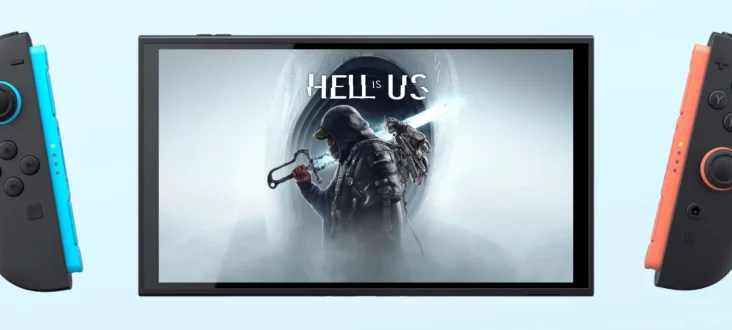
By Mustafa Mahmoud
The landscape of modern gaming is often dominated by predictable sequels and live-service models. However, occasionally, a title emerges that challenges convention, prioritizing atmosphere, player agency, and deliberate pacing. Hell is Us, the third-person action-adventure title developed by Rogue Factor and published by Nacon, is one such game. Since its release late last year, the title has garnered significant critical acclaim, cementing its status as one of the highest-rated games in Nacon’s storied history.
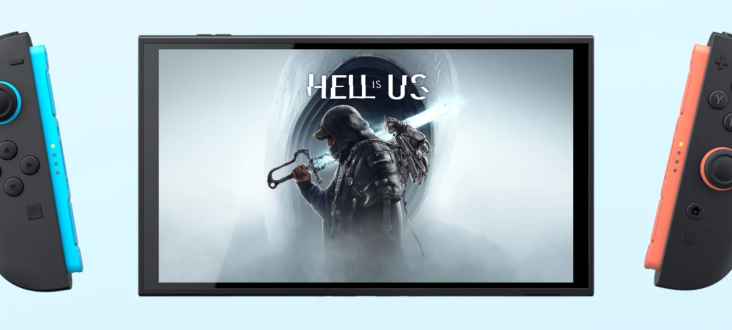
In a major development for handheld gaming enthusiasts, Nacon has officially confirmed that Hell is Us is making its way to the highly anticipated Nintendo Switch 2. The announcement, delivered during the latest Nacon Connect livestream, solidifies the console’s growing library of "next-gen" ports. With a scheduled release date of September 24, the title promises to bring its unique, melee-focused combat and cryptic exploration to a portable form factor, roughly one year after its initial debut on PC, PlayStation 5, and Xbox Series X/S.
The Core Experience: Why Hell is Us Matters
To understand the excitement surrounding this port, one must first appreciate the game’s design philosophy. Hell is Us is an atmospheric, third-person title that eschews the hand-holding common in contemporary AAA gaming. It is a game defined by silence and mystery, set in a war-torn nation plagued by a supernatural disaster that has birthed grotesque, mechanical monstrosities.
Gameplay Mechanics and Philosophy
The game centers on exploration, environmental puzzle-solving, and precise, melee-focused combat. Unlike many action titles that rely on UI-heavy markers and objective lists, Hell is Us forces players to pay close attention to the world around them. The environment acts as the primary storyteller, with subtle visual cues replacing traditional waypoints. This creates an immersive experience that respects the player’s intelligence, inviting them to piece together the narrative through discovery rather than exposition.
Reception and Critical Acclaim
Upon its release, the game was met with "Very Positive" reviews on platforms like Steam, with critics praising its bold artistic direction and commitment to its own vision. It has become a cornerstone of Nacon’s current software portfolio, standing out as a high-water mark for their publishing efforts despite the operational hurdles the parent company has faced in recent months.
Chronology of Development and Announcement
The journey of Hell is Us from a niche, high-concept project to a multi-platform powerhouse has been a testament to Rogue Factor’s persistence.
- Initial Reveal: The game was first teased with an emphasis on its "unsettling" atmosphere, capturing the attention of those tired of standard action-adventure tropes.
- Original Launch: The game officially launched late last year on high-end hardware, immediately garnering praise for its art style and satisfying, weight-heavy combat mechanics.
- Nacon Connect Reveal: During the most recent Nacon Connect livestream, the publisher addressed long-standing rumors regarding a portable version of the title. They officially confirmed the September 24th release date for the Nintendo Switch 2.
- Pre-Launch Phase: Following the announcement, the industry has turned its attention to the technical capabilities of the Switch 2, specifically how it will handle a game as visually dense as Hell is Us.
Technical Implications: Bringing the Abyss to Handheld
One of the most intriguing aspects of this announcement is the performance target. The trailer showcased during Nacon Connect featured gameplay running at a smooth 60 frames per second (fps). For a title that relies heavily on timing-based combat, frame rate consistency is paramount.
Performance Parity and Hardware Expectations
On the PlayStation 5, Hell is Us offers two distinct graphical modes: a "Quality" mode and a "Performance" mode. The latter utilizes FSR 2 (FidelityFX Super Resolution) to upscale to 4K while maintaining a 60fps target. The Switch 2 port is expected to mirror this structure, providing players with options to prioritize either visual fidelity or fluid motion.
The Role of DLSS
The biggest question mark—and simultaneously the most promising aspect—is the potential implementation of NVIDIA’s Deep Learning Super Sampling (DLSS). Given that the Switch 2 is widely expected to utilize an NVIDIA-based architecture, the inclusion of DLSS could allow the game to punch well above its weight class. By using AI-driven upscaling, the Switch 2 could potentially maintain the game’s detailed, eerie atmosphere and high-resolution textures without sacrificing the portability that defines the console.
Implications for the Industry and Nacon
The decision to port Hell is Us to the Switch 2 is a strategic move for both Nacon and Nintendo.
Nacon’s Strategic Pivot
Nacon, while navigating a challenging period of corporate restructuring and internal issues, has identified Hell is Us as a "flagship" title. By bringing it to the Switch 2, they are extending the game’s lifecycle and maximizing its revenue potential. It signals to investors and consumers that despite the company’s recent difficulties, their commitment to high-quality, singular gaming experiences remains intact.
The Nintendo Switch 2’s Software Strategy
For Nintendo, the addition of Hell is Us to the Switch 2’s launch-window lineup is significant. It demonstrates that the new console is capable of running demanding, modern third-party titles that were previously the exclusive domain of the PS5 and high-end PCs. This helps mitigate the "performance gap" narrative that often surrounds Nintendo hardware, positioning the Switch 2 as a versatile platform that can cater to both family-friendly Nintendo staples and intense, mature action-adventure titles.
Supporting Data: The Shift to Digital and the Changing Market
The context of this release is further complicated by broader market trends. As highlighted in recent industry reports, the market is undergoing a seismic shift toward digital consumption.
Recent data suggests that approximately 85% of game sales for consoles like the PlayStation 5 are now digital, with physical media accounting for only 15% of the market. This trend is likely to be mirrored on the Switch 2, where the convenience of a digital library aligns with the portable nature of the hardware. For a game like Hell is Us, which relies on atmospheric immersion, the ability to play seamlessly on the go while maintaining a digital-first ecosystem is a natural fit.
Furthermore, the longevity of consoles is expanding. With the PS5 nearing 100 million units sold, the industry is seeing longer hardware cycles. Hell is Us is part of a wave of "mid-cycle" hits that prove that high-quality, original IP can thrive even in a market saturated by established franchises.
Looking Ahead: What to Expect
As we approach the September 24th launch, several questions remain for the development team at Rogue Factor:
- Optimization: How will the game’s complex lighting and particle effects—which are vital for creating its haunting atmosphere—translate to the Switch 2’s mobile chipset?
- Control Schemes: The game’s melee combat requires precise inputs. Will the Switch 2’s Joy-Cons or the Pro Controller offer the tactile response necessary for the game’s more punishing encounters?
- Content Parity: Will the Switch 2 version include all post-launch updates and expansions from the original release, or will it be a base-game release?
The confirmation of Hell is Us for the Nintendo Switch 2 is more than just a news item; it is a signal of confidence in the upcoming hardware and a testament to the enduring appeal of the game itself. Whether you are a veteran of the game looking for a reason to replay it on a new platform or a newcomer eager to experience its mysterious world, September 24 promises to be a date of significant interest for the gaming community.
As the industry watches, the success of this port could set a new benchmark for what is possible on portable hardware. If Rogue Factor can successfully translate the dread, the beauty, and the intensity of Hell is Us to the Switch 2, it may well prove that the best experiences aren’t defined by the hardware they run on, but by the vision of the developers who create them.
What do you think? Will the unique atmosphere of Hell is Us suffer on a portable screen, or will the Switch 2’s potential technology provide the perfect stage for this hit title? Share your thoughts and join the conversation as we count down to the September release.


 Iffa Jayyana
 Muslim