

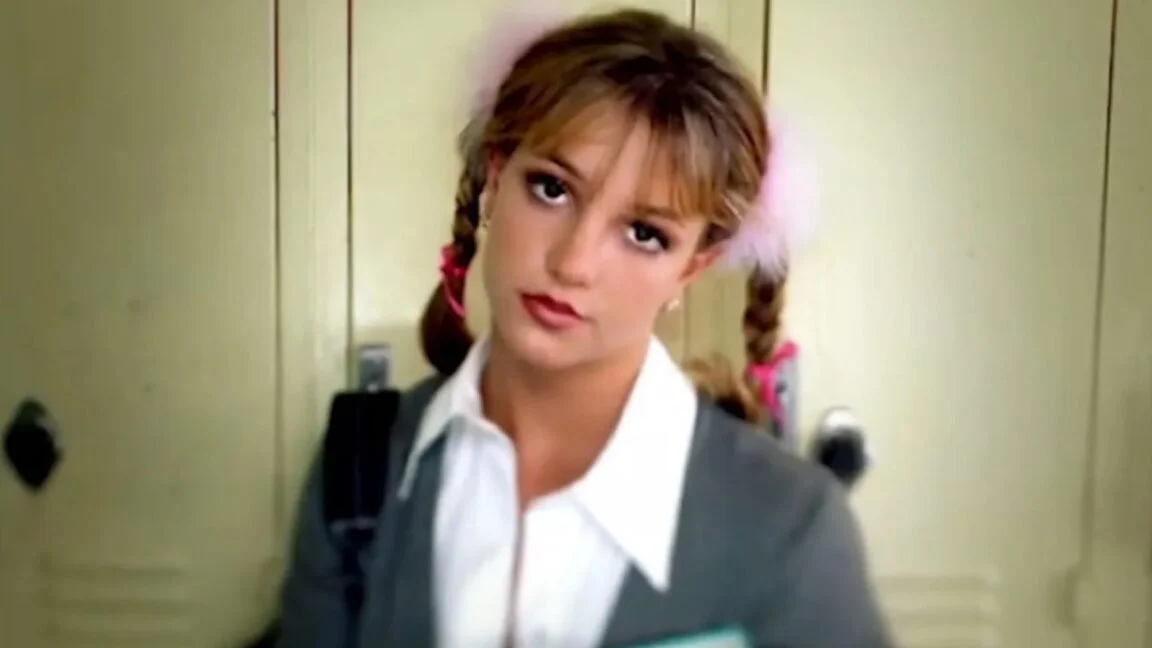
For over a decade, a linguistic phenomenon known as "vocal fry"—characterized by a low, rattling, or "creaky" vibration in the voice—has been at the center of a cultural firestorm. Often caricatured as the "Valley Girl" affectation of the 21st century, it is frequently cited in media critiques as a symptom of a generational decline in speech standards, particularly among young women. From the breathy, gravelly cadence of Britney Spears to the stylistic choices of contemporary podcasters, vocal fry has been scrutinized, mocked, and pathologized.
However, recent scientific inquiry is beginning to dismantle the long-held assumption that this vocal register is a gendered quirk. New research suggests that our cultural obsession with "creaky voice" as a female-coded trait may say more about our own cognitive biases than the actual physiological realities of human speech.
The Science of the "Creak": Defining Vocal Fry
To understand the controversy, one must first understand the physiology of the sound. Vocal fry, technically referred to as the "pulse register" or "glottal fry," is the lowest register of the human voice. It sits beneath the modal register (our standard speaking voice) and the falsetto register.
Physiologically, vocal fry occurs when the arytenoid cartilages in the larynx close tightly, causing the vocal folds to slacken. Instead of the rhythmic, fluid vibration associated with normal speech, the folds vibrate at an irregular, sluggish pace. Air is released in intermittent spurts, creating a low-frequency sound—often hovering around 70 Hz—that manifests as a rhythmic "popping" or "rattling." Given that the lower threshold of human hearing is roughly 20 Hz, vocal fry operates at the very basement of our audible range.
Challenging the Narrative: The McGill Study
The prevailing cultural narrative suggests that young women are the primary purveyors of vocal fry. This belief has fueled countless op-eds, self-help guides for women looking to "fix" their voices, and anecdotal complaints from employers claiming the register makes speakers sound unconfident or unintelligent.
Jeanne Brown, a graduate student at McGill University, has recently challenged these assumptions head-on. Presenting her findings at the recent meeting of the Acoustical Society of America in Philadelphia, Brown unveiled data that complicates the gendered perception of the vocal register.
Through rigorous experimental analysis, Brown discovered that vocal fry is actually more prevalent in men than in women. This finding serves as a significant corrective to the popular discourse. If men use vocal fry at higher rates, why does the public perception remain so stubbornly fixated on women? Brown’s research suggests that the issue is not one of frequency, but of perception. We are conditioned to "hear" fry in women because we have been socialized to associate it with femininity and, often, with perceived incompetence. In men, the same auditory phenomenon is often ignored, interpreted as a sign of gravitas, or simply categorized as a standard masculine vocal trait.
A Chronology of the "Creaky" Trend
The trajectory of vocal fry from a linguistic curiosity to a cultural lightning rod is a story of shifting media landscapes and the rise of digital influence.
The 1990s: The Pop Cultural Awakening
While vocal fry has existed as long as humans have possessed vocal cords, it entered the mainstream consciousness through the music industry. In 1998, Britney Spears’ "Hit Me Baby (One More Time)" utilized the register as a stylistic device, creating an intimate, breathy, and highly textured sound that resonated with a generation. It became a hallmark of the "pop princess" aesthetic—a way to convey vulnerability and emotional raw-ness in an amplified, studio-produced environment.
The 2010s: The Pathologization
By the early 2010s, the "creak" began to be framed as a problem. Articles in major publications began to link the use of vocal fry to professional failure. A 2014 study published in the Journal of Voice suggested that listeners found speakers with vocal fry to be less competent and less hireable. This sparked a wave of media coverage that disproportionately focused on young women, labeling the speech pattern as a "career-killer."
The 2020s: The Scientific Re-evaluation
The current decade has seen a shift toward more nuanced acoustic research. Linguists and researchers like Brown are utilizing better technology and more diverse sample sizes to prove that the "epidemic" of vocal fry in young women is largely a social construct.
The Artistic Utility of Effort
The debate is not merely about speech habits; it is about how we express emotion. Ten years ago, John Nix, a professor of voice at the University of Texas, San Antonio, conducted pioneering research on why singers utilize the register. His conclusions remain highly relevant today.
Nix argued that vocal fry serves as a tool for "displaying effort." In classical music, singers are trained to disguise the physical exertion required to produce a note; the goal is to make the sound seem effortless and pure. Conversely, in popular music—which is heavily amplified—the goal is often to sound "honest," "intimate," and "raw."
"Fry may be one way to communicate such effort, or honest, raw emotions," Nix noted. This explains why vocal fry is not confined to pop stars like Katy Perry or Lady Gaga, but is also a staple of the repertoires of gospel bassists like Mike Holcomb and record-breaking vocalists like Tim Storms. When Justin Bieber or a gospel singer employs the register, it is interpreted as a display of depth or range. When a young woman employs the same register, it is frequently dismissed as a stylistic affectation.
Implications: The Psychology of Auditory Bias
The disparity between how we hear men and women using the same vocal register highlights a deep-seated auditory bias.
Professional Impact
If professional gatekeepers believe that vocal fry is a sign of lack of confidence, women may be unfairly penalized in job interviews or public speaking engagements. This "vocal discrimination" mirrors other forms of bias against women in the workplace, where their tone, pitch, and word choice are subjected to a level of scrutiny that men rarely encounter.
Cultural Policing
The persistent policing of women’s voices—whether it be the pitch, the speed, or the use of "uptalk" and vocal fry—suggests a desire to regulate how women occupy space in the public sphere. By labeling the way a woman speaks as "annoying" or "unprofessional," critics are able to minimize the content of the message by attacking the medium of delivery.
The Need for Scientific Literacy
The work being done at McGill University and by organizations like the Acoustical Society of America underscores the necessity of moving beyond stereotypes. If we are to have a productive conversation about linguistics and communication, it must be grounded in data rather than cultural hearsay.
Conclusion: Hearing Beyond the Stereotype
The evidence presented by Jeanne Brown and her contemporaries suggests that the "vocal fry epidemic" is, in many ways, a phantom. We are hearing what we expect to hear. As we continue to analyze the complexities of human speech, it is vital to separate the physiological reality of the vocal folds from the cultural baggage we impose upon them.
Vocal fry is a natural, versatile, and common register of the human voice, utilized by singers and speakers across the gender spectrum to convey emotion, manage breath, and project authenticity. It is time to retire the gendered myths surrounding the "creaky voice" and accept it for what it truly is: a fundamental, and entirely normal, part of the human acoustic experience. As our understanding of vocal mechanics deepens, perhaps we will finally learn to listen to the speaker rather than the stereotype.












No comments yet. Be the first to join the conversation!