

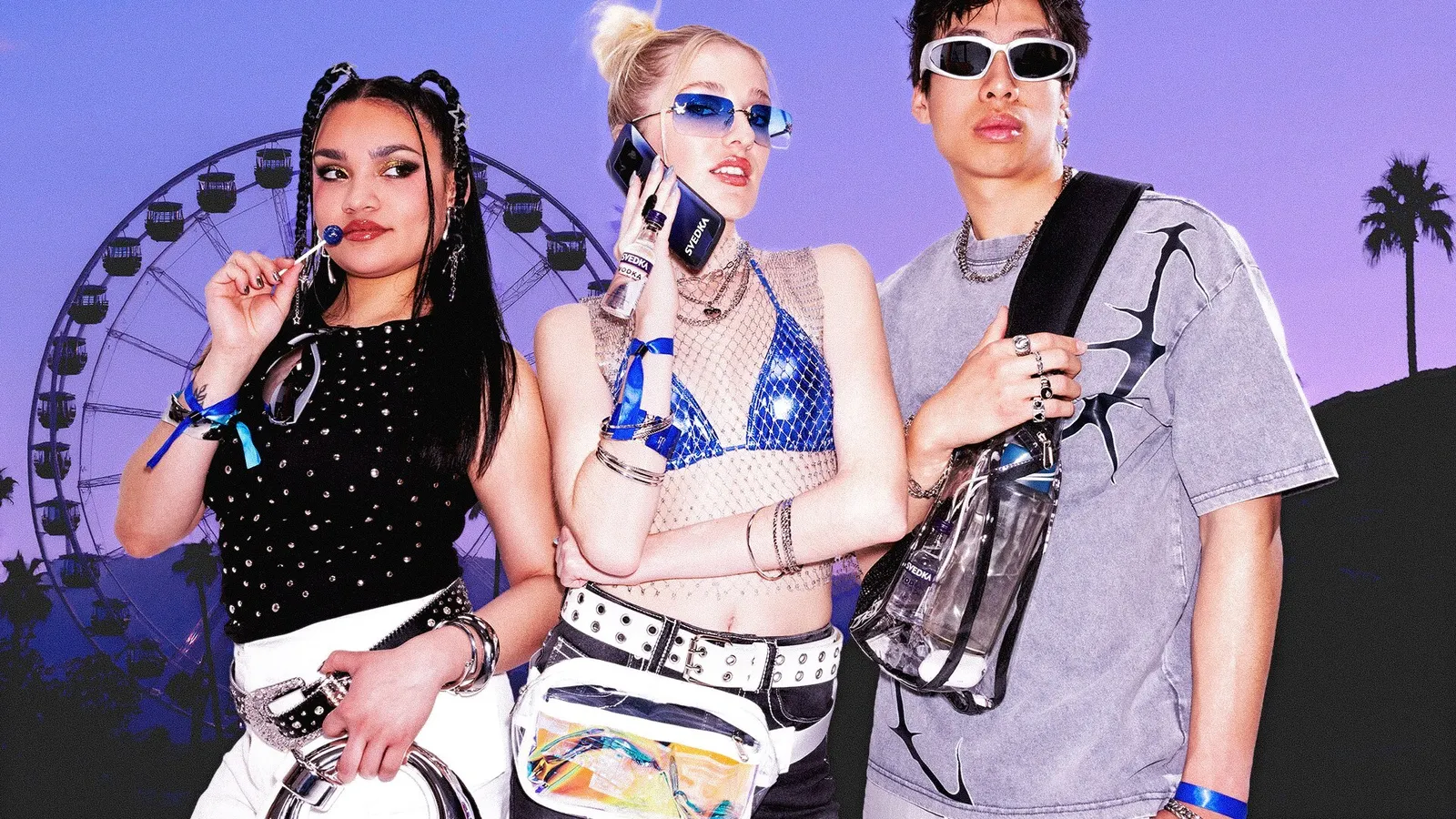
In the high-stakes, hyper-competitive landscape of the global spirits industry, brand identity is often the only thing standing between a market leader and a forgotten footnote. For Svedka Vodka, the challenge of staying relevant in 2025 and beyond has prompted a strategic trip through time. Following its acquisition by the beverage giant Sazerac last year, the brand is undergoing a major creative renaissance, intentionally pivoting back to its mid-2000s roots while simultaneously navigating the controversial frontier of artificial intelligence.
The centerpiece of this strategy is a clever temporal update: the brand, once famously marketed as the "No. 1 vodka of 2033," has officially rebranded itself as the "No. 1 vodka of 2055." By reviving its iconic, sleek Fembot mascot and leaning into a "retrofuturistic" aesthetic, Svedka is betting that the key to winning over a modern, digitally overwhelmed consumer base lies in a paradoxical blend of high-tech imagery and an analog, human-centric philosophy.
The Chronology of a Rebrand
To understand where Svedka is going, one must look at where it has been. Launched in the mid-2000s, the brand established itself through a disruptive marketing strategy that utilized "futuristic" visuals and the Fembot—a chrome-plated, robotic figure that became synonymous with the brand’s identity. The initial campaign was a masterclass in brand positioning, using the "2033" moniker to suggest that Svedka was a spirit from the future, arriving early.
After a 12-year hiatus, the Fembot returned to the spotlight in August 2023. This re-emergence was not merely a nostalgic exercise; it was a calculated response to the modern epidemic of digital burnout. The brand launched a campaign offering to pay for consumers’ bar tabs, provided they agreed to put their phones away and engage in face-to-face socialization.
The momentum continued into 2024, culminating in a historic Super Bowl debut in February. The commercial featured the Fembot in an AI-generated spot that drew both fascination and industry-wide debate. This was followed by the release of a Y2K-inspired "dumb phone," a limited-edition device designed to restrict communication to basic calls and texts, aimed specifically at the festival-going crowd. These efforts underscore a brand that is no longer just selling a spirit, but a lifestyle counter-movement against the relentless pull of the digital world.
Supporting Data and Market Strategy
Svedka’s recent maneuvers are part of a broader expansion strategy by parent company Sazerac. Following the acquisition of the vodka brand, Sazerac has been aggressive in diversifying its portfolio, including a notable minority stake in 818 Tequila, the high-profile brand founded by Kendall Jenner.
The rationale behind these moves is grounded in shifting consumer demographics. Current market research suggests a "nostalgia wave" that is transcending generational lines. While Gen Z consumers are famously embracing analog technology—such as film cameras and vintage fashion—to combat the "over-connectedness" of the smartphone era, older Millennials are equally drawn to the simplicity of the past.
David Binder, Senior Brand Director for Svedka at Sazerac, notes that the success of these campaigns is measurable. Despite the skepticism that often follows the use of AI in advertising, the brand reported a significant increase in sales during the Super Bowl season. This suggests that while the use of AI might be a polarizing topic, it effectively achieved the primary goal of any marketing endeavor: cutting through the noise in a fragmented media environment.
Official Responses: The Philosophy of the Future
In an exclusive discussion regarding the brand’s trajectory, David Binder offered clarity on the delicate balance between utilizing cutting-edge technology and maintaining human relevance.
The Role of the Fembot
When asked how a 2005-era robot fits into a world where humanoid robotics are a daily reality on social media, Binder explained that the Fembot’s purpose has fundamentally shifted. "When the robot initially launched, the future was a fun idea. Dreaming of flying cars and walking robots was a dream that seemed very far off," Binder noted. "But the role she plays is a bit different now. AI is everywhere. Tech is everywhere. It’s moving faster than we can understand. The future feels a bit less whimsical these days and a bit scarier."
Binder clarifies that the new iteration of the Fembot is not the menacing harbinger of a tech-takeover. Instead, she acts as a guide: "I’ve been to the future. I’ve seen it, and humans are the answer."
The AI Controversy
The decision to use AI in the Super Bowl commercial was, according to Binder, a conscious choice to lean into the brand’s identity. "We’re saying we’re the No. 1 brand of 2055. In a meta way, it makes sense that we would take that first step and use AI to push into the future," he said.
However, he was quick to address the backlash regarding the "human vs. machine" debate. "I want to clarify that we are not making a binary choice between humans and robots. AI is a tool. It was very, very, very human-led, human-ideated, and human-driven." Binder emphasizes that for advertising to be effective in 2025, it must spark a conversation, even if that conversation includes skepticism.
Implications for the Spirits Industry
The "Svedka strategy" serves as a case study for legacy brands attempting to reinvent themselves under new ownership. By merging the comfort of 2000s nostalgia with the cutting-edge utility of generative AI, Sazerac is attempting to capture two distinct market segments: the "digital natives" who are disillusioned by tech, and the "nostalgia-seekers" who value the brand equity of the early 2000s.
The Rise of "Analog" Marketing
Svedka’s collaboration with the Y2K flip phone trend is part of a growing movement among consumer goods brands to promote "digital wellness." By positioning a vodka brand as an advocate for real-life human connection, Svedka differentiates itself from competitors who are focusing solely on digital connectivity and social media presence. This approach creates a "brand halo" that prioritizes the experience of the drink over the lifestyle of the user’s online persona.
The AI Tightrope
Svedka’s experience during the Super Bowl highlights the thin line brands walk when adopting new technologies. While the backlash was present, the sales increase confirms that consumers are often willing to forgive—or even engage with—controversial creative choices if the underlying message resonates with their personal values. The takeaway for the industry is clear: boldness in creative execution, even when polarizing, often yields higher returns than safe, conventional advertising.
Conclusion: The Road to 2055
As Svedka looks toward the horizon, the "2055" branding serves as more than just a number; it is a declaration of intent. By grounding its future-focused marketing in the tangible, nostalgic reality of the past, the brand is successfully navigating the transition into the Sazerac portfolio.
The brand’s success suggests that in a world increasingly dominated by algorithms and automation, the most "futuristic" thing a company can do is remind its customers to look up from their screens, pick up a glass, and connect with the people standing right in front of them. Whether through a retro Fembot or an AI-generated commercial, Svedka has proven that the path forward requires a firm grasp on the past. As the industry watches, the brand’s commitment to this "human-first" approach will likely serve as a blueprint for others looking to stay relevant in an increasingly automated world.









No comments yet. Be the first to join the conversation!