Ammar Sabilarrohman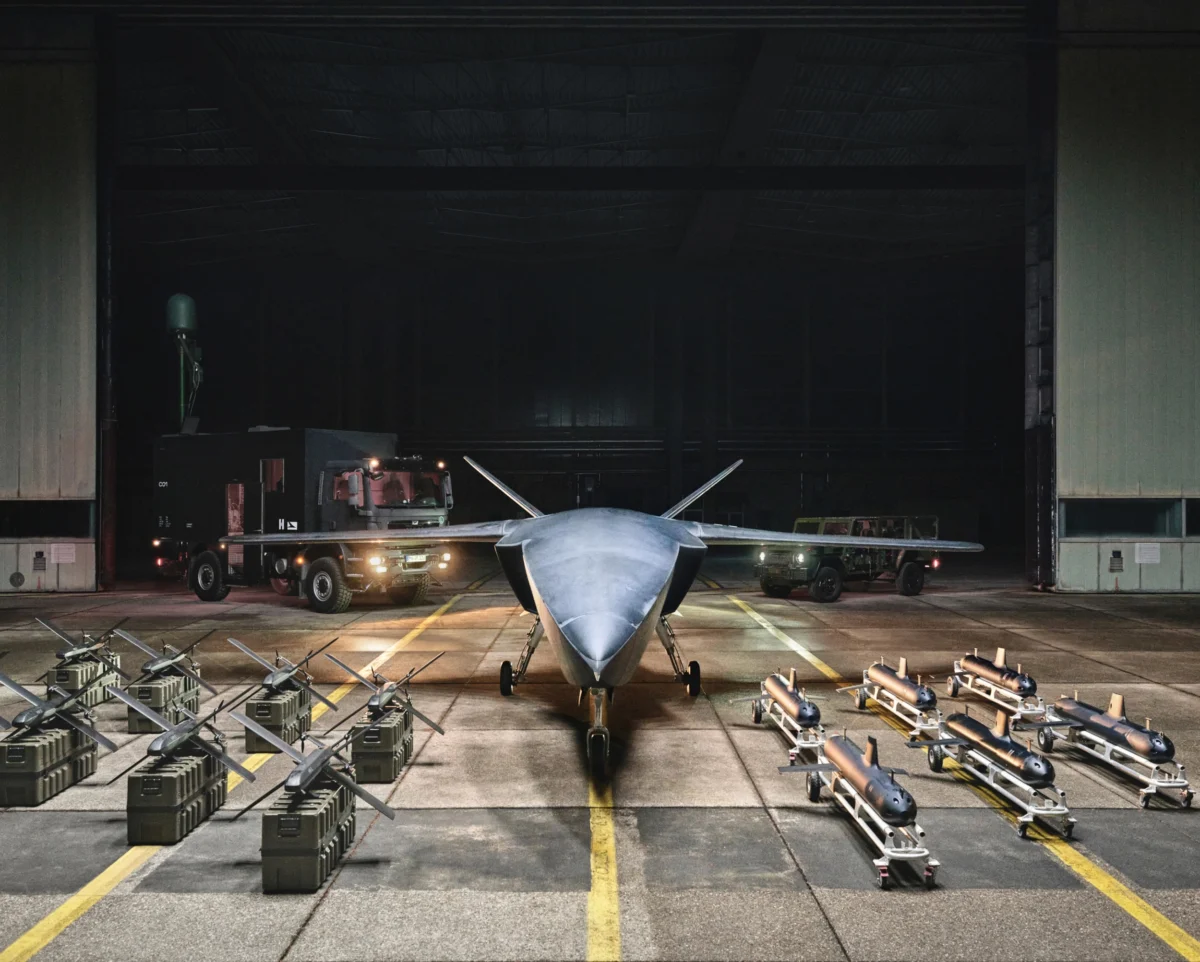
By TechCrunch News Desk
May 11, 2026
In a move that underscores the seismic shift in global venture capital priorities, European defense technology leader Helsing is reportedly finalizing a monumental $1.2 billion funding round. According to reports from the Financial Times, this latest infusion of capital is set to value the five-year-old startup at approximately $18 billion. The deal is expected to be led by investment firm Dragoneer, with significant participation from existing backer Lightspeed Venture Partners, cementing Helsing’s position as the undisputed heavyweight of the European defense tech ecosystem.
This capital raise represents a significant "step-up" for the company, which has seen its valuation climb at an aggressive pace as the demand for AI-driven military capabilities reaches a fever pitch across the continent.
The Core Facts: A New Benchmark for Defense
Helsing, which has positioned itself as the "software-defined defense" powerhouse of Europe, has moved from a niche disruptor to a cornerstone of the Western military-industrial complex in just half a decade.
The $1.2 billion injection—should it close at the reported $18 billion valuation—will provide the firm with the necessary liquidity to scale its manufacturing and software deployment capabilities. This comes less than a year after the company’s June 2025 round, which saw Spotify founder Daniel Ek lead a €600 million investment. That previous round valued the company at roughly €12 billion ($14 billion USD at the time), meaning that despite the broader economic cooling in other tech sectors, Helsing’s valuation has appreciated significantly in just 11 months.
For investors, the bet is clear: as geopolitical tensions remain elevated and the efficacy of autonomous drone warfare continues to be validated on the front lines, Helsing is not merely a startup, but a critical strategic asset for European sovereignty.
Chronology: The Rapid Ascent of Helsing
To understand Helsing’s current trajectory, one must look at its accelerated history of growth and institutional validation:
- 2021: The Genesis. Founded with the mission to bring advanced artificial intelligence and software engineering to the defense sector, Helsing emerged at a time when Europe was beginning to grapple with a chronic lack of domestic defense tech investment.
- 2023: The Proof of Concept. As the war in Ukraine intensified, Helsing began demonstrating the utility of its AI-enhanced systems, moving from research and development to battlefield-ready deployments.
- June 2025: The Billionaire Bet. Spotify CEO Daniel Ek, signaling a personal shift toward deep-tech and defense, led a €600 million round. This provided the company with the financial firepower to expand its workforce and operational footprint across the EU.
- Late 2025 – Early 2026: Consolidation. Throughout the latter half of 2025, Helsing secured various contracts, solidifying its role in national defense procurement pipelines.
- May 2026: The $18 Billion Valuation. The current reported round represents the company’s transition from a "growth-stage" unicorn to a "mega-cap" private entity, signaling that institutional investors are treating it with the same level of scrutiny—and optimism—as traditional defense contractors like Lockheed Martin or Rheinmetall.
Supporting Data: The Competitive Landscape
Helsing does not exist in a vacuum. The "Defense Tech" category has become one of the most crowded and well-funded sectors in European venture capital. However, Helsing’s valuation dwarfs its peers, placing it in a category of its own.
The Unicorn Field
- Quantum Systems: In November 2025, this German drone manufacturer successfully raised €180 million. While the company is a major player, its valuation stands at over €3 billion—a significant figure, but one that highlights the sheer scale of the premium placed on Helsing.
- Tekever: Based in Lisbon, this drone and surveillance tech firm raised £400 million a year ago. Achieving a valuation north of £1 billion, Tekever represents the "middle class" of the European defense boom, focusing on specialized maritime and aerial surveillance rather than the broad-spectrum AI software integration that defines Helsing’s model.
The divergence in these valuations suggests that investors are not just buying into hardware, but into software platforms. Helsing’s focus on the "operating system" of the battlefield—the AI stack that processes sensor data and optimizes autonomous response—is viewed as a more scalable, higher-margin business than traditional hardware manufacturing.

Official Responses and Market Silence
As of mid-day May 11, 2026, the silence from the primary stakeholders has been notable. Helsing’s corporate communications team, as well as representatives from Dragoneer and Lightspeed, have not provided official comments regarding the Financial Times report.
In the world of high-stakes defense contracting and private equity, such silence is standard. The sensitive nature of the company’s client base—which includes various European ministries of defense—often requires a level of discretion that typical software unicorns do not observe. The lack of denial, however, is being interpreted by market analysts as a strong confirmation that the terms are in the final stages of legal and regulatory vetting.
Implications: A New Era for European Sovereignty
The implications of this $18 billion valuation extend far beyond the balance sheets of venture capital firms. They speak to a structural shift in how Europe views its own security.
1. Sovereignty and Autonomy
For decades, European nations relied heavily on imported defense technology, particularly from the United States. Helsing’s meteoric rise is a reflection of the "European Strategic Autonomy" movement. By building domestic, AI-first defense capabilities, European governments are seeking to decouple their operational readiness from the unpredictable procurement cycles of non-EU powers.
2. The "War-Tech" Premium
The ongoing conflict in Ukraine has acted as a grim, yet powerful, catalyst for innovation. Startups are no longer waiting for decade-long procurement cycles; they are testing their tech in live environments. This "proving ground" effect has made defense tech the most attractive sector for VCs who are fleeing the volatility of consumer AI or SaaS investments.
3. The Future of Warfare
Helsing’s technology is not just about drones; it is about the "cognitive" side of the battlefield. By utilizing advanced sensors and edge-computing, the company is enabling military units to process information faster than their adversaries. As this technology matures, the valuation of companies like Helsing will likely be tied less to their revenue and more to their ability to integrate into NATO-standard systems.
4. Regulatory and Ethical Hurdles
With such high valuations come high expectations—and high scrutiny. As Helsing grows, it faces the dual challenge of scaling its production while navigating the complex web of European regulations regarding lethal autonomous weapons systems (LAWS). Investors are betting that the company can navigate these ethical and legal challenges while maintaining its technological edge.
Conclusion
The reported $1.2 billion round is a watershed moment for the European tech ecosystem. It signifies that the continent is finally ready to produce "big defense" players that can compete on the global stage. As Helsing continues to integrate its AI platforms into the defense infrastructure of the continent, it will remain the primary barometer for the health and ambition of the European defense-tech sector. Whether this $18 billion valuation proves to be a peak or a foundation for even greater expansion remains to be seen, but one thing is certain: the era of the software-defined battlefield has arrived.


 Iffa Jayyana
 Asep Darmawan