

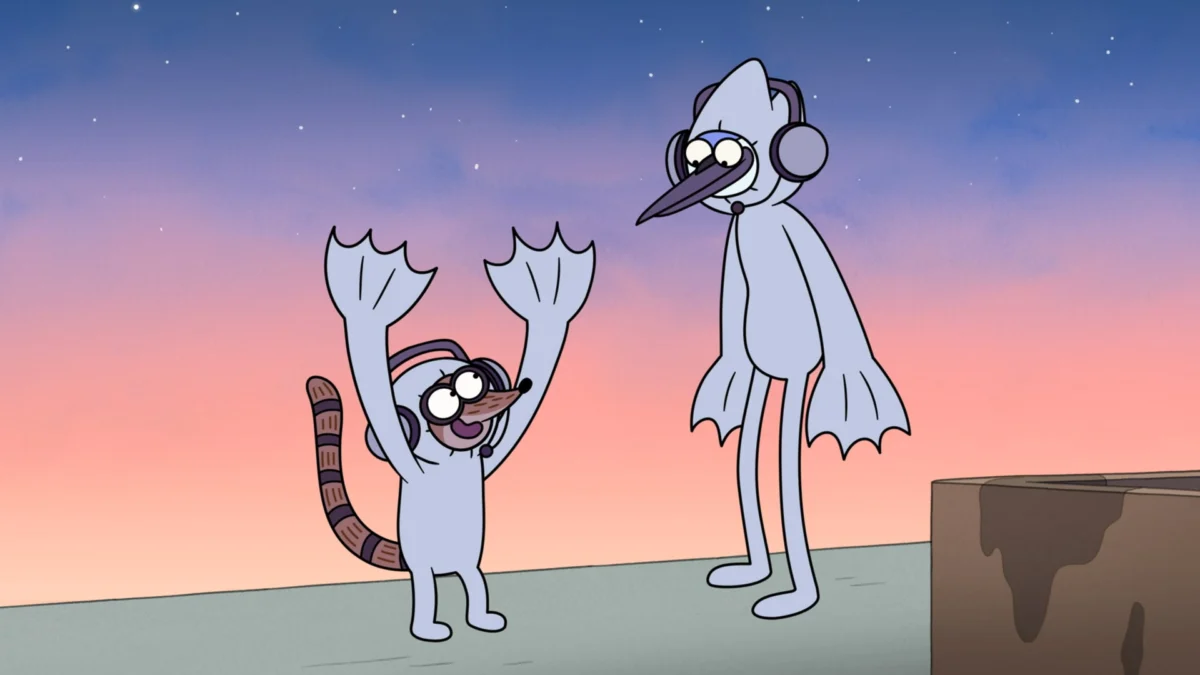
The current television landscape is defined by an insatiable hunger for the past. In an era where the “attention economy” is increasingly fractured, networks and streamers are turning to a well-worn playbook: mining the deep-seated nostalgia of their audiences to revive properties that once dominated the cultural zeitgeist. From the 2026 return of Scrubs to the four-episode limited series revival of Malcolm in the Middle, the industry has made it clear that intellectual property (IP) is safer than original concepts.
However, these revivals often feel less like artistic endeavors and more like cynical exercises in “Member Berries” pandering. Nowhere is this phenomenon more prevalent—or more uniquely structured—than in the world of animation. Unlike live-action dramas, which must contend with the inexorable aging of actors and the narrative complications of time jumps, animation preserves its characters in amber. Voices can be recast, designs can be replicated, and the status quo can be maintained indefinitely. It is the perfect medium for a “no time has passed” revival, but that convenience often masks a fundamental creative dilemma: how do you move forward when you are designed to stand still?
The Anatomy of the Animated Revival
Animation is uniquely susceptible to the lure of the revival. Logistical hurdles that plague live-action reunions—scheduling conflicts, physical aging, or the need to explain a decade of off-screen character development—simply do not exist. In animation, a show can return after a fifteen-year hiatus and, if the creative team desires, act as if the original run ended only last week.
Yet, this ease of return has led to a mixed bag of results. We have seen successes, such as the 2025 King of the Hill revival on Hulu, which managed the delicate task of honoring the show’s original tone while allowing the Hill family to age and evolve. Conversely, we have witnessed disasters, such as the 2016 Powerpuff Girls reboot, which mistakenly believed that meme culture and modern slang were adequate substitutes for sharp, character-driven writing.
The core requirement for a successful revival is not merely the return of familiar faces, but the ability to recapture the "secret sauce" of the original while offering something new. Without that evolution, a revival risks feeling like little more than warmed-over leftovers—a trap that seems to have ensnared the latest entry into this crowded field: Regular Show: The Lost Tapes.

A Case Study: The Return of J.G. Quintel’s Slackers
Premiering in 2010, J.G. Quintel’s Regular Show became a cornerstone of Cartoon Network’s golden age. Over the course of eight seasons and 244 episodes, the show cultivated a unique identity: a stoner comedy masquerading as a children’s show, featuring the exploits of two 20-something groundskeepers, the blue jay Mordecai and the raccoon Rigby.
For many who grew up in that era, Regular Show felt like a secret, slightly edgy viewing experience. It occupied a space similar to The Simpsons or Bill & Ted, balancing mundane, naturalistic sitcom scenarios with reality-bending, surrealist adventures. It won a Primetime Emmy and concluded in 2017 with a poignant finale that saw the lovable, cheerful Pops sacrifice himself to save the universe. It was a perfect, self-contained ending.
Nine years later, the return of the franchise via The Lost Tapes has been met with both excitement and skepticism. As a viewer who was 10 years old when the original series premiered, watching the new iteration is a surreal experience. It is the first time I have felt squarely in the demographic crosshairs of a marketing strategy designed to monetize my childhood.
Chronology of the Release: A Questionable Strategy
The Lost Tapes debuted on May 11, 2026, marking a return to the linear broadcast model of Cartoon Network. The rollout strategy, however, has been met with bewilderment by industry analysts. With a planned 37-episode run for the first season, the show is airing primarily on weeknights on traditional cable—a platform that the show’s core target audience (now in their mid-20s and early 30s) has largely abandoned in favor of streaming services.
While the first episode is currently available to stream for free on YouTube, the wider series remains locked behind a traditional cable wall for the time being, with no concrete date for its arrival on HBO Max or Hulu. This decision feels like a significant miscalculation. By prioritizing a dying medium over the platforms where its adult fanbase actually congregates, the network risks burying the series before it has the chance to find its footing.

Comparison to Past Successes: The Samurai Jack Model
The disconnect becomes even more apparent when comparing The Lost Tapes to one of the most celebrated revivals in animation history: Genndy Tartakovsky’s Samurai Jack (2017).
When Samurai Jack returned to television after a 13-year hiatus, it didn’t try to replicate the original’s constraints. It moved to Adult Swim, allowed for graphic violence, and embraced a more mature, somber tone that reflected the aging of both its protagonist and its audience. It understood that the fans had grown up, and it was willing to grow up with them.
Regular Show: The Lost Tapes, by contrast, remains firmly rooted in the style and tone of the original. There is no shift to a more mature block; there is no aging of the characters. It is, quite literally, "more of the same." While J.G. Quintel has hinted in interviews that the series will eventually feature a "payoff" or a narrative shift, the initial episodes feel like a missed opportunity to meet the audience where they are today.
Creative Implications: Stasis vs. Evolution
The premise of The Lost Tapes—that these are "forgotten" adventures from the original timeline—is a clever narrative trick. By framing the show as a series of VHS tapes that Pops is watching in the afterlife, the creative team avoids the need to disrupt the original show’s canon.
However, this framing device also traps the series in a state of permanent stasis. Because these stories must fit into the established timeline, they cannot meaningfully advance the characters’ lives or force them to confront the realities of growing up. Consequently, the show feels less like a new chapter and more like a collection of outtakes.

The pilot episode, "Fix That Tape," and its follow-up, "Skip’s Luau," suffer from a frantic, uneven pace. They lack the quiet, observational humor that once provided the necessary contrast to the show’s trademark absurdity. While a well-placed joke about Hall & Oates proves that the writers haven’t lost their touch, the overall execution feels clunkier than the original run. The magic of Regular Show was its ability to ground the supernatural in the mundanity of a dead-end job; here, the mundanity is gone, replaced by a desperate attempt to recapture a "vibe" that has already been perfected elsewhere.
The Verdict on Nostalgia-Driven Content
The broader implication of this trend is a creeping stagnation in the creative arts. When television is built on the foundation of existing IP, the incentive to take risks vanishes. Regular Show: The Lost Tapes is not a bad show—it is technically competent and occasionally funny—but it serves as a stark reminder of the limits of nostalgia.
If a show is only ever intended to be a "rerun" of a past success, it ceases to be art and becomes a product. The audience deserves to be challenged, not just reminded of what they liked when they were children. As the industry continues to pump out revivals, it must grapple with the fact that while nostalgia is a powerful marketing tool, it is a poor substitute for innovation.
As it stands, The Lost Tapes has time to pivot. It has 37 episodes to prove that it is more than just a nostalgic echo. But for now, it serves as a cautionary tale: sometimes, the best way to honor a legacy is to leave it exactly where it ended. If the goal of a revival is to bring us back to a place we once loved, it should be careful not to make that place feel like a museum, frozen in time and devoid of the life that made it special in the first place.











No comments yet. Be the first to join the conversation!