

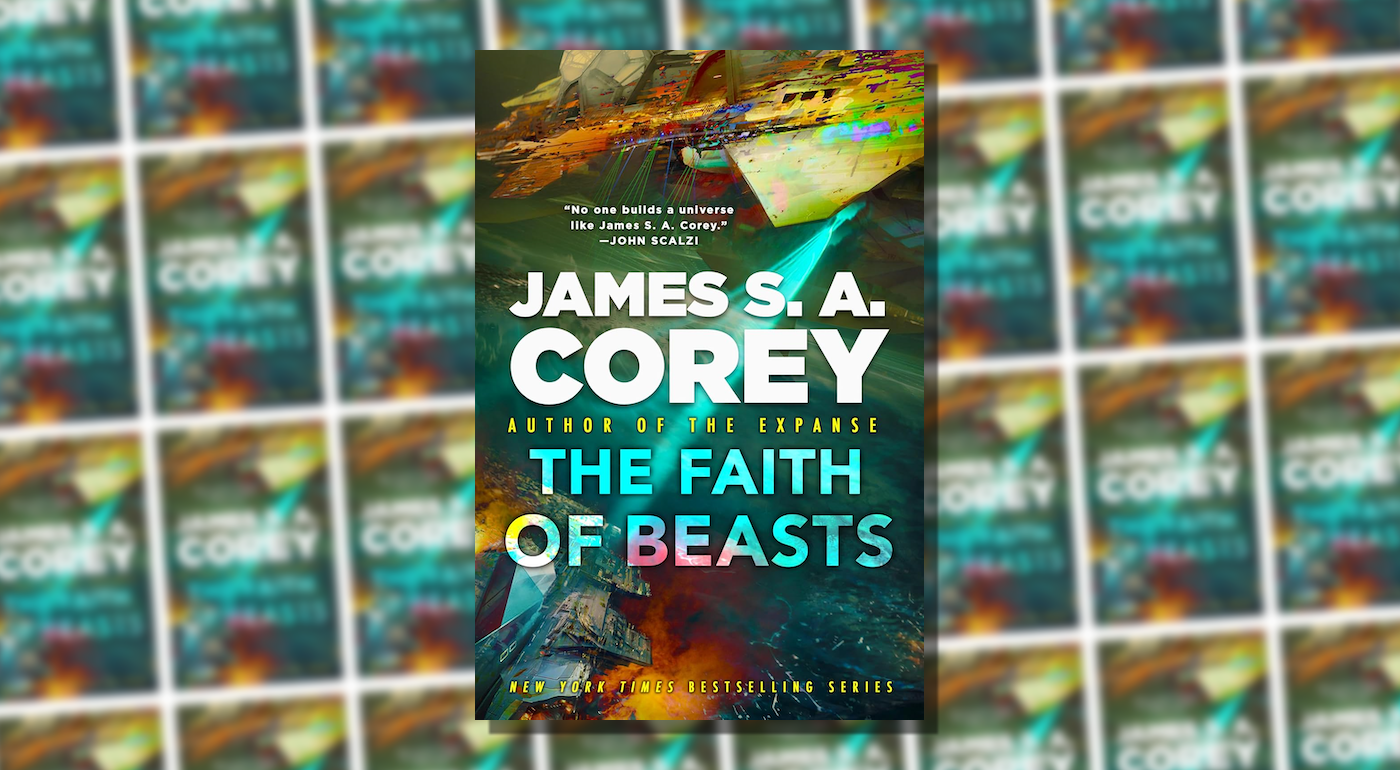
The science fiction landscape has been fundamentally altered by the arrival of the Captive’s War trilogy, a sprawling, ambitious epic from James S.A. Corey—the collective pen name for authors Daniel Abraham and Ty Franck. Following the colossal success of The Expanse, which redefined modern space opera, Corey has turned their attention to a more claustrophobic, yet equally grand, examination of power, hegemony, and the nature of survival. With the release of the second installment, The Faith of Beasts, the trilogy solidifies its status as a profound meditation on the mechanics of resistance under the heel of an indifferent, galaxy-spanning empire.
The Foundations of the Captive’s War
The narrative of the Captive’s War does not begin with the humans who occupy the center of its emotional stakes, but rather with the alien perspective. In the opening of the first novel, The Mercy of Gods, we are introduced to the Carryx, an ancient, hyper-advanced civilization that views the rest of the galaxy as little more than resources to be harvested or "animals" to be managed.
The story centers on a group of humans from the planet Anjiin, a colony whose origins are shrouded in the mists of a forgotten past. When the Carryx arrive, they do not offer diplomacy; they offer total subjugation. The selected group of scientists and researchers from Anjiin are abducted and transported to the Carryx homeworld, forced to work within the confines of a colossal, monolithic tower. Their mandate is simple: solve the complex scientific problems presented to them by their masters, or face absolute extinction.
This premise serves as the crucible for the series. It is a story about the fragility of individual agency when confronted by an adversary that views life through the cold, utilitarian lens of a hive-mind empire.
Chronology: From Abduction to Insurgency
To understand the trajectory of the Captive’s War, one must track the evolution of its central protagonist, Dafyd Alkhor.
- The Initial Displacement: Dafyd begins the series as a low-level research assistant, a man of modest standing caught in the wake of far more brilliant, yet less adaptable, minds.
- The Pivot Point: In The Mercy of Gods, a failed, violent uprising by the captive humans serves as a critical turning point. The rebellion, fueled by raw emotion and a desire for immediate retribution, is brutally suppressed. Dafyd, through a series of calculated, often agonizing choices, finds himself in a position of involuntary leadership. He realizes that the path to human survival lies not in the futile gesture of open combat, but in the "long game"—a strategy of subtle manipulation and endurance.
- The Current Conflict (The Faith of Beasts): The second book picks up the threads of this precarious existence. The survivors are no longer those defined by their immediate impulse toward violence, but rather those who possess the intellectual fortitude to study their captors, adapt to their strange, rigid society, and find avenues for resistance that do not manifest as overt war.
Supporting Data: The Mechanics of the Carryx Empire
The Carryx are among the most chillingly realized antagonists in contemporary literature. Unlike human empires, which are driven by political ambition or ideological fervor, the Carryx are essentially an extension of their Sovran—the absolute center of their civilization.
For the Carryx, there is no distinction between life, war, and service to the state. They possess a terrifying fluidity, physically transforming their bodies to meet the specific requirements of the empire. This biological and societal rigidity is the "brick wall" against which humanity is constantly throwing itself.
The human experience within this system is one of extreme, persistent trauma. In The Faith of Beasts, Corey explores how this trauma is processed. Some characters, such as the writer Uuya Tomos, attempt to preserve human identity through the creation of myth and song, ensuring that future generations born into captivity understand the possibility of a world beyond the Carryx. Others, like the scientists, engage in "genius science," finding small, dangerous cracks in the Carryx’s technological dominance.
Official Perspectives and Thematic Implications
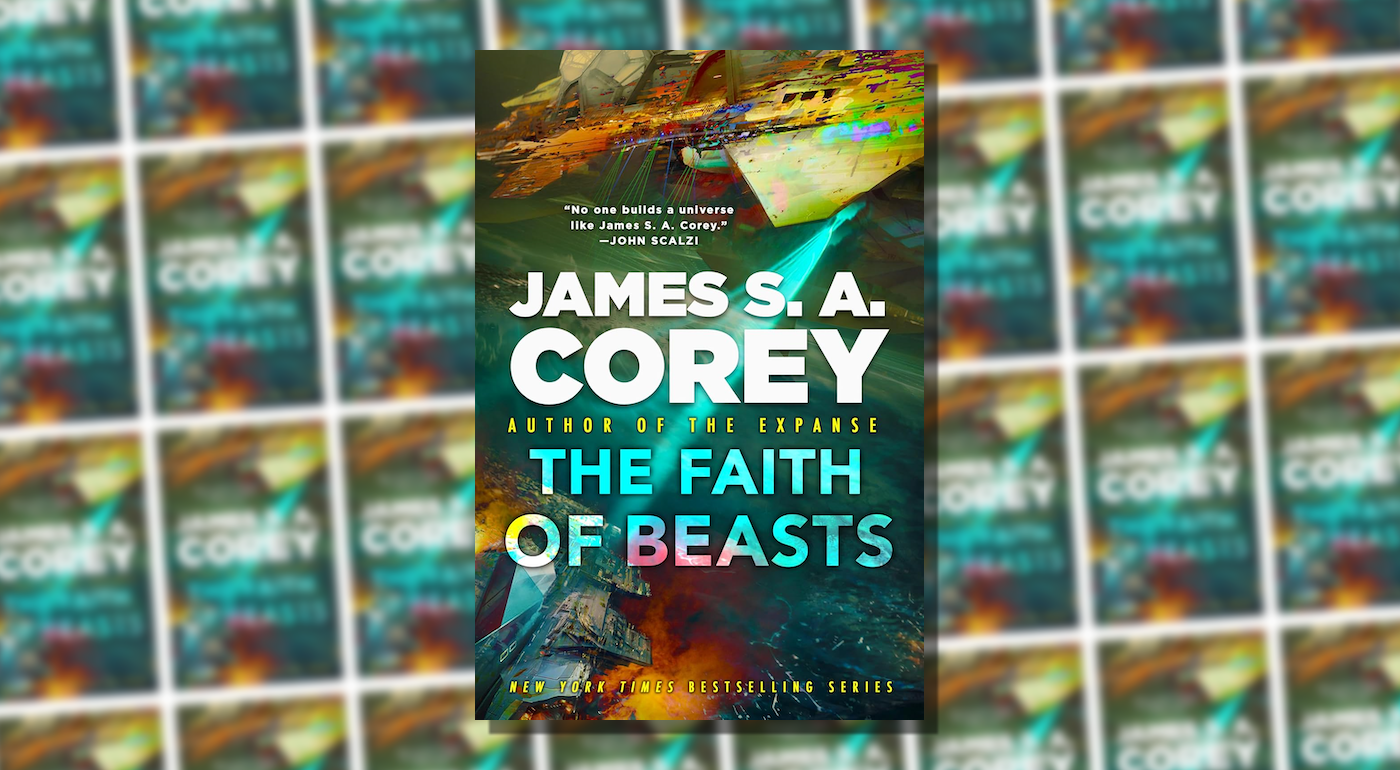
While the authors, writing under the Corey moniker, maintain a distance from the "in-universe" events, the thematic weight of the narrative is clear. The Faith of Beasts is a study in the "politics of the small."
The Illusion of Power
A central question posed by the text is: What does resistance look like when you are the "animal" in the cage? The book argues that freedom is not necessarily a sudden, explosive victory, but a generational struggle. As the character Uuya Tomos observes, "It’s never your responsibility to do something that can’t be done. You do your part, and you help the next generation carry it a little farther." This shift in perspective—from the individual hero who saves the day to the collective, generational effort—is what makes the Captive’s War feel so distinctly radical.
The Role of the "Swarm"
The introduction of the "swarm"—an alien sentience that has been observing humanity on Anjiin—adds a layer of cosmic horror and intrigue. The swarm’s decision to form an attachment to Dafyd Alkhor suggests that humanity’s survival might not be entirely within its own control. The swarm’s ability to subsume human consciousness into a shared mind creates a fascinating parallel to the Carryx, yet one that is driven by curiosity and a strange, alien version of "love" rather than cold administrative duty.
Implications for the Future of the Trilogy
As we move toward the conclusion of the trilogy, the implications of the current trajectory are profound. The humans of Anjiin have begun to adapt to a reality where their oppressors are almost entirely incomprehensible. They are learning to navigate the alien cathedrals of the Carryx, to communicate with bizarre entities like the slug-like "meat-on-sticks," and to reconcile their own need for individual identity with the crushing weight of the Carryx empire.
The brilliance of The Faith of Beasts lies in its restraint. Corey refuses to grant the reader the satisfaction of easy answers or sudden, heroic reversals. Instead, they offer a dense, character-driven examination of how people hold onto their humanity when the very concept of "personhood" is denied to them by the powers that be.
A Hopeful Outlook in a Bleak Setting
Despite the inherent bleakness of the premise, there is a persistent, quiet hope embedded in the narrative. The characters continue to "persist." Whether through humor, the cultivation of intimate relationships, or the clandestine recording of their history, the captives refuse to be erased.
The Captive’s War is a testament to the idea that resistance is not just an act of violence, but an act of will. It is the decision to remain oneself in a system that demands you become a tool. In the hands of Corey, this story is not merely a space opera; it is a profound exploration of human endurance that will likely stand as one of the definitive works of the decade.
Readers who enjoyed the intricate world-building of The Expanse will find much to admire in The Faith of Beasts. It is a slower, more deliberate, and perhaps more intimate book, but one that rewards the reader with a deep, unsettling look at the price of survival and the endurance of the human spirit. As the trilogy progresses, the stakes will undoubtedly rise, but for now, the most compelling conflict remains the internal one: the struggle to maintain one’s integrity in a universe that has long since stopped caring about the individual.












No comments yet. Be the first to join the conversation!