Lina Irawan
In an industry often defined by genre purity, developer Firevolt is attempting a daring experiment in mechanical hybridization. Their upcoming title, KingFish, seeks to bridge the gap between two of gaming’s most disparate demographics: the meticulous city-builder enthusiast and the adrenaline-fueled action-RPG player. By placing both experiences on the back of a colossal, sentient creature—a literal living island—Firevolt is creating a cooperative, roguelike experience that challenges the conventions of management and combat.
Main Facts: A Kingdom Adrift on the Ocean’s Surface
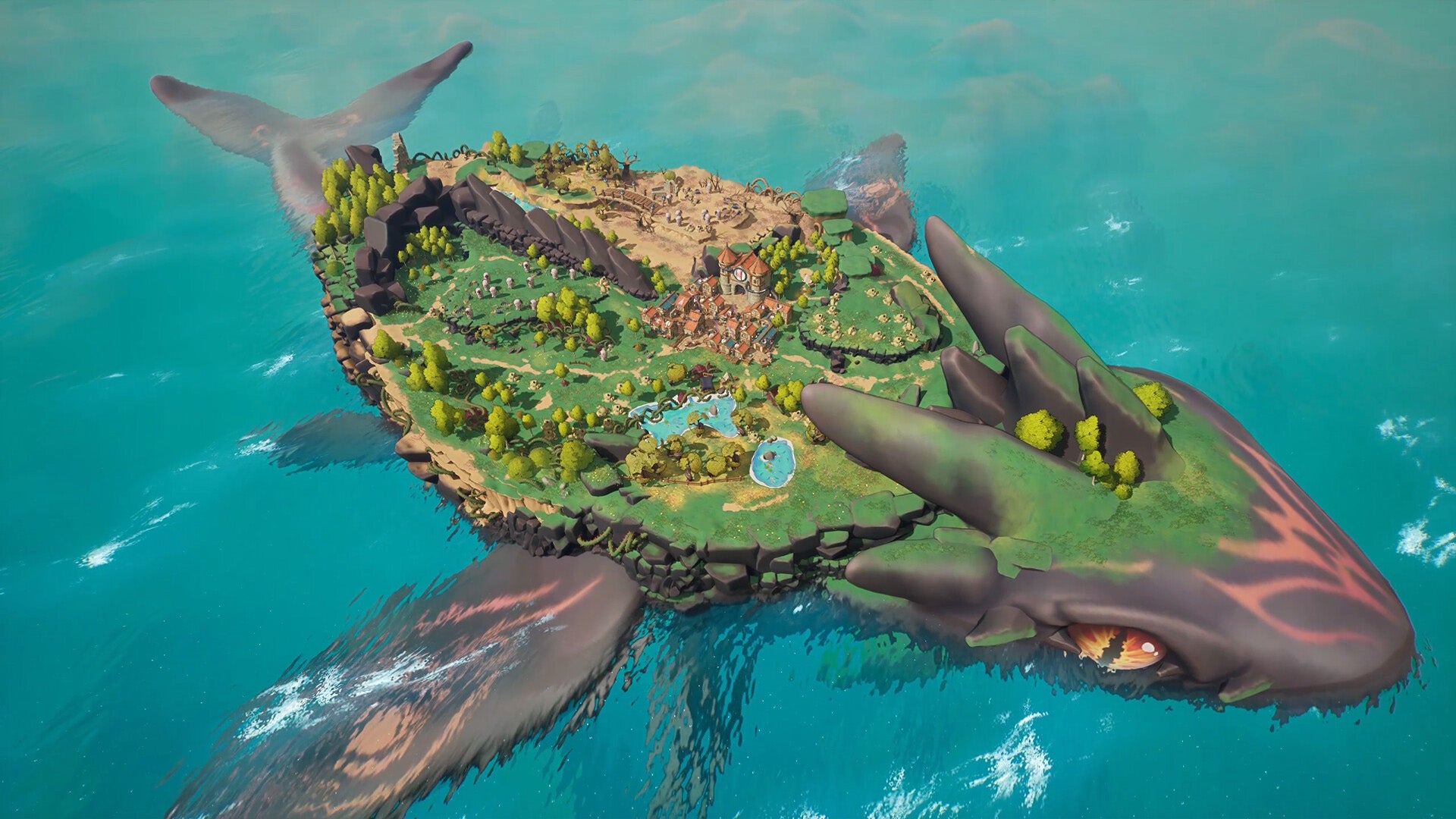
At its core, KingFish is a cooperative experience that casts players into a surreal world where the concept of "land" is synonymous with "creature." The game centers on two distinct roles: the King and the Fish.
The King serves as the boots-on-the-ground protagonist. Tasked with physical labor, the King navigates the back of the giant fish, hacking away at natural resources, engaging in skirmishes with encroaching threats, and managing the immediate needs of a growing population. It is a third-person action experience that demands agility and resourcefulness.
Conversely, the Fish acts as a celestial architect and guardian. This role provides an "eye-in-the-sky" perspective, allowing the player to survey the expansive shell of the beast, plan the placement of structures, and provide aerial support. While the King manages the granular details of resource gathering and defense, the Fish oversees the grand strategic vision, influencing the layout and efficiency of the kingdom.
The title blends these roles with roguelike elements, ensuring that every expedition across the ocean is procedurally generated. With variable maps, randomized threats, and unique character abilities, KingFish aims to ensure that no two playthroughs are identical.
Chronology: From Concept to the 2027 Horizon
The announcement of KingFish has sent ripples through the indie gaming community, marking a significant entry for Firevolt.
- Initial Development: While the specific gestation period remains internal, Firevolt began teasing the concept of "living-island survival" mechanics in early 2024.
- The Reveal Trailer: The official debut trailer, released recently, provided the first concrete look at the game’s verticality and scale. It showcased the King traversing rocky crags on the creature’s back while the Fish-player launched defensive strikes against oceanic monstrosities.
- Steam Page Launch: With the store page now live, the game has officially entered the public consciousness, inviting players to add it to their wishlists.
- Target Release: Firevolt has set a tentative release window for 2027. This long development runway suggests that the studio is prioritizing the complex balancing act required to make two separate gameplay loops feel cohesive.
Supporting Data: The Mechanical Tug-of-War
The most compelling aspect of KingFish lies in its asymmetrical gameplay distribution. While one might assume a clean split between "builder" and "fighter," Firevolt has introduced significant overlap to encourage cooperation.
The King’s Burden
The King’s role is not merely combat-oriented. Because resources are scarce, the King is the primary harvester. This creates a high-stakes rhythm: the King must balance the need to defend the settlement from waves of enemies—incorporating tower defense mechanics—with the necessity of gathering materials to fund construction. The addition of customizable citizens, each with unique utility traits, adds a layer of depth to the management side of the King’s journey.
The Fish’s Oversight
The Fish is not a passive observer. In addition to city planning, the Fish serves as the kingdom’s primary deterrent against large-scale threats. By monitoring the perimeter and utilizing abilities from above, the Fish can thin out enemy ranks before they reach the King, or manipulate the environment to create tactical advantages.
Roguelike Integration
The procedural nature of the game implies a "run-based" structure. Players will likely lose their progress, reset their kingdom, and start anew on a different iteration of the giant fish. This creates a loop of "Build, Defend, Adapt, Perish, Repeat." The success of this model will hinge on how well Firevolt balances the persistence of character upgrades versus the volatility of map generation.
Official Responses and Studio Vision
While Firevolt has remained relatively quiet regarding specific gameplay metrics, their early marketing materials emphasize the "synergy" between players. The studio’s messaging highlights a philosophy of shared ownership. In KingFish, the failure of the King is the failure of the kingdom; the failure of the Fish is the destruction of the King.
"We wanted to make a game where two friends who usually play entirely different genres could find common ground," a representative for Firevolt hinted in early press briefings. The studio is betting that the shared stakes of protecting their mobile home will foster deeper communication and coordination than traditional co-op games.
Implications: The Challenge of Mechanical Cohesion
The ambition of KingFish is undeniably high, but it faces significant design hurdles that industry analysts are watching closely.
The "Underbaked" Risk
The primary concern regarding KingFish is the "jack of all trades, master of none" trap. By splitting development focus between a third-person action game and a top-down city-builder, there is a risk that both halves may feel shallow. Action gamers may find the combat mechanics simplistic compared to dedicated RPGs, while city-builder fans may find the management systems lacking the complexity of titles like Cities: Skylines or Frostpunk.
For KingFish to succeed, Firevolt must ensure that the transition between roles feels seamless. The game must prove that the action influences the building and vice versa in meaningful ways, rather than simply having two players occupy the same screen while performing disparate tasks.
The 2027 Timeline
The three-year window until the projected 2027 release is a double-edged sword. On one hand, it grants Firevolt the time necessary to iterate on the physics of the living island and the complex balancing required for a roguelike of this scale. On the other hand, in the fast-paced world of indie game development, maintaining community interest over such a long duration is a significant challenge.
The Evolution of Co-op
If successful, KingFish could redefine how asymmetric co-op is viewed. Many current co-op games rely on players performing identical or near-identical roles (e.g., Left 4 Dead or Helldivers). KingFish dares to offer a fundamentally different user experience for each player, potentially paving the way for a new sub-genre of "cross-genre cooperative" titles.
Conclusion: A Visionary Concept
KingFish is, at its heart, a project of pure imagination. The image of a kingdom clinging to the back of a leviathan, navigating the vast, hostile ocean, is a powerful hook. While the game currently stands as a promising concept with a long road to completion, it represents the kind of creative risk-taking that keeps the indie scene vibrant.
Whether the final product will manage to unify the disparate worlds of high-octane combat and slow-paced urban planning remains to be seen. However, for those who have ever looked for a reason to bridge the divide between their "hardcore" and "casual" gaming friends, KingFish offers a unique invitation. As we look toward 2027, the gaming world will be watching to see if this giant, living island can support the weight of two very different, but equally ambitious, gameplay experiences.


 Asro
Asro
 Muslim