Iffa Jayyana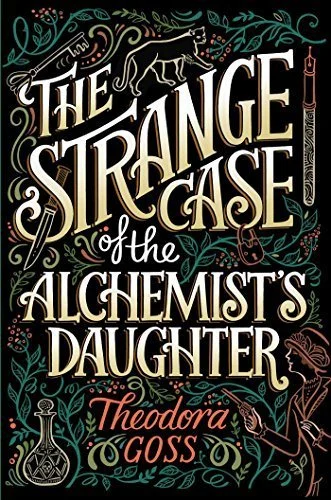
In the landscape of modern literature, few sub-genres are as crowded or as contentious as the "literary remix." When an author chooses to weave together the icons of the Victorian Gothic—Dr. Jekyll, Sherlock Holmes, Frankenstein—the risk of falling into pastiche is immense. Yet, Theodora Goss’s The Strange Case of the Alchemist’s Daughter has emerged as a standout triumph, not merely for its ambition, but for its profound humanity. What begins as a classic detective mystery evolves into a poignant exploration of identity, agency, and the "found family" trope, all set against a backdrop of scientific hubris.
Main Facts: A Victorian Mystery Reimagined
The narrative centers on Mary Jekyll, the daughter of the infamous Dr. Henry Jekyll. Following the death of her parents and the subsequent evaporation of her inheritance, Mary finds herself destitute and alone in London. Her quest for financial stability initially leads her down a dangerous path: pursuing the trail of her father’s former associate, Edward Hyde. A bounty has been placed on Hyde’s head, and Mary, desperate to solve her "immediate financial woes," begins a hunt that will bring her into the orbit of some of the most legendary figures in Western literature.
However, the mystery quickly shifts from a simple hunt for a murderer to an investigation into the lives of the "monsters" themselves. Mary discovers Diana, Hyde’s feral, nun-raised daughter, and soon finds herself allied with a cohort of women created through the grotesque, unethical experimentation of famous men. Among them are Beatrice Rappaccini, Catherine Moreau, and Justine Frankenstein. As they investigate the mysterious "Société des Alchimistes," a clandestine organization of power-crazed scientists, the women realize that they are not just victims of their pasts, but the primary architects of their own future.
Chronology of the Narrative Arc
The progression of the novel is carefully structured to mirror the pacing of classic Victorian detective fiction while subverting the gender dynamics of the era:
- The Inciting Incident: Mary Jekyll, stripped of her social standing and resources, uncovers documents detailing her father’s illicit research, setting her on the trail of Edward Hyde.
- The Meeting of Minds: Mary engages the services of the era’s most celebrated detective, Sherlock Holmes, and his loyal companion, Dr. Watson. This encounter bridges the gap between traditional detective fiction and the fantastical elements of the story.
- The Gathering of the Displaced: Through her investigation, Mary locates the other "monsters." Each woman—Beatrice, Catherine, and Justine—represents a different manifestation of scientific cruelty, yet they find common ground in their shared trauma.
- The Confrontation: The group uncovers the existence of the secret society of scientists. This marks the transition from victims to protagonists, as they decide to take the offensive.
- The Climax: A high-stakes confrontation occurs where the "monsters" must prove their moral superiority over the "monstrous" men who created them, effectively reclaiming their narratives.
Supporting Data: Why the Narrative Works
While the plot is engaging, the success of the novel lies in its execution. As noted by reviewer Julia Kitvaria Sarene, the book’s voice acts as the "glue" that binds disparate literary universes together. The narrative style is reminiscent of Jane Austen—witty, observant, and socially sharp—but applied to a Sherlock Holmes-style procedural.
The Meta-Fictional Device
Perhaps the most daring choice in the book is the use of the fourth wall. The characters within the novel are, in effect, writing the book they are starring in. They argue over the narration, interrupt one another, and quibble about how their own stories should be told. Far from being a distraction, this meta-fictional layer provides a sense of intimacy. It transforms the reader from a passive observer into a confidant, making the characters feel "playful and alive."
Accessible Mythology
A common concern with literary remixes is the requirement for prior knowledge. Does one need to read Mary Shelley, Robert Louis Stevenson, and H.G. Wells to enjoy this book? The answer is a resounding no. Goss crafts the narrative in such a way that the "Easter eggs"—the nods to the source material—are merely bonuses. The emotional stakes are grounded in the present, not in the footnotes of 19th-century literature.
Official Perspectives and Critical Reception
The critical consensus suggests that Goss has achieved something rare: a book that is intellectually stimulating yet deeply "cozy." Julia Kitvaria Sarene describes the reading experience as one that leaves the reader with a "feel-good feeling long after the last page."

The focus on an all-female cast in a Victorian setting is a critical strength. By moving these characters out from the shadows of their famous fathers and creators, the book reclaims the female narrative. These are not merely damsels in distress or secondary creatures; they are the active agents of their own survival. The emphasis on loyalty, warmth, and the creation of a "found family" provides a necessary emotional counterweight to the dark, body-horror themes of the scientific experiments.
Implications: The Future of Feminist Gothic
The Strange Case of the Alchemist’s Daughter is more than just a creative exercise in genre-mashing; it is a commentary on the history of science and the representation of women in literature. By centering the "monsters," Goss forces the reader to question who the real villains of these classic stories actually are.
Challenging the Scientific Canon
The book highlights the "immoral and power-crazed" nature of the classic male scientist archetype. By exploring the victims of these experiments—women who were treated as mere raw material—the novel strips away the romanticism often afforded to the "mad scientist" figure. The implications for the genre are significant: we are seeing a shift toward "reclaimed narratives," where the silence of the past is being replaced by the voices of those who were silenced.
The Power of "Found Family"
In a world that is often fragmented, the success of this novel highlights a growing reader appetite for stories about chosen kinship. The characters in the book support one another, argue, and ultimately build a unit that is stronger than the institutions that tried to destroy them. This shift toward themes of communal resilience, rather than solitary heroism, suggests that the future of Gothic fantasy may be leaning toward the hopeful and the interconnected.
Conclusion
Theodora Goss has managed to blend the grit of Victorian horror with the warmth of a character-driven drama. Whether the reader is a devotee of classic literature looking for a fresh take, or a newcomer seeking a compelling mystery with a heart of gold, the novel delivers on all fronts.
By balancing wit, sharp dialogue, and a profound respect for its cast, the book proves that one does not need to reinvent the wheel to create something extraordinary—one only needs to change the perspective. In the end, the "monsters" are not the ones who were created in laboratories, but the systems that allowed such horrors to exist. The real triumph, however, belongs to the women who survived those systems, and in doing so, created a story worth telling.
For those who enjoy a blend of mystery, historical fiction, and the occasional touch of the uncanny, The Strange Case of the Alchemist’s Daughter stands as a testament to the idea that even in the darkest of tales, there is room for charm, humor, and a sense of belonging. It is, by all accounts, a masterclass in how to honor the classics while successfully moving beyond them.


 Laily UPN
 Lina Irawan