

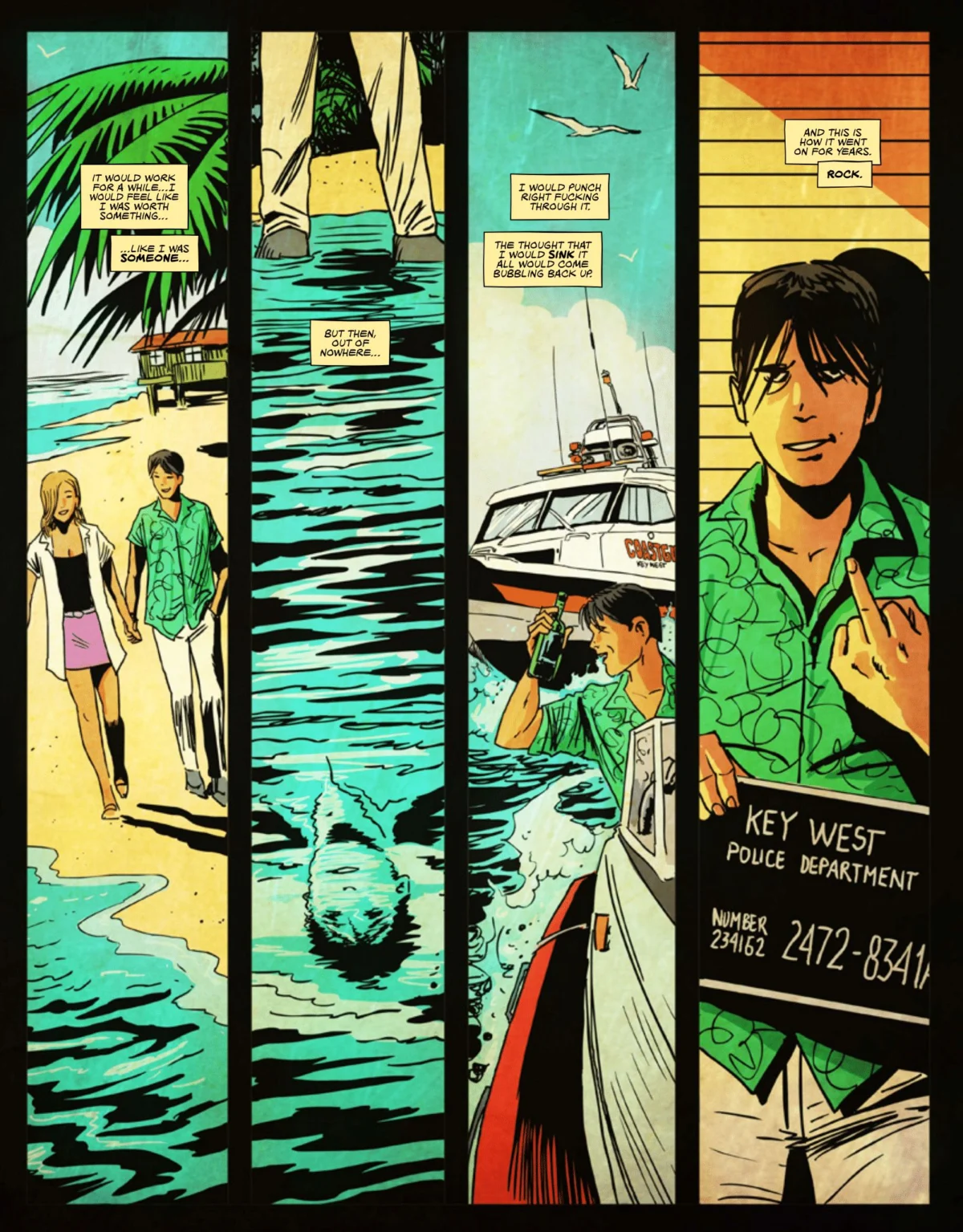
The landscape of modern cosmic horror in comics has been irrevocably altered by the arrival of White Boat, the visceral, pulse-pounding collaboration between industry titan Scott Snyder and acclaimed visual storyteller Francesco Francavilla. Since its debut in early 2024, the series has served as a masterclass in atmospheric tension, blending the existential dread of doomsday cultism with the claustrophobic survival instincts reminiscent of classic creature-feature cinema.
With the release of White Boat #3 on July 8th, the trilogy reaches its harrowing conclusion. For collectors and fans eager to witness the resolution of this island-bound nightmare, the window for action is closing rapidly: local comic shops must finalize their orders by May 18th to secure copies of the finale. As the narrative threads tighten around the protagonist, Lee, readers are prepared for a final act that promises to be as haunting as it is inevitable.
The Genesis of a Cosmic Nightmare
To understand the gravity of the finale, one must revisit the trauma that propelled the narrative forward. The series is anchored by Lee, a man haunted by a singular, life-altering catastrophe: a boat accident that claimed his brother’s life—or so he believed. The revelation that his brother did not perish in the wreckage, but instead exists as a "god-like" entity held in captivity, served as the catalyst for the entire journey.
The island, which initially appeared to be a sanctuary or a scientific research facility, has evolved into a much more sinister character. Throughout the first two issues, Snyder meticulously peeled back the layers of the facility, revealing a group of researchers obsessed with predicting and surviving an impending "great flood" destined to wipe out the majority of humanity. However, as Lee’s investigation deepened, the facade of a benevolent scientific endeavor crumbled. The island is not merely a laboratory; it is a gilded cage—a prison for the divine, the monstrous, and the remnants of a tragedy that has now fully consumed its survivor.
Chronology of the Descent
The trajectory of White Boat has been a swift, brutal descent into madness.

- The Launch (Early 2024): The series introduced the world to the "White Boat" mythos, establishing the dichotomy between the quiet, guilt-ridden life of Lee and the explosive, cosmic reality of the island.
- The Investigation (Issues #1-2): Lee’s arrival on the island and his interactions with the researchers served to build a sense of mounting dread. The parallels to Jurassic Park were intentional; the sense of being an interloper in a place where humanity’s hubris is being tested by forces beyond comprehension became the story’s heartbeat.
- The Finale (Issue #3, July 8th): The final chapter forces a confrontation between Lee and the reality of his brother’s existence. As the researchers continue their experiments, Lee is forced into a desperate, high-stakes gamble. The narrative shifts from observation to survival, as the island’s secrets are laid bare.
Visual Language and Cinematic Influence
One of the most striking aspects of White Boat is how it utilizes visual storytelling to amplify the reader’s anxiety. Francesco Francavilla, known for his noir-inspired aesthetic and bold color palettes, has delivered some of his most evocative work to date. In the final issue, his art acts as a conduit for the story’s oppressive heat and encroaching horror.
The visual cues are intentionally reminiscent of the "Golden Age" of creature cinema. When the giant, strangely colored beings—reminiscent of the Engineers from Ridley Scott’s Prometheus—make their presence known, the scale of the threat becomes palpable. Francavilla’s use of close-ups, particularly during moments of gore or extreme psychological duress, forces the reader into an intimate, uncomfortable proximity with the characters.
The color palette of the final issue—deep, saturated tropical tones—serves a dual purpose. It captures the beauty of the island setting while simultaneously making the environment feel stifling. As the narrative reaches its climax, the art captures the "sweaty" intensity of the situation, ensuring that the reader feels the physical toll the island is taking on those trapped within its borders.
Implications: The Nature of Guilt and Control
At its core, White Boat is an exploration of how we attempt to categorize and control that which we do not understand. The researchers on the island represent the ultimate human failing: the belief that through observation and containment, one can master the forces of nature—or, in this case, the forces of the divine.
The "great flood" serves as a metaphor for the inevitability of change and the futility of human resistance against the cosmic. Lee’s personal journey is inextricably linked to this theme. His guilt over his brother’s "death" was a desire to control a past that had already slipped through his fingers. By confronting his brother, who is now the centerpiece of this cosmic experiment, Lee is forced to confront the fact that he was never in control, neither of his brother’s fate nor his own.

The final issue’s resolution suggests that while some secrets are revealed, the true nature of the universe—and the island—remains fundamentally unknowable. This ambiguity is what gives the story its lingering power. It is not a tale of a tidy resolution; it is a tale of a shattering revelation that leaves the protagonist, and the reader, forever changed.
Expert Analysis: Why This Finale Matters
The collaboration between Snyder and Francavilla has been hailed as one of the most cohesive partnerships in recent independent comics. Snyder’s script provides a grounded, emotional emotional throughline that prevents the high-concept sci-fi elements from feeling cold or detached. Meanwhile, Francavilla’s ability to render the visceral, animalistic nature of the island’s denizens provides the perfect counterweight to Snyder’s dialogue-heavy exploration of guilt.
For retailers and collectors, the importance of White Boat #3 cannot be overstated. As a limited series, its impact is measured by the resonance of its conclusion. The feedback from the initial release cycle suggests that the final act successfully pushes the horror into "overdrive," moving away from the slow-burn suspense of the first two issues into a finale that is both chaotic and profoundly satisfying.
However, some critics have noted that the series’ commitment to mystery means that not every loose end is tied into a neat bow. For readers who prefer explicit explanations for every plot device, the ending may feel abrupt. Yet, for those who value the "cosmic" in cosmic horror—the idea that the universe is vast, uncaring, and largely incomprehensible—the finale is a triumphant success.
Final Thoughts for Collectors
As the clock ticks down toward the May 18th order deadline, the anticipation surrounding White Boat #3 continues to build. The series stands as a testament to the power of the three-act structure in modern graphic storytelling. By keeping the scope focused on the relationship between two brothers, Snyder and Francavilla have managed to make the end of the world feel deeply personal.

Whether you are a fan of high-concept science fiction, visceral horror, or simply the work of two masters at the top of their craft, the finale of White Boat is an essential addition to any collection. It is a story that demands to be read in one sitting, allowing the oppressive atmosphere and the stunning, haunting visuals to wash over you in a single, sustained experience of dread.
The white boat may have been a cage in the beginning, but by the time you reach the final page of issue #3, you will realize that the cage was never just for the brother—it was for everyone who dared to look too closely at the water.









No comments yet. Be the first to join the conversation!