Evan Lee Salim
In the pantheon of American cinema, few figures cast as long a shadow as John Wayne and Clint Eastwood. Representing two distinct eras of the Western genre—the mythic, foundational period and the revisionist, cynical evolution—the two titans often occupied a complex space of mutual admiration and professional skepticism. While they were never close friends and often occupied different political and aesthetic spheres, there was a profound, begrudging respect that spanned decades.
Nowhere was this clearer than in Clint Eastwood’s assessment of John Wayne’s most divisive role: the embittered, racially prejudiced Ethan Edwards in John Ford’s 1956 masterpiece, The Searchers. For Eastwood, a man who would eventually dismantle the "white hat" trope of the traditional Western, Wayne’s performance was not merely a career highlight; it was a daring act of artistic courage.
The Foundation: A Cinematic Lineage
To understand why Eastwood gravitated toward The Searchers, one must look at the lineage of the Western hero. When Eastwood first broke through as the lanky, laconic Rowdy Yates on the television series Rawhide, he was stepping into a mold carved by the pioneers before him. As noted in Scott Eyman’s definitive biography, John Wayne: The Life and Legend, Eastwood’s early work was heavily informed by the archetypes established by Wayne and Montgomery Clift in Howard Hawks’ Red River (1948).
Eastwood, ever the student of film history, recognized the complexity in that performance. In the 1970s, during a series of interviews with Paul Nelson later collected in Conversations with Clint, Eastwood spoke candidly about his predecessor. "John Wayne in his day, one of his better roles was Red River," Eastwood remarked. "Where he played a guy who had many faults."
This acknowledgment of "faults" is crucial. When Eastwood transitioned into his iconic "Man with No Name" persona in Sergio Leone’s Dollars trilogy, he was refining the concept of the flawed protagonist. In fact, his character’s moniker was a deliberate nod to the Ringo Kid, Wayne’s breakout character in the 1939 classic Stagecoach. Eastwood and Wayne were inextricably linked by a shared evolution; both men understood that the American West was not a place of pure, untainted virtue, but a landscape forged in blood, grit, and moral ambiguity.
A Study in Complexity: The Brilliance of Ethan Edwards
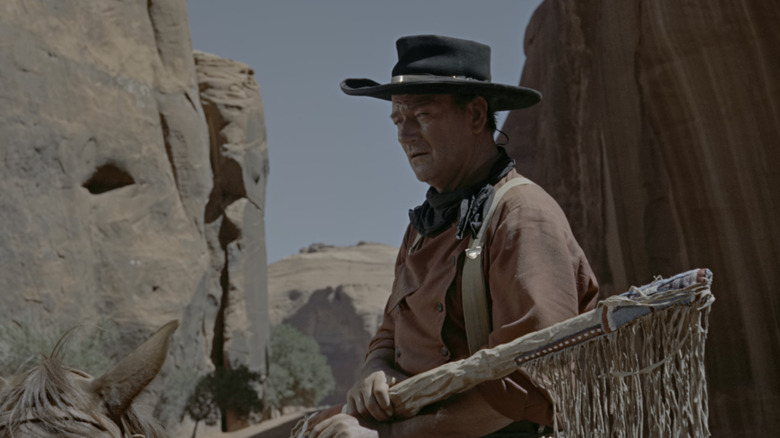
In 1956, the creative partnership of director John Ford and John Wayne reached its zenith with The Searchers. The film follows Ethan Edwards, a Confederate veteran who returns home to Texas only to embark on a multi-year odyssey to rescue his niece, Debbie, from the Comanches who slaughtered his family.
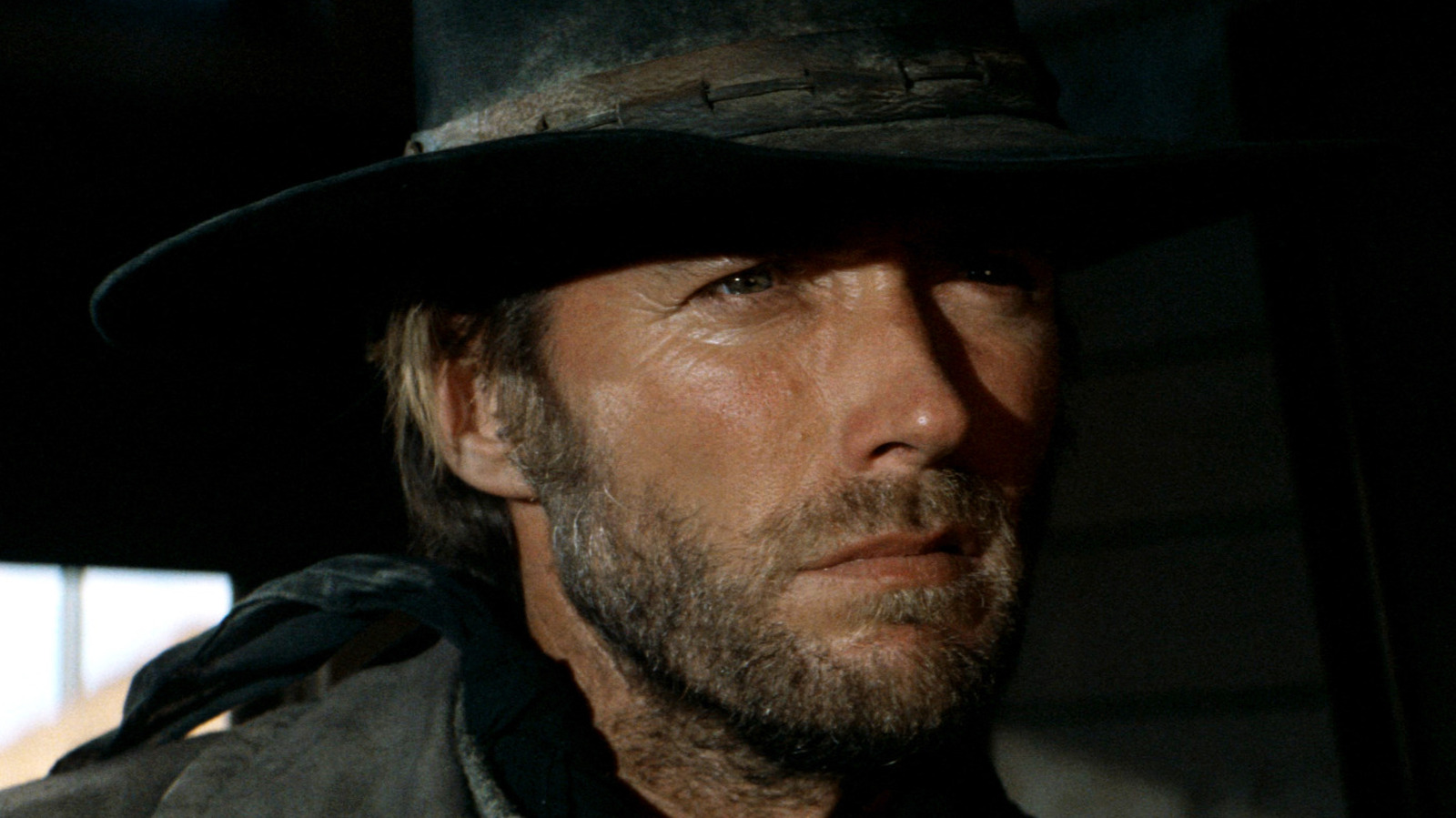
For modern audiences, The Searchers is a polarizing piece of art. For 1950s audiences, it was a seismic shift in how the Western hero was portrayed. Eastwood, viewing the film through the eyes of a fellow director and actor, saw the sheer bravery required to inhabit a character so profoundly unlikable.
In an interview with Film Comment, Eastwood highlighted a pivotal, haunting scene where Edwards returns from discovering the brutal fate of his niece’s sister. When asked about the moment where Wayne simply utters, "Never ask me what I saw," Eastwood’s admiration was palpable.
"That’s one of his brilliant performances and brave, because he wasn’t afraid to play the flat-out racism," Eastwood stated. "And when you look at his eyes at that moment you know it wasn’t something good that he saw. And you’d almost resent it if he started explaining it."
For Eastwood, the brilliance lay in the restraint. Wayne did not need to pontificate or moralize; he allowed the character’s internal rot—the all-consuming hatred that fueled his search—to speak for itself. It was a masterclass in "showing, not telling," a philosophy that would define Eastwood’s own directorial career.
The Critical Consensus and the Legacy of Racism
The critical reception of The Searchers has remained remarkably consistent over the decades, though the lens through which it is viewed has sharpened. Roger Ebert, in his "Great Movies" series, captured the essence of the film’s dilemma: "John Ford’s The Searchers contains scenes of magnificence, and one of John Wayne’s best performances. But at its center is a difficult question, because the Wayne character is racist without apology."
Ebert argued that it took immense courage to cast an actor as beloved as John Wayne in a role defined by such toxic prejudice. The heroism of Ethan Edwards is not merely "tainted"; it is fundamentally challenged by his bigotry. The film poses a fundamental question: Can a man who harbors such hatred be a hero?
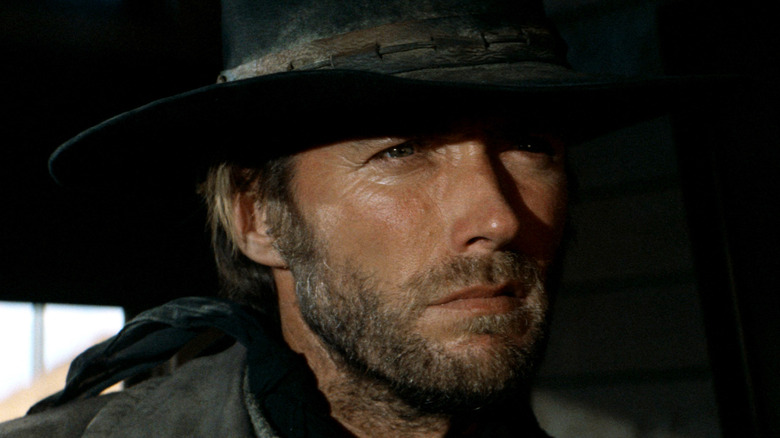
Contemporary viewers often struggle with this. On platforms like Letterboxd, the discourse is frequently heated. Some argue that the film’s failure to fully condemn Edwards’ worldview makes it a dangerous artifact. Others, however, contend that the film is a profound tragedy—a study of a man who is so consumed by the violence of the frontier that he is unable to participate in the society he helped secure. As one critic noted, "Ford doesn’t canonize Ethan Edwards: He showcases him as a tragic figure, necessary to found a world to which he can no longer belong."
The Man Behind the Legend
It is impossible to discuss the character of Ethan Edwards without addressing the views of the man who played him. John Wayne’s 1971 interview with Playboy remains a flashpoint for historians, as the actor articulated views on race and the Civil Rights movement that are widely viewed as abhorrent today.
However, Eastwood’s appreciation for the performance in The Searchers serves as an interesting differentiator. Eastwood recognized that acting is the art of portraying a character, not necessarily endorsing them. The fact that other Westerns of that era often featured racist characters without any attempt at irony or interrogation suggests that The Searchers was doing something fundamentally different. It was an investigation into the psychological toll of hatred, not a celebration of it.
Eastwood’s praise suggests that he saw in Wayne the willingness to hold up a mirror to the darker side of American history. While Wayne the man may have held beliefs that align with the character, the performance itself serves as a chilling portrait of a man destroyed by his own convictions.
The Implications for Modern Westerns
The influence of The Searchers on the genre is immeasurable, and its legacy continues to shape how modern filmmakers approach the Western. Clint Eastwood’s own directorial efforts—such as Unforgiven (1992)—are the direct descendants of the path paved by Ford and Wayne.
Unforgiven deconstructs the myth of the gunslinger, stripping away the romanticism to reveal the trauma, regret, and lingering malice that haunt those who live by the gun. When Eastwood speaks of the "bravery" in Wayne’s performance, he is speaking about the willingness to break the icon. To be a "legend" and yet play a man whose soul is blackened by his own prejudices is a high-wire act that few actors possess the stature to attempt.
Conclusion: A Mutual Respect Across Time
Clint Eastwood and John Wayne represented the evolution of the American spirit in cinema. Wayne was the iron-willed pillar of a nation finding its footing, while Eastwood became the disillusioned observer who arrived to question what that footing was built upon.
That Eastwood, the man who brought the "revisionist" Western into the mainstream, would look back at the "traditional" Western icon and find a moment of such intense artistic honesty in The Searchers is a testament to the power of the film. It reminds us that cinema is at its best when it does not shy away from the difficult, the uncomfortable, and the deeply human failures of its protagonists.
In the eyes of Clint Eastwood, John Wayne’s portrayal of Ethan Edwards wasn’t just a performance—it was a mirror held up to the American psyche, reflecting both the courage required to survive the frontier and the devastating cost of the hatred that traveled alongside it. It remains a definitive moment in film history, bridging the gap between two legends and defining the complexity of the genre they both helped shape.


 Layla Zulfa
 Ammar Sabilarrohman