

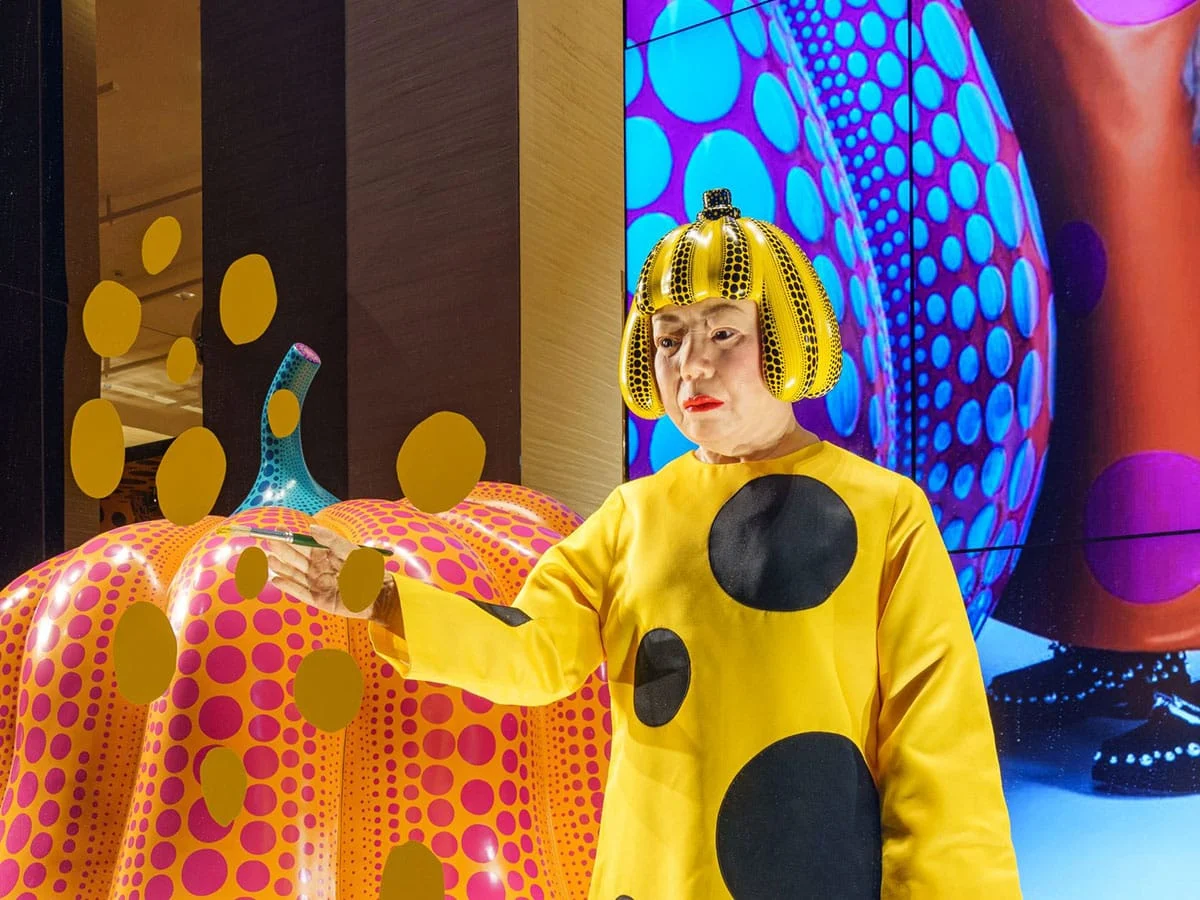
In the heart of Tokyo’s fashionable Shibuya Ward, the Louis Vuitton Omotesando flagship store has become the epicenter of a global cultural intersection where high fashion meets avant-garde robotics. Marking a decade since their inaugural 2012 collaboration, Louis Vuitton has reunited with the legendary Japanese artist Yayoi Kusama to unveil a collection that transcends the traditional boundaries of retail. Central to this celebration is a hyper-realistic, life-sized humanoid robot modeled after the 93-year-old artist herself—a spectacle that has captivated global audiences from Paris to New York and has now returned to the artist’s home turf in Japan.
The Main Facts: A Robotic Manifestation of Art
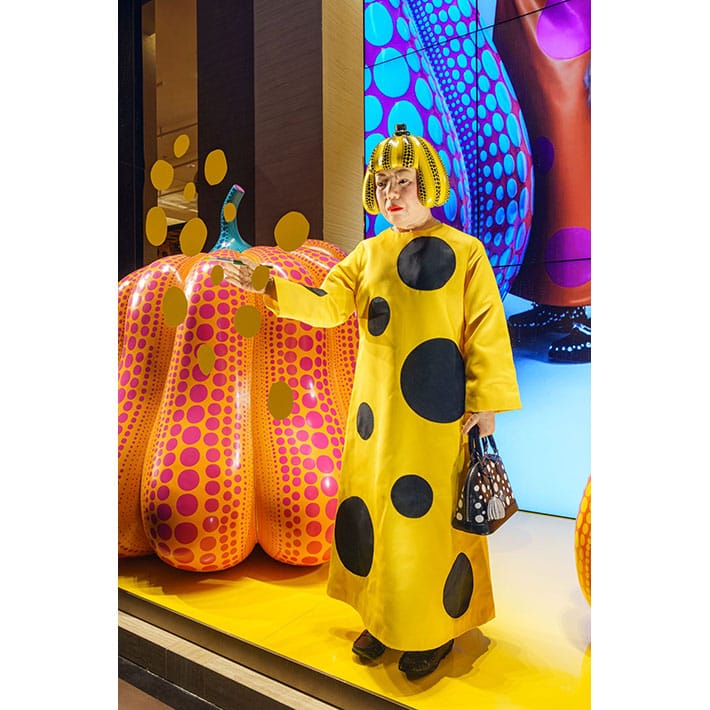
The installation at the Omotesando store is not merely a window display; it is a technological marvel that blurs the lines between human artifice and digital animation. Standing over six feet tall, the animatronic Yayoi Kusama serves as the centerpiece of a sprawling visual marketing campaign. The robot is engineered with sophisticated sensors that allow it to interact with its environment, tracking the movement of passersby on the street.
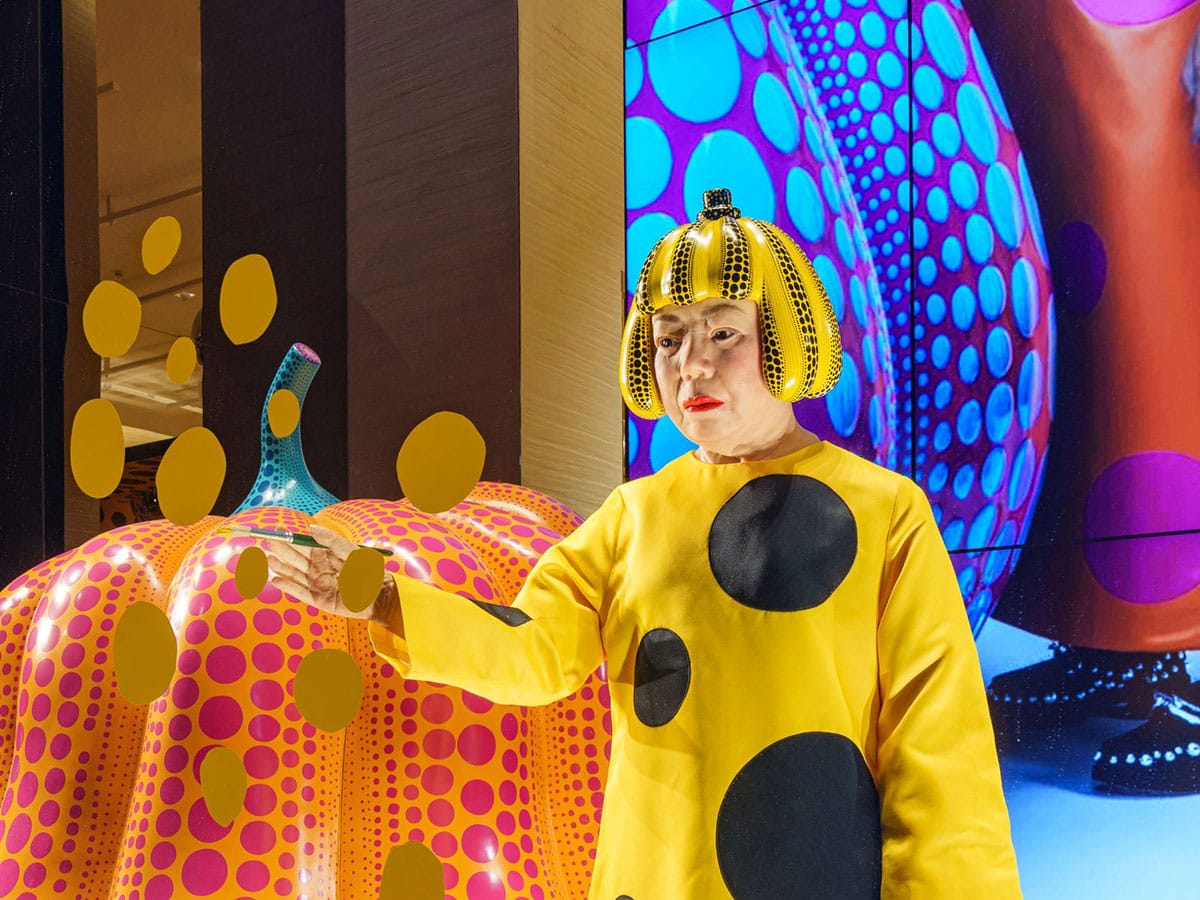
Equipped with a paintbrush in its right hand, the figure performs a rhythmic, hypnotic motion, meticulously applying its signature polka dots onto the glass of the display window. The complexity of the robot’s facial expressions—which include synchronized blinking, subtle lip movements, and a gentle, uncanny smile directed at onlookers—has been described by many as a masterful traversal of the "uncanny valley." By marrying the traditional aesthetic of Kusama’s dot-obsessed world with the cold, precise mechanics of modern robotics, Louis Vuitton has successfully turned a retail storefront into a living museum.
Chronology: A Decade of Dots
To understand the weight of this collaboration, one must look back at the historical trajectory of the partnership.
2012: The Foundation
Under the creative direction of Marc Jacobs, Louis Vuitton first approached Yayoi Kusama to infuse the brand’s classic luxury aesthetic with her radical, repetitive motifs. The 2012 collection, defined by vibrant polka-dot leather goods and accessories, was a watershed moment for luxury-art collaborations, signaling that the house of Louis Vuitton was ready to embrace the chaotic energy of contemporary avant-garde art.
2022-2023: The 10th Anniversary Revival
In late 2022, Louis Vuitton announced a massive, multi-city takeover to commemorate the 10th anniversary of the partnership. This second act was far more ambitious than the first, utilizing cutting-edge technology to bring the artist’s personality to the forefront.
The Global Tour
Before its arrival in Tokyo, the animatronic Kusama toured the fashion capitals of the world. From the Champs-Élysées in Paris to Fifth Avenue in New York and Bond Street in London, the robot became a viral sensation. Social media platforms, particularly TikTok and Instagram, were flooded with clips of the "robotic artist" at work, generating millions of impressions and cementing the campaign as one of the most successful digital-physical marketing bridges in modern luxury history.
January 2023: The Homecoming
The installation’s arrival in Omotesando represents a "homecoming." For the Japanese public, seeing the nation’s most famous living artist represented by a high-tech automaton at the storefront of one of the world’s most prestigious luxury brands was a moment of national pride and curiosity.
Supporting Data: The Anatomy of a Luxury Takeover
The scale of the "Louis Vuitton x Yayoi Kusama" collection is unprecedented. The current retail offering encompasses a vast range of items, including:
- Leather Goods: Iconic bags such as the Speedy, Keepall, and Neverfull, reinterpreted with Kusama’s "Painted Dots," "Metal Dots," and "Infinity Nets."
- Ready-to-Wear: Clothing that utilizes digital printing technology to replicate the intricate, hand-painted texture of Kusama’s canvases.
- Accessories: From silk scarves to high-end eyewear, every piece is designed to be a wearable extension of the artist’s philosophy—a belief that art should permeate every aspect of existence, including the clothes we wear.
Market analysts have noted that this collaboration is more than just a seasonal product drop; it is a masterclass in brand storytelling. By deploying the robotic installation, Louis Vuitton has successfully transitioned from "selling luxury" to "selling an experience." Foot traffic at the Omotesando location increased significantly following the installation of the robot, demonstrating that immersive, technologically-driven retail environments remain the most effective antidote to the decline of physical shopping in the e-commerce era.
Official Responses and Creative Vision
While Louis Vuitton has maintained a level of mystery regarding the specific engineering firm responsible for the robot’s internal mechanics, the brand’s creative leadership has been vocal about the purpose behind the installation.
"The goal was never to replicate the artist, but to manifest her creative energy," a Louis Vuitton representative noted during the launch. "Yayoi Kusama has spent decades repeating dots as a way to find her place in the universe. Having a robot perform this action, day and night, in the center of Tokyo, is a tribute to her tireless dedication to her craft."
The artist herself, who resides in a psychiatric facility by choice and has long been a champion of the therapeutic power of art, has remained largely private regarding the robotic replication. However, her team has expressed that the collaboration aligns with her lifelong goal of "self-obliteration"—the idea that by repeating a shape or pattern until it covers everything, the individual eventually merges with the work. In this context, the robot is not a vanity project, but an extension of her artistic philosophy.
Implications: The Future of Luxury Retail
The success of the Louis Vuitton x Yayoi Kusama collaboration carries profound implications for the future of the luxury industry.
1. The Death of Static Retail
Retailers are learning that static window displays are no longer sufficient to capture the attention of a digitally native demographic. The use of animatronics, augmented reality (AR), and interactive displays is the new standard. Louis Vuitton’s decision to invest in a robotic installation proves that the physical store must now function as a stage for performance art.
2. Art as the New Currency
High-end brands are increasingly moving away from pure celebrity endorsements and toward deeper, more meaningful partnerships with the art world. By aligning with a figure as complex and established as Kusama, Louis Vuitton elevates its brand identity from "fashion house" to "cultural institution."
3. The Ethical and Aesthetic Frontier
The use of hyper-realistic humanoid robots raises ethical questions about representation. As these machines become more lifelike, the industry must navigate the balance between awe and discomfort. The "uncanny valley" effect—where the robot is almost human, but not quite—was a deliberate stylistic choice here, perhaps acknowledging that true art, like life, is never perfectly polished or predictable.
4. Globalizing Local Icons
Finally, this campaign demonstrates the power of globalizing local talent. By taking a Japanese artist and showcasing her work with cutting-edge technology in London, Paris, and New York, Louis Vuitton has successfully elevated the stature of contemporary Japanese art to a global audience, proving that luxury fashion can be a vehicle for cultural diplomacy.
Conclusion
The Louis Vuitton Omotesando window is a testament to the fact that when technology meets vision, the results are transformative. As the robotic Yayoi Kusama continues to paint her infinite dots, she invites shoppers not just to purchase a handbag or a scarf, but to step into a universe where the boundaries between human creativity and mechanical precision are erased.
For those visiting Tokyo, the installation serves as a reminder that the world of high fashion is no longer content with being merely ornamental. It aims to be conversational, provocative, and—in the case of the dots that cover the storefront—utterly inescapable. Whether the collection is seen as a commercial success or a piece of performance art, one thing remains certain: Louis Vuitton and Yayoi Kusama have successfully painted their mark on the cultural consciousness of the 21st century.
Reported by the grape Japan editorial staff.












No comments yet. Be the first to join the conversation!