

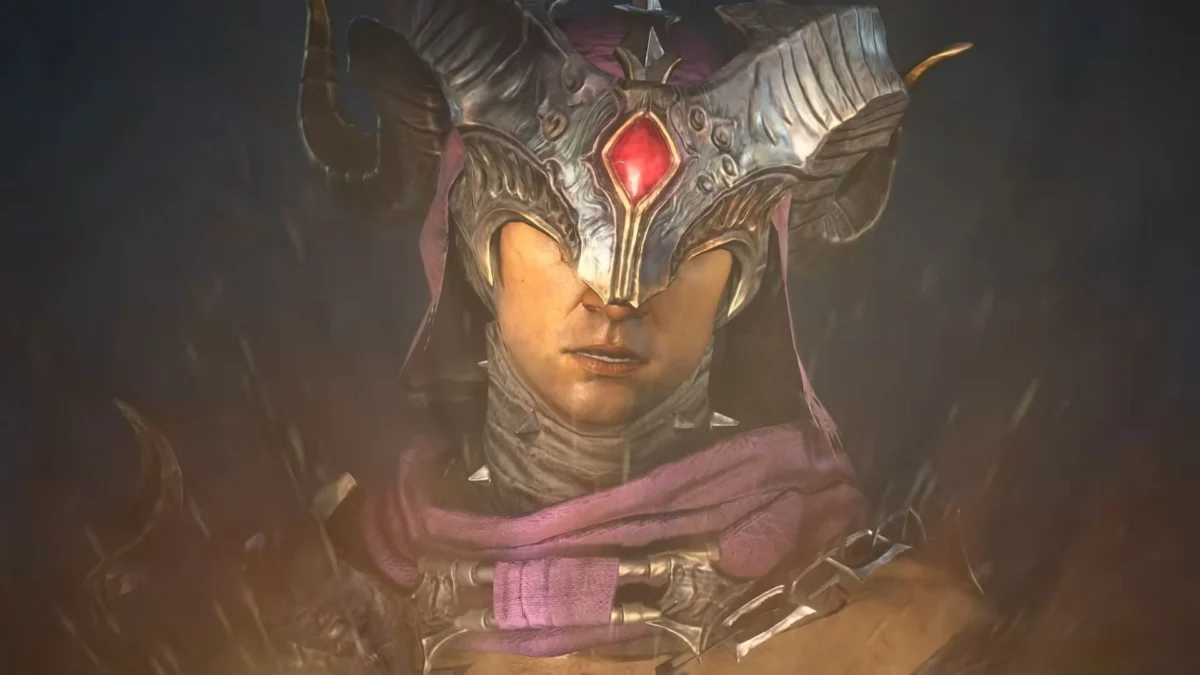
The gaming landscape is often defined by the "launch and pivot" model—a cycle where developers release a base product and subsequently scramble to address player feedback. However, Blizzard Entertainment’s recent release of Diablo 4: Vessel of Hatred serves as a stark departure from this industry norm. By fundamentally overhauling the core systems of the ARPG while simultaneously delivering a massive narrative expansion, the studio has demonstrated a level of long-term planning rarely seen in modern live-service gaming.
Recent revelations have confirmed that the Vessel of Hatred expansion was already in active development prior to the base game’s launch in May 2023. This revelation not only reframes how the public views the evolution of Sanctuary but also highlights the sheer scale of Blizzard’s production pipeline, which has managed to sustain a steady cadence of seasonal updates while building a massive, game-altering expansion in the background.
The Foundations of a New Era: Main Facts
Vessel of Hatred is not merely an add-on; it is a foundational transformation. The expansion introduces the Spiritborn class, the dense jungle region of Nahantu, and a complete re-engineering of the game’s difficulty and leveling systems. When viewed through the lens of its development timeline, the expansion becomes a testament to the "parallel development" strategy—a logistical feat that requires immense resource allocation.
While the base game was being polished for its record-breaking 2023 launch, a dedicated contingent of the Diablo team was already conceptualizing the mechanics of Nahantu and the complexities of the Spiritborn’s martial arts-inspired gameplay. This approach ensures that the "live" game and the "expansion" game do not operate in silos but rather as a unified, evolving entity.
A Chronology of Sustained Development
To understand the significance of this timeline, one must look at the density of content Blizzard has pushed since May 2023. The chronology of Diablo 4 is a marathon of rapid-fire releases:
- May 2023: The launch of Diablo 4, which shattered company records to become the fastest-selling game in Blizzard history.
- July 2023 – Present: A rigorous seasonal cadence (Season of the Malignant, Season of Blood, Season of the Construct, etc.), each bringing new gameplay mechanics, unique items, and quality-of-life adjustments.
- Mid-2023 to 2024: The sustained development of Vessel of Hatred, occurring simultaneously with the "reclamation" of the base game’s endgame, specifically the major itemization overhaul (Loot Reborn) that occurred in Season 4.
- October 2024: The global release of Vessel of Hatred, marking the culmination of roughly two years of intensive, overlapping production cycles.
The fact that these milestones occurred in parallel suggests a bifurcated development structure. Blizzard effectively created a "Live Ops" team focused on the immediate, monthly, and seasonal needs of the player base, while a "Core Expansion" team operated in the shadows, architecting the future of the franchise.
Supporting Data: The Scale of Blizzard’s Operations
The development of Vessel of Hatred highlights the massive human capital Blizzard has poured into the Diablo franchise. Following the acquisition by Microsoft, the studio has been bolstered by a level of resource support that allows for this type of long-term, multi-pronged development.
Estimates regarding the size of the Diablo 4 team have consistently pointed toward a workforce in the hundreds, if not over a thousand when including support studios and contractors. The parallel development of the expansion indicates that Blizzard is operating with the efficiency of a major film studio, where pre-production for sequels begins long before the first entry hits the theaters.
Furthermore, the complexity of the Vessel of Hatred—which includes a new class, a new zone, and a significant continuation of the story involving Mephisto—requires not just developers, but writers, animators, sound engineers, and combat designers who have been sequestered from the main live-service loop to ensure the expansion’s quality did not suffer from the demands of the base game’s maintenance.
Official Responses: Insights from Zaven Haroutunian
Associate Game Director Zaven Haroutunian recently provided clarity on this timeline, confirming that the scope of the project was conceptualized far earlier than players might expect. According to Haroutunian, the sheer scale of the expansion is a reflection of the "size and ambition" that Blizzard has cultivated in the post-launch era.
"It is wild to think about what we’ve achieved," Haroutunian noted in recent discussions regarding the development pipeline. "To manage the base game, the seasonal drops, and the expansion simultaneously is a testament to the team’s growth."
Haroutunian’s comments emphasize that the expansion was never an "afterthought" or a reactive measure to address criticisms of the base game. Rather, it was a proactive roadmap. The "Foundational Shakeup," as described by the development team, was intended to be the ultimate refinement of the game’s systems—taking everything learned during the launch period and baking it into the expansion’s DNA.
The Implications for the ARPG Genre
The strategy employed by Blizzard has several profound implications for the industry:
1. The Death of the "Patch-Work" Expansion
Historically, expansions were often created as a response to the success of a base game. If a game sold well, an expansion was greenlit. Blizzard’s move suggests a shift toward "planned evolution." By developing the expansion before the base game even launched, they are ensuring a consistent, high-fidelity experience that feels cohesive rather than "tacked on."
2. High Bar for Competitive Titles
Other ARPG developers—such as those behind Path of Exile 2 or Last Epoch—are now facing a landscape where the competition is not just releasing a game, but maintaining a constant, high-speed treadmill of content. Blizzard has effectively turned Diablo into an "always-on" service where the expansion is merely the latest, largest update in a never-ending stream of evolution.
3. Player Retention and Fatigue
While this strategy is a boon for dedicated players, it places a heavy burden on the consumer. The sheer volume of changes—the "foundational shakeups"—requires players to constantly relearn the game. This constant state of flux can lead to player fatigue, a risk that Blizzard is clearly aware of but seems willing to take in exchange for long-term engagement.
4. Technical Debt and Stability
Operating multiple dev streams creates a risk of technical debt. When the "Live" team changes a damage formula in Season 4, it must be reconciled with the "Expansion" team’s work in Vessel of Hatred. The successful launch of the expansion, which integrated seamlessly with existing systems, proves that Blizzard has mastered the complex internal communication required to merge these two development pipelines.
Conclusion: The Future of Sanctuary
The revelation that Vessel of Hatred was in development since before May 2023 changes the way we perceive the narrative and mechanical journey of Diablo 4. It transforms the expansion from a "new product" into the "intended vision."
Blizzard has signaled that they are not content with merely supporting Diablo 4; they are intent on constantly reinventing it. As the studio looks toward the future, the integration of new classes, regions, and narrative arcs will likely follow this same pattern of long-lead development. For the fans of the franchise, this means that while the game may change drastically from year to year, the foundation is being built with a level of foresight and investment that is, at the very least, impressive.
As the industry moves toward more "service-oriented" models, Diablo 4 stands as a masterclass in how to manage a massive live-service project. By maintaining a clear distinction between the "now" and the "next," Blizzard has secured its position as the titan of the ARPG genre, proving that the Lord of Hatred wasn’t just a boss in a game—it was the catalyst for a total transformation of the development process itself.











No comments yet. Be the first to join the conversation!