Basiran
By Craig Robinson, Senior Editor
Last Updated: 13/05/2026
The release of League of Legends Patch 26.10 on May 12 was intended to be a routine update, packed with the usual cycle of pro-play adjustments, champion balancing, and minor quality-of-life improvements. However, buried deep within the patch notes was a seemingly innocuous change regarding minion aggro—a technical adjustment to how minions target one another that has sent shockwaves through the professional and high-ELO communities.
While the average player may never have noticed this interaction, it was a cornerstone of advanced wave manipulation. Its removal has sparked a heated debate regarding the balance between game accessibility and the preservation of "esoteric" high-skill mechanics.
The Core Mechanic: What Was Removed?
To understand the current controversy, one must first understand the mechanic that Riot Games has effectively neutralized. In League of Legends, minion behavior is governed by a complex set of "aggro" rules. Most players are familiar with the standard rule: if you attack an enemy champion within range of an enemy minion wave, those minions will immediately switch their focus to you. This is a fundamental concept of laning phase discipline.
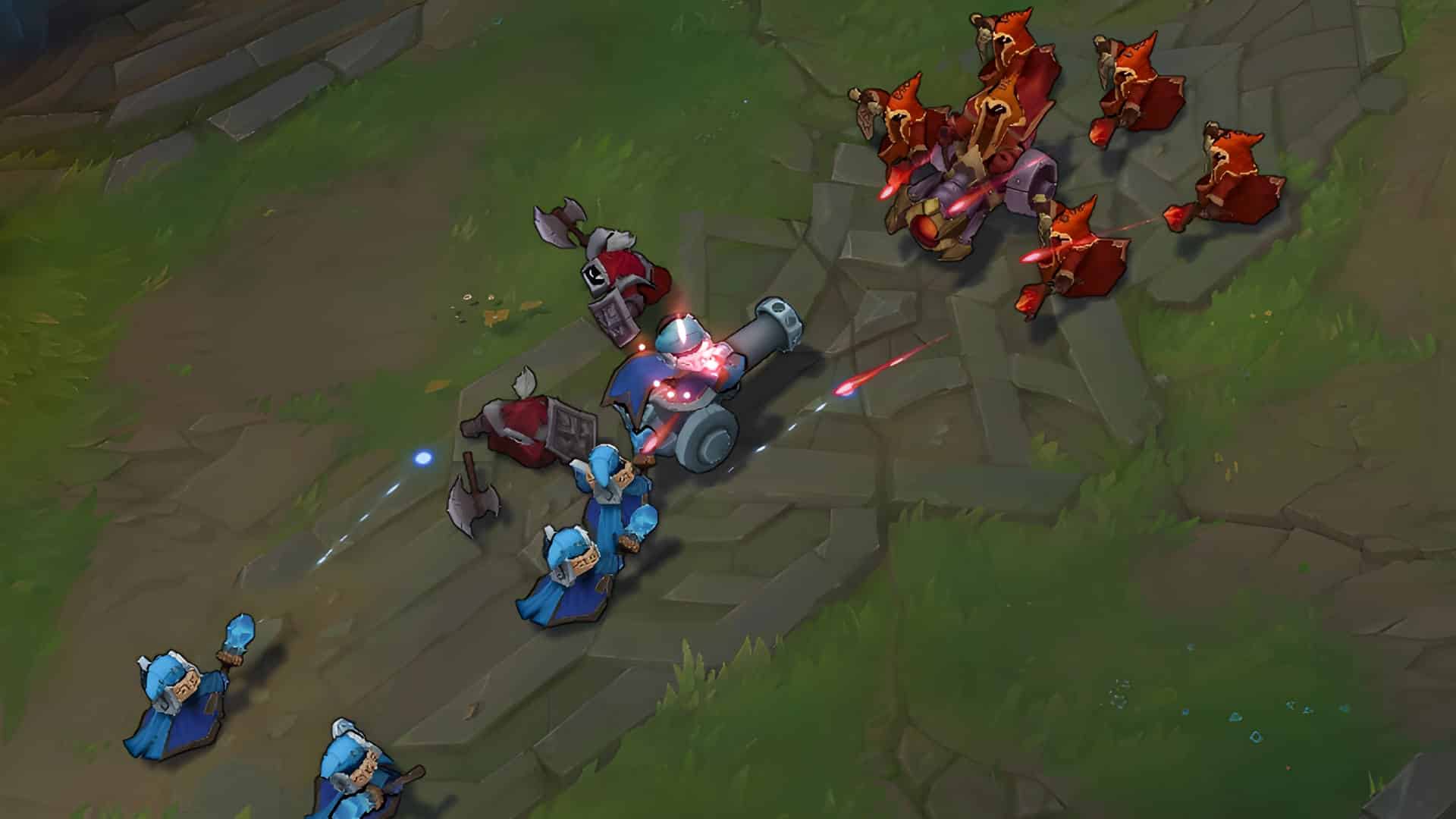
However, the "manipulation" tactic removed in Patch 26.10 was more subtle. Highly skilled players—particularly top laners—had mastered a way to manipulate minion-to-minion targeting. By attacking specific minions, players could "draw" the attention of the enemy wave, dragging them into a concentrated position. This effectively forced an entire minion wave to crash into a single target or a specific point, allowing for perfect wave freezes, rapid slow-pushes, or the denial of enemy farm.
This tactic was particularly devastating in the top lane, where isolated 1v1 matchups make wave management the primary deciding factor of the lane. Ranged top laners and specialists like Rengar mains were the most frequent beneficiaries, using the mechanic to create "kill boxes" where they could harass opponents while remaining safely near their own tower.
A Chronology of the Controversy
The discourse surrounding this change began almost the moment the patch notes were unveiled.
- May 12, 2026: Patch 26.10 goes live. Shortly thereafter, the community begins to dissect the "hidden" changes. Riot Games designer Drew Levin posts a tweet defending the removal, framing it as an unnecessary, esoteric rule that hampered the game’s approachability.
- May 12–13, 2026: High-ELO players and analysts take to social media. The sentiment is sharply divided. Some top-tier players, such as HANCOCK, express frustration, while others point out that the mechanic was so niche that its removal is a net positive for game clarity.
- May 13, 2026: Arnold Hur, CEO of Gen.G, publicly questions the timing of the change. He highlights the impact on professional play, noting that the patch is scheduled to be active for the critical Week 8 and 9 of the competitive season, potentially destabilizing teams fighting for playoff spots.
The Pro-Play Dilemma: Why Timing Matters
The most significant concern voiced by professional organizations is the timing of the implementation. In the world of tier-one esports, teams spend months refining their strategies around the established rules of the game. A change as fundamental as minion aggro—even one that feels "minor" to the developers—can invalidate thousands of hours of practice.
Arnold, the CEO of Gen.G, articulated this concern clearly: "Not a single pro team or player thinks having this change in the middle of the season is a good idea."
His argument centers on the fact that these teams are currently in the heat of a competitive race. Introducing a change that alters how top lane waves are managed during Weeks 8 and 9 of the split—the most critical period for playoff qualification—is, according to him, a massive disruption. It forces players to unlearn years of muscle memory and strategic planning under extreme pressure, which many critics argue is unnecessary for a mechanic that was not a major "pain point" for the general player base.
The Argument for "Accessibility" vs. "Skill Expression"
At the heart of this conflict lies the philosophical divide between Riot’s design team and the game’s most dedicated veterans.
The Developer Perspective: Complexity vs. Clarity
Riot Games has been on a long-term mission to make League of Legends more intuitive. Drew Levin’s commentary on social media highlights the developer’s stance: there is a distinct difference between "skill expression" and "esoteric code abuse." By removing a rule that only a tiny fraction of the global player base understood, Riot believes they are lowering the barrier to entry for new players, making the game more "comprehensible."
The Veteran Perspective: The Erosion of Depth
Conversely, the "hardcore" community views this as the "dumbing down" of the game. For players like HANCOCK, the fact that the mechanic was difficult to learn and master was exactly what made it valuable. To them, the "hidden" nature of the mechanic was a reward for years of study and practice.
The sentiment shared by many high-ELO players is that if something feels "random" to a player, the solution should be to educate the player, not to remove the mechanic. As one commentator put it: "If you don’t understand how the minions work, you are bad at the game. The answer shouldn’t be to change the game to accommodate the uninformed."
Implications for the Future of League of Legends
What does this change mean for the long-term health of the game?
- The Death of Niche Interaction: This change signals that Riot is increasingly prioritizing "game clarity" over "hidden depth." Future patches will likely continue to excise complex, non-obvious interactions in favor of a more standardized experience.
- Professional Scrambling: The immediate impact will be felt in the upcoming weeks of the pro scene. We may see a shift in top lane priority as players adjust to the inability to manipulate wave states as aggressively. Champions that relied on these "aggro-hops" may see a dip in win rates, forcing a meta shift.
- Community Trust: The vocal backlash from figures like the CEO of Gen.G highlights a growing disconnect between the developers and the professional ecosystem. If Riot continues to drop significant mechanical changes mid-season without consulting the players who make their living on the game, they risk further alienating the competitive community.
Final Thoughts: Was it Worth It?
Ultimately, the removal of this minion aggro mechanic acts as a microcosm for the broader challenges facing League of Legends. On one side, we have a developer trying to keep a 17-year-old game accessible for new players. On the other, we have a professional community that treats the game’s code like a piano—an instrument to be mastered.
Whether or not the change is "good" depends entirely on your perspective. To a bronze-tier player, the game is now slightly more predictable. To a professional top laner, the game has just lost a layer of tactical nuance that separated the elite from the merely good.
One thing is certain: as League of Legends continues to age, these moments of friction will only become more common. The question for Riot moving forward is not just whether they can change the game, but whether they should do so at the cost of the high-level competitive integrity that built the League of Legends empire in the first place.
For now, players at every level will have to adapt. The "kill boxes" are gone, the waves will crash differently, and the race to adapt in the final weeks of the competitive season is officially on.
If you are interested in the granular details of the changes, the full documentation of Patch 26.10 is available on the official League of Legends website. Stay tuned to Esports News UK for further coverage as the professional meta shifts to accommodate these latest adjustments.


 Nila Kartika Wati
 Muslim