

As artificial intelligence continues its rapid integration into the fabric of the global economy, the video game industry finds itself at a unique crossroads. For developers, publishers, and the millions of players who consume their products, the rise of machine learning, generative art, and automated scripting tools presents a paradox: the promise of unprecedented efficiency versus the existential dread of creative displacement.
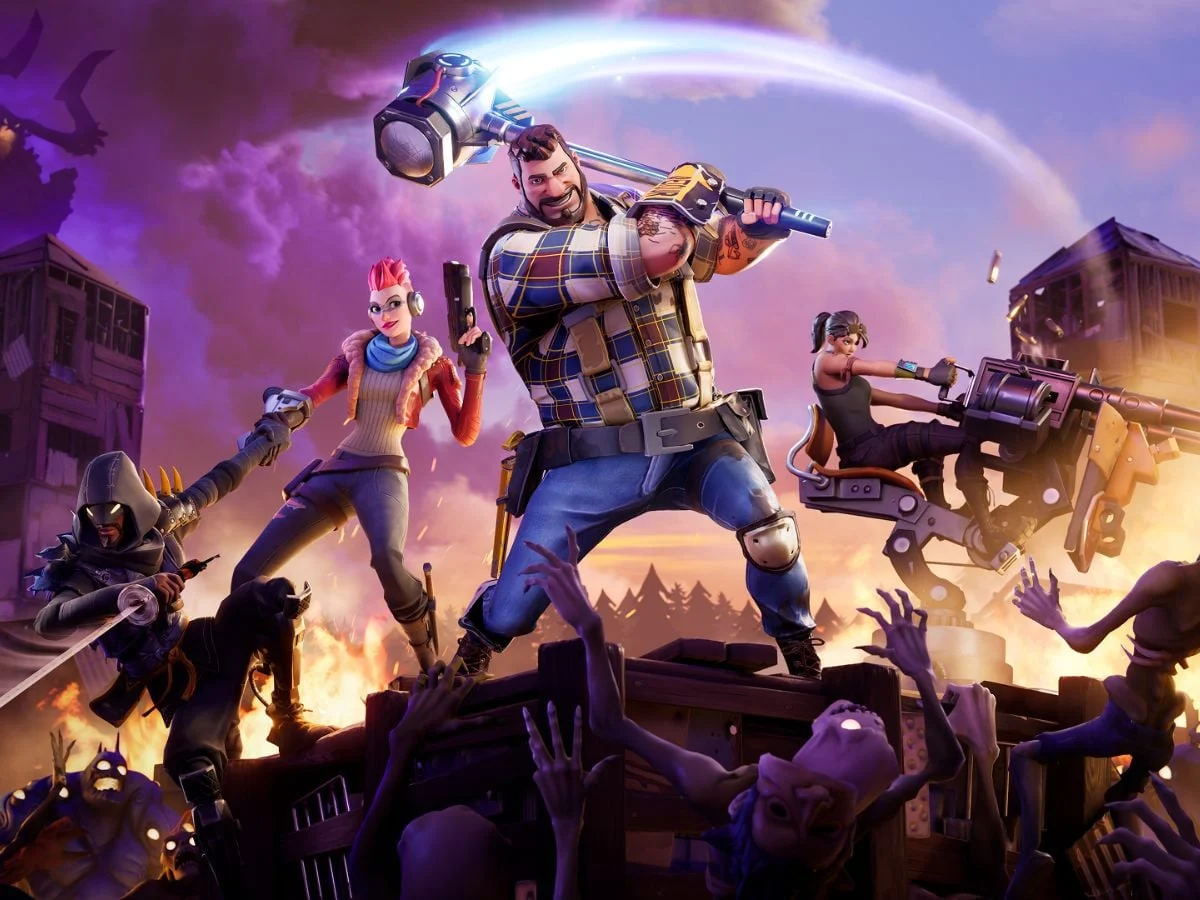
Epic Games, the titan behind Fortnite and the industry-standard Unreal Engine, recently addressed these swirling anxieties. During a panel at Gamescom Latam, the company’s leadership sought to clarify its stance on the controversial technology, framing AI not as an engine for workforce reduction, but as a "productivity multiplier" designed to augment human potential.
The Core Conflict: Efficiency vs. Employment
The apprehension surrounding AI in game development is multifaceted. For years, the industry has grappled with ballooning budgets, protracted development cycles, and the pressure to deliver increasingly lifelike, expansive virtual worlds. Proponents argue that AI can alleviate the "crunch" culture—the practice of forcing developers to work excessive hours to meet deadlines—by automating mundane, repetitive tasks.
Conversely, the creative community fears that these tools serve as a precursor to widespread layoffs. Critics point to the fact that when a company claims it wants to "increase efficiency," the historical precedent in the tech sector often involves shrinking headcount to improve profit margins. This sentiment is amplified by the industry’s recent history of large-scale layoffs, which has left many developers feeling vulnerable to any new technological shift that threatens their specialized roles.

Chronology of the AI Integration Debate
The integration of AI into gaming is not a sudden phenomenon but a gradual evolution that has accelerated significantly over the past 24 months.
- The Early Adoption Phase (2020–2022): Initial forays into AI were largely relegated to backend tasks, such as procedural generation for terrain or testing environments. Companies like Ubisoft and NVIDIA began experimenting with machine learning to optimize rendering and animation.
- The Generative AI Boom (2023): The public release of advanced Large Language Models (LLMs) and image generation tools triggered an industry-wide scramble. Studios began investigating how to use AI for non-player character (NPC) dialogue, texture generation, and rapid prototyping.
- The Public Backlash (Late 2023–Early 2024): A significant cultural resistance emerged, with players voicing concerns over the "soullessness" of AI-generated content and the ethics of training models on artists’ work without compensation or consent.
- The Regulatory and Corporate Pivot (Mid-2024): Large entities like Microsoft began walking back certain AI initiatives, such as the scaling back of the Copilot feature on Xbox consoles, signaling a cautious approach to consumer and developer feedback.
- The Current Stance (Present Day): Major players, including Epic Games, are now actively communicating their "Human-in-the-Loop" strategies, attempting to reassure stakeholders that AI is a tool, not a replacement.
Official Stance: Epic Games’ "Directional" Philosophy
Stephanie Arnette, a senior external development manager for Fortnite at Epic Games, provided a candid look at the company’s internal philosophy during the Gamescom Latam panel. Addressing the "fear of the unknown" directly, she acknowledged the elephant in the room: the potential for job loss.
"I know everyone’s biggest fear is, ‘Oh my god, AI is going to take all our jobs,’" Arnette stated. "That’s not our goal. The goal is to make us more efficient."
Arnette highlighted a critical distinction in how Epic intends to use these tools. She emphasized that the company is maintaining a "closed-loop" approach to AI implementation. "There really is no opening for a partner to try to put their AI info or tooling into ours," she explained. "It would always be from our direction outward, and not the other way around."

This "direction outward" philosophy is crucial. It suggests that Epic aims to retain total control over its intellectual property and creative pipelines, ensuring that third-party AI models cannot influence the core development of Fortnite or the future iterations of the Unreal Engine without explicit, internal supervision. By focusing on internal experimentation, Epic hopes to alleviate concerns regarding data scraping and the unauthorized use of creative assets.
The Economics of Efficiency: Why AI is "Compelling"
To understand why studios are so enamored with AI despite the pushback, one must look at the economics of modern game development. A AAA title today can cost upwards of $200–$300 million and take five to seven years to produce.
Arnette’s argument centers on the time-cost ratio. "If the thing that takes you 10 hours to do suddenly doesn’t take you as long, that’s compelling," she noted. In an industry where developers spend thousands of hours on tasks like retopologizing 3D models, cleaning up animation data, or writing boilerplate code, AI offers a way to reclaim those hours for higher-level creative decision-making.
However, the industry must answer a difficult question: If a task that took 10 hours now takes one, what happens to the remaining nine hours? If the answer is "increased volume of content," the developer workload may remain the same, albeit with higher expectations for scale. If the answer is "fewer staff required," the fears of the creative community will be realized.
Supporting Data and Industry Trends
While Epic Games is vocal about its cautious approach, the broader industry is divided.
- Microsoft and Sony: Both companies have invested heavily in AI infrastructure. While Microsoft has been cautious with consumer-facing AI features like the Xbox Copilot, their investments in Azure and machine learning are foundational to their future cloud-gaming strategy.
- The "Efficiency" Metric: Reports from industry analysts suggest that AI tools could reduce development costs by 10% to 20% over the next five years. However, these same reports warn that such gains could lead to a "hollowing out" of entry-level positions, as junior artists and coders are the ones most likely to be replaced by automated workflows.
- Player Sentiment: According to various surveys conducted by gaming news outlets and market research firms, a majority of the core gaming audience remains skeptical of AI. This skepticism is often rooted in a desire for human-authored narratives and original artistic expression, which they fear will be diluted by algorithmic generation.
Future Implications: A New Era for Developers
The path forward for developers is likely to be one of "upskilling." As AI automates the mechanical aspects of development, the value of the human developer will shift toward "curation" and "direction." Just as the transition from hand-drawn animation to 3D modeling changed the landscape of the industry in the 1990s, the current transition will likely redefine what it means to be a "developer."
The Challenges Ahead
- Ethical Training: Studios must ensure their AI models are trained on ethically sourced, licensed, or proprietary data to avoid legal and moral repercussions.
- Maintaining "Soul": The industry faces the challenge of maintaining the unique "artistic voice" that defines a game, which is difficult to replicate with statistical models.
- Job Security: Studios will need to be transparent about their workforce strategies to avoid alienating their own talent pool.
The Potential Benefits
- Lowering the Barrier to Entry: Smaller, independent studios could leverage AI to create high-fidelity games that were previously only possible for massive corporations.
- Increased Iteration: Developers will be able to test more ideas, leading to more experimental gameplay mechanics.
- Quality of Life: By eliminating tedious, repetitive tasks, developers might be able to focus on the work they find most fulfilling, potentially reducing the industry’s notorious burnout rates.
Conclusion: Balancing Progress and Preservation
Epic Games’ attempt to demystify AI reflects a growing awareness that the industry’s future depends on the trust of both its employees and its audience. By positioning AI as a support tool rather than a replacement, companies are attempting to build a narrative of technological "partnership."
However, the success of this strategy will depend on execution. As the industry continues to search for ways to mitigate rising costs while maintaining high quality, the line between "efficiency" and "replacement" will remain razor-thin. For the foreseeable future, the onus will remain on major studios to demonstrate that when they talk about "efficiency," they mean a better, more sustainable life for their creators—not a leaner bottom line at the expense of human artistry.

The integration of AI in gaming is an inevitability, but the manner of that integration—whether it leads to a renaissance of creative productivity or a devaluation of human labor—is a choice that developers like Epic Games are currently making, one panel and one tool at a time.












No comments yet. Be the first to join the conversation!