Reynand Wu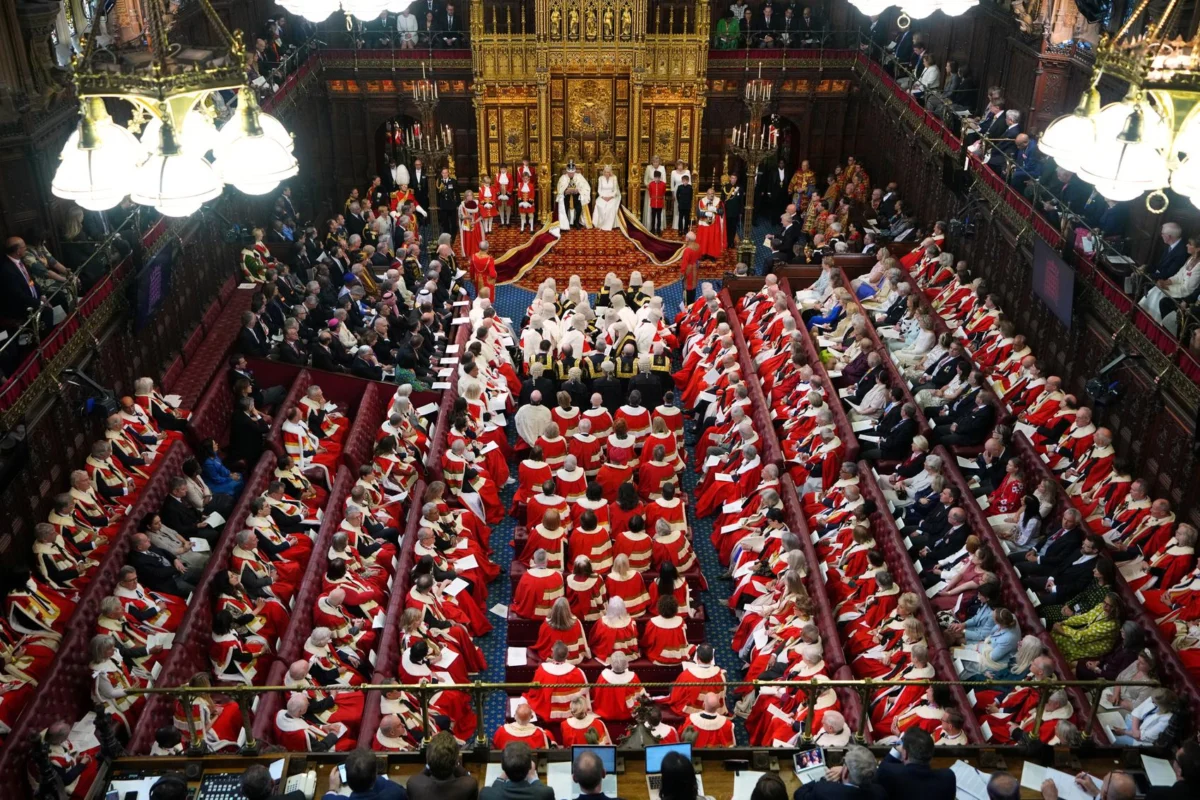
By Political Correspondent
The British government was plunged into a state of acute political uncertainty this Wednesday as Prime Minister Keir Starmer faced the most significant threat to his leadership to date. Just as the administration sought to reset its fractured mandate with the pomp and tradition of the King’s Speech, reports emerged that Health Secretary Wes Streeting was preparing to resign from the cabinet, effectively triggering a formal leadership contest within the Labour Party.
The development marks a stunning escalation in the internal revolt against Mr. Starmer, whose authority has been hemorrhaging following a catastrophic performance in last week’s local and regional elections. As King Charles III stood before the assembled members of Parliament to outline a legislative agenda intended to provide the government with a new sense of purpose, the atmosphere was thick with the scent of political transition rather than renewal.
The Chronology of a Crisis
The unraveling of the government’s carefully choreographed day began early Wednesday morning. While the Prime Minister was focused on the constitutional necessity of the King’s Speech, a report in The Times revealed that Wes Streeting, a key figure in the cabinet and a prominent voice from the right of the Labour Party, was finalizing plans to step down as early as Thursday.
The timing of the leak was tactical, designed to pierce the veil of the day’s "reset" narrative. By midday, as the monarch delivered the government’s legislative program in the House of Lords—a ritual steeped in centuries of history—the focus of the political class had already shifted from the contents of the speech to the potential vacancy at Number 10.
The tension was palpable in the halls of Westminster. During the traditional ceremonial knocking on the door of the House of Commons, a moment usually marked by solemnity, a lawmaker couldn’t resist the irony of the situation, shouting, "Not now, Andy!" in reference to Greater Manchester Mayor Andy Burnham, a perennial leadership hopeful. The nervous laughter that rippled through the chamber underscored the fragility of the Prime Minister’s position.
Supporting Data and Market Reactions
The instability within the Labour Party has had tangible consequences for the British economy. Financial markets, already jittery after a turbulent week, reacted sharply to the news of a potential leadership change. Government borrowing costs, which had surged to multi-decade highs on Tuesday, saw significant volatility throughout Wednesday.
While yields eased slightly from their peak as the day progressed, the sensitivity of the bond markets highlights the high stakes of the current political vacuum. Investors are reportedly wary of the ideological shift that a new leadership race might precipitate. Streeting, seen as a pragmatist and a champion of the party’s right wing, is contrasted sharply with potential left-leaning challengers.
To trigger a formal leadership contest, Streeting requires the support of 81 Labour lawmakers—a high bar, but one that analysts believe is within reach given the growing dissent. Currently, more than 90 Labour MPs have publicly urged Starmer to set a firm timetable for his departure, citing concerns that his continued presence will lead the party toward a crushing defeat in the 2029 national election.
Official Responses and Strategic Silence
The response from Downing Street was one of calculated containment. When questioned about the rumors surrounding Mr. Streeting, a spokesperson for the Prime Minister stated that Starmer retained "full confidence" in his Health Secretary. However, the spokesperson pointedly declined to comment on the nature or content of a private meeting held between the two men at Downing Street earlier that day.
Mr. Streeting’s office maintained a wall of silence, citing the importance of the King’s Speech as the reason for avoiding any public statements. In a subtle, if not entirely clarifying, move, the Health Secretary took to social media platform X later in the day. He posted an update regarding his department’s progress in tackling NHS waiting times, noting, "Lots done, lots to do." The post was widely interpreted as an attempt to project an image of "business as usual," yet it notably failed to address the burgeoning rumors of his resignation.
In the House of Commons, the debate that followed the King’s Speech saw Conservative opposition leader Kemi Badenoch launch a scathing critique of the Prime Minister. Ms. Badenoch characterized Starmer as being "in office but not in power," a sentiment that drew applause from her benches. She directed a sharp barb at Streeting, asking why he was distracted by political maneuvering instead of addressing the crisis in the hospital system.
Starmer attempted to deflect with humor, referring to Ms. Badenoch’s input as a "ray of sunshine" on an otherwise bleak day. However, the levity did little to mask the grim reality facing his administration.
The Contenders and the Ideological Divide
Should a leadership race materialize, the path forward remains complex. The Labour Party is currently divided along ideological lines, and the potential field of candidates reflects this rift.
Wes Streeting, as a proponent of centrist, reformist policies, would likely appeal to the party’s moderate base and nervous financial markets. Conversely, the "soft left" of the party is looking toward figures like Andy Burnham and Angela Rayner. Both, however, face significant obstacles:
- Andy Burnham: Despite his popularity, he currently lacks a seat in the House of Commons, which is a constitutional prerequisite for serving as Prime Minister.
- Angela Rayner: She is still navigating the fallout from tax-related issues that forced her resignation from a previous post last year.
In the event that these two cannot proceed, political insiders point to Ed Miliband, the current Minister for Energy Security and Net Zero, as a potential "unity" candidate for the left. Investors have expressed apprehension regarding such a shift, fearing that a more left-leaning administration might prioritize high-tax, high-spend policies, potentially destabilizing the recovery plan Starmer has spent years attempting to craft.
Implications for the Government Agenda
The irony of the day was not lost on observers. The King’s Speech, which Starmer hoped would signal a new, "activist" era of governance, was largely a compilation of existing policy priorities. These included efforts to stimulate economic growth, enhance national security, and rebuild ties with the European Union.
"Our response this time must and will be different, a complete break," Starmer had promised in his preface to the speech. He framed the world as being "more volatile and dangerous than at any point in our lifetimes," arguing that the government could no longer rely on the status quo.
However, the "complete break" he championed may now be his own. The legislative agenda outlined by King Charles—covering everything from energy security to infrastructure—is currently in a state of suspended animation. If the government falls or a leadership contest consumes the party’s energy, these initiatives are unlikely to reach the statute books.
Conclusion: A Turning Point for Labour
As the sun sets on a day meant to be a fresh start, Keir Starmer finds himself in the eye of a political storm. The ceremony at Buckingham Palace and the traditional carriage procession provided a veneer of stability, but the reality behind the closed doors of Westminster is one of profound instability.
Whether Streeting pulls the trigger on a resignation remains the defining question of the week. If he does, it will not just be the end of Starmer’s premiership; it will signal a fundamental realignment of the Labour Party, one that could define the trajectory of British politics for the remainder of the decade. For now, the Prime Minister remains in office, but the power required to govern is rapidly slipping through his fingers.


 Neng Nana
 Asro
Asro