Nila Kartika Wati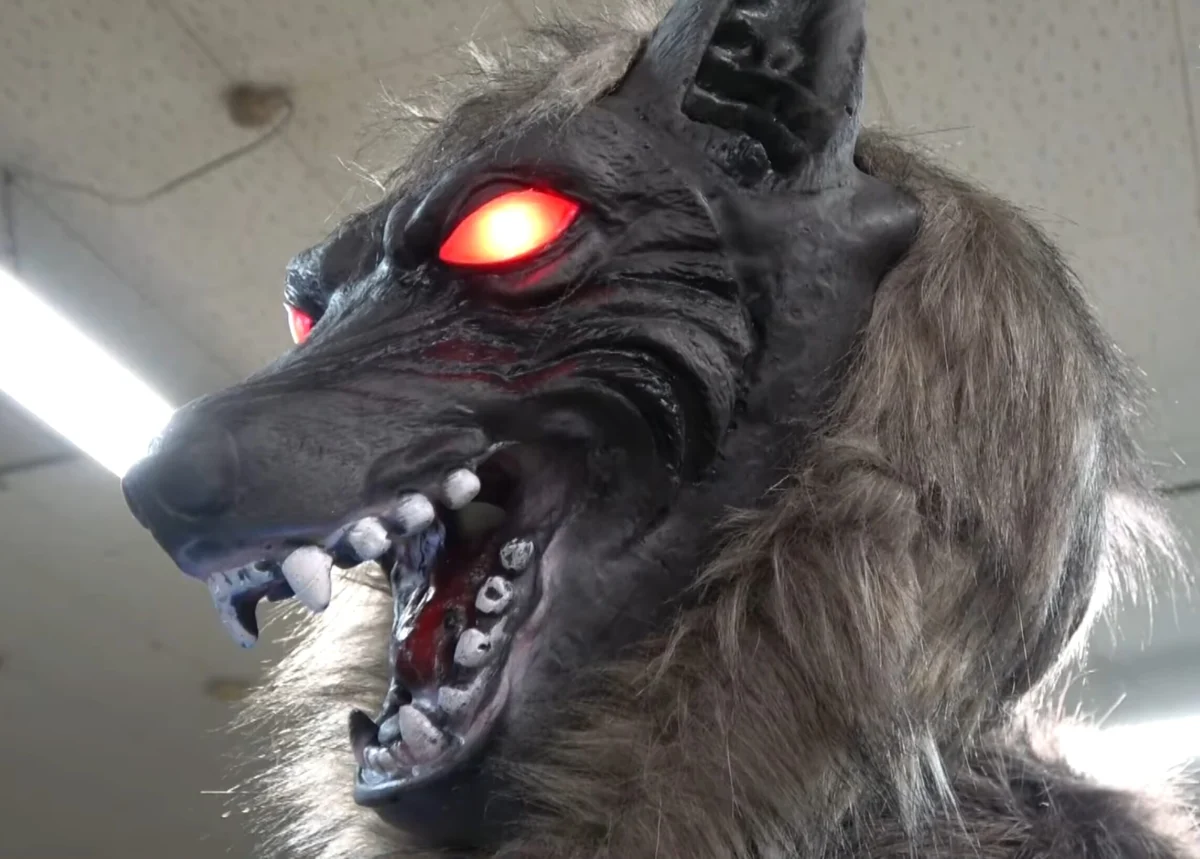
In the quiet, mist-covered valleys of rural Japan, a new kind of guardian has taken up residence. It does not carry a rifle, nor does it require a salary or sleep. Instead, this guardian stands roughly 65 centimeters tall, boasts a coat of realistic synthetic fur, and possesses a pair of glowing red eyes that pierce the darkness of the Japanese wilderness. It is the "Super Monster Wolf," a solar-powered robotic deterrent that has become the unlikely front line in Japan’s escalating battle against an unprecedented surge in bear encounters.
As Japan grapples with a record-shattering increase in Asian black bear sightings and a tragic rise in human-wildlife conflict, the demand for this high-tech scarecrow has surged to historic levels. With over 50,000 sightings recorded in the last fiscal year, the Super Monster Wolf—once considered a niche curiosity—has evolved into a critical tool for survival in the Japanese countryside.
The Genesis of the Super Monster Wolf
The technology behind the Super Monster Wolf is as ingenious as it is unsettling. Developed by Hokkaido-based manufacturing firm Ohta Seiki Co. and introduced in 2016, the device was initially conceptualized as a modern, sustainable alternative to traditional agricultural deterrents like firecrackers, fences, or lethal traps.
The robot operates as an "eco-friendly wildlife repellent." When its sophisticated motion sensors detect movement within its perimeter, the device springs to life. It triggers a multi-sensory assault: its head rotates with predatory precision, its red LED eyes pulse rhythmically, and it emits a cacophony of over 50 "threatening sounds," including synthesized howls and mechanical growls that can be heard up to a kilometer away.
For years, these units were primarily deployed on golf courses to keep deer away or on small-scale farms to protect crops from boars. However, the rapidly shifting ecological landscape of 2026 has transformed the robot from a nuisance-prevention tool into a vital safety asset for rural residents, hikers, and forestry workers.
A Chronology of Crisis: The Road to 2026
The surge in bear activity did not happen overnight; it is the culmination of a multi-year ecological imbalance.
- 2016: Ohta Seiki Co. releases the first iteration of the Super Monster Wolf. The market reaction is cautious, with interest primarily limited to localized agricultural protection.
- 2023: Japan experiences a massive spike in bear sightings, with 24,348 incidents reported. This year marks the beginning of a public realization that the bear population is encroaching deeper into human territory than ever before.
- 2025: The situation reaches a critical breaking point. Data from the Japanese Environment Ministry reveals 50,776 sightings of Asian black bears—a record-shattering figure that doubles the previous high. The year ends with 13 confirmed human fatalities, forcing local governments to rethink their mitigation strategies.
- April 2026: The first fatal attack of the year occurs in Iwate Prefecture. A 55-year-old woman is discovered with fatal injuries consistent with a bear attack, sending shockwaves through the region.
- May 2026: Demand for the Super Monster Wolf reaches a fever pitch. Ohta Seiki reports that it has already received 50 orders in just a few months—an annual volume condensed into a single quarter.
The Data Behind the Danger
The statistics provided by the Environment Ministry paint a grim picture. The surge in sightings is not merely a result of increased reporting; it is indicative of a profound shift in bear behavior and population density.
Experts attribute this phenomenon to two primary factors: a collapse in natural food sources in the mountains—often due to unpredictable weather patterns and poor harvests of acorns and beech nuts—and a burgeoning bear population that has grown emboldened by the lack of traditional prey. As the bears find the forests barren, they are increasingly drawn toward "satoyama"—the borderlands between the wilderness and human settlement—where trash, abandoned orchards, and pet food provide easy calories.
The physical scale of the problem is best illustrated by the encounters themselves. In the spring of 2026, a police officer on a search-and-rescue mission in the mountains was mauled by a 1.3-meter-long bear. The event highlighted the vulnerability of even those trained to operate in the outdoors, necessitating the intervention of hunters to neutralize the animal.
Official Responses and Manufacturing Strains
For Yuji Ohta, president of Ohta Seiki, the sudden fame of his creation has been both a triumph and a logistical nightmare.

"We make them by hand," Ohta remarked in an interview following the May 2026 reports. The artisanal nature of the production process, which prioritizes the durability and realistic appearance of the synthetic fur and the precision of the electronic components, makes scaling up difficult. "We cannot make them fast enough now, and we are asking customers to wait two to three months."
The waitlist is a testament to the desperation felt by rural communities. To date, more than 380 units have been deployed, with a client base that has expanded from solitary farmers to local municipalities, school districts, and outdoor recreation operators. The company is not resting on its laurels, however. Recognizing that static sentinels have limitations, Ohta Seiki is currently prototyping new versions equipped with wheels, allowing the wolves to patrol larger perimeters and respond more dynamically to movement.
Socio-Economic and Ecological Implications
The reliance on robotic wildlife management carries significant implications for Japan’s future.
The Ethical Debate
While the robots are non-lethal, their proliferation has sparked a minor debate among conservationists. Some argue that relying on technology to "scare" bears away is a temporary band-aid that fails to address the root causes of habitat loss and climate change. Furthermore, there is the concern of "habituation"—will the bears eventually learn that the mechanical wolf is a harmless phantom, rendering the technology obsolete?
The Human-Wildlife Interface
Conversely, proponents argue that the Super Monster Wolf provides a necessary buffer in a country where human populations in rural areas are aging. Many elderly residents in Japan’s mountain villages are unable to fend for themselves against apex predators. In this context, the robot provides a vital sense of security, allowing agricultural and daily life to continue in areas that might otherwise be abandoned to the wildlife.
The Future of Rural Safety
The shift toward automated defense signals a broader trend in Japanese infrastructure. As the country faces a shrinking workforce, automation is increasingly filling gaps in public safety and maintenance. The "Super Monster Wolf" is effectively a pilot project for the integration of robotics into rural land management. If successful, it could pave the way for a new generation of autonomous, environmentally conscious guardians designed to monitor everything from crop health to predator migration patterns.
Conclusion: A New Era of Coexistence
The sight of a robotic wolf howling at the moon in a dark Japanese forest is, at first glance, the stuff of science fiction. Yet, as the sun sets over the mountains of Iwate or Hokkaido, the Super Monster Wolf serves as a poignant reminder of the tension between human expansion and the wild.
Japan is currently at a crossroads. The record-breaking bear activity of 2025 and 2026 has proven that traditional methods of wildlife control are insufficient for the modern era. While the Super Monster Wolf is not a panacea—it cannot restore lost forest habitats or reverse the climate trends driving bears toward cities—it has emerged as a symbol of human ingenuity under pressure.
As Ohta Seiki works to clear its backlog of orders and refines its mechanical sentinels, the rest of the world watches. Japan’s struggle with its apex predators is a microcosm of a global challenge: how to maintain the safety of human communities while respecting the shrinking boundaries of the natural world. For now, at least, the answer lies in a solar-powered machine, standing guard in the dark, blinking its red eyes, and ensuring that, for one more night, the village remains secure.


 Neng Nana
 Asro
Asro