Lina Hope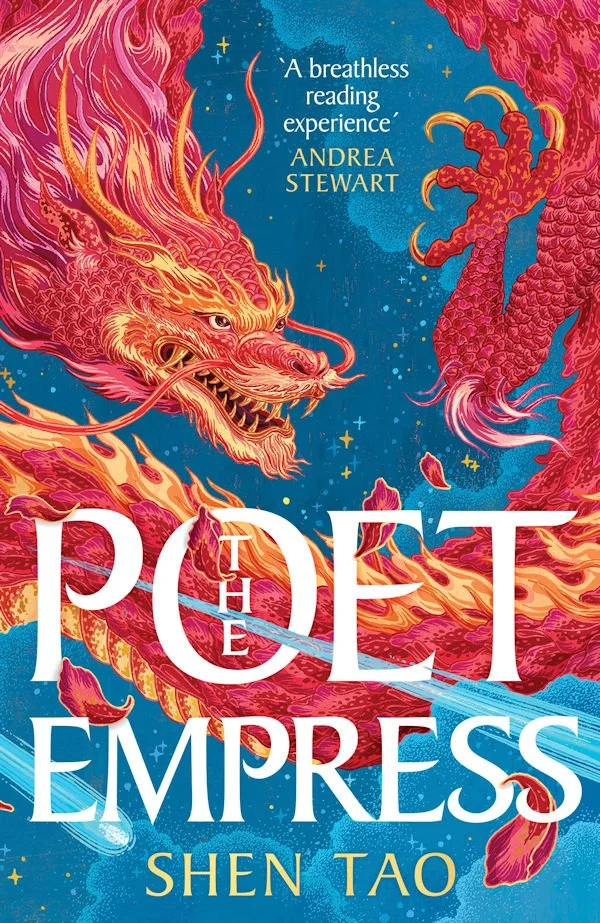
[Content Warning: Readers are advised that The Poet Empress contains explicit depictions of torture and sexual violence.]
In the landscape of modern speculative fiction, it is a rare phenomenon for a debut novel to arrive with the seismic force of Shen Tao’s The Poet Empress. The book has not only captured the imagination of critics but has also prompted a profound re-evaluation of how we categorize villainy, redemption, and the mechanics of power within the genre. For many authors, reading The Poet Empress is a humbling experience—a reminder of the heights that prose can reach when wielded with surgical, and occasionally devastating, precision.
The Genesis of an Enigma: A Brief Chronology
The buzz surrounding The Poet Empress began in the hushed corridors of literary agencies, eventually culminating in a release that has defied traditional marketing expectations.
- The Pre-Release Phase: While early industry buzz was positive, the sheer intensity of the manuscript caused significant internal deliberation regarding its darker themes.
- The Launch: Following its release, the audiobook, narrated by the acclaimed Katharine Chin, became the primary gateway for many readers. The immediate critical reception was marked by a peculiar struggle: reviewers found themselves unable to articulate the plot without risking spoilers, leading to a "spoiler-free" phenomenon that fueled the book’s organic growth.
- The Post-Release Impact: Within the first month of availability, the novel transitioned from a niche recommendation to a staple of high-fantasy discussions, drawing comparisons to foundational epics while simultaneously carving out a space that feels entirely singular.
The Architecture of the Narrative
At its core, The Poet Empress is a puzzle of partial recollections. The story functions as a psychological labyrinth, where the protagonist—an outsider thrust into the suffocating atmosphere of court intrigue—must navigate a society defined by extreme censorship and lethal hierarchy.
The setting is one of brutal beauty: a world where magic is not merely a tool, but a dangerous art form fueled by written poetry. In this culture, literacy for the wrong person is a death sentence. The stakes are immediate, and the environment is unforgiving. To understand the gravity of the setting, one must look toward historical and cultural touchstones. Fans of the Japanese drama Ooku or the sprawling, high-stakes narratives of The Empress of China will find a familiar, yet uniquely twisted, rhythm here.
The Magic System: Literomancy and the Seal
One of the most impressive technical achievements in Tao’s work is the development of "Literomancy." In an era where fantasy magic systems are often compared to the intricate rules of Brandon Sanderson’s Mistborn series, Tao’s world-building holds its own with remarkable tenacity.
Where Sanderson utilized Allomancy, Feruchemy, and Hemalurgy to define his world’s physical boundaries, Tao uses the hereditary "Seals" and the act of writing as the conduits for power. Critics have noted that while Sanderson’s work spans three exhaustive volumes to establish its vibrancy, Tao accomplishes a similar feat of "lived-in" world-building within the confines of a single, standalone novel. It is a rare feat of narrative efficiency that does not sacrifice depth for brevity.
The Moral Calculus of the Villain
The central triumph of The Poet Empress lies in its subversion of the antagonist. In most fantasy literature, the villain serves as a mirror for the hero’s virtue. Here, the villain is a prism, refracting the reader’s expectations until they are broken.
The book forces the reader to confront uncomfortable questions:
- Can we truly empathize with the sociopathic?
- Does love possess the capacity to act as a solvent for irredeemable evil?
- When the full weight of a character’s trauma is laid bare, does our judgment hold, or does it shift?
These questions are not merely thematic window dressing; they are the gears that drive the plot forward. The narrative explores generational trauma and the destructive nature of sibling rivalry in a cutthroat culture that actively discourages communication. The result is a story that manages to turn the "hero’s journey" on its head, leaving the reader questioning their own moral compass long after the final page is turned.
Critical Analysis and Technical Merit
From a stylistic perspective, Shen Tao’s prose is a lesson in economy. The author eschews the flowery, overly descriptive language common in high fantasy, opting instead for a simple, rhythmic style that mirrors the perspective of the protagonist. This choice is intentional; it keeps the reader grounded in the immediate, often terrifying reality of the character’s experiences.
Katharine Chin’s audiobook narration has been widely credited with elevating the source material. By capturing the nuanced shifts in the protagonist’s internal monologue, Chin transforms the text from a reading experience into an immersive psychological journey.
Comparisons in the Genre
It is rare to find a standalone novel that invites comparison to the heavyweights of the genre, yet The Poet Empress is consistently mentioned in the same breath as the most celebrated trilogies of the last two decades. The key difference lies in the pacing. While many epic fantasies require a "slow burn" to establish the world, Tao’s novel maintains a relentless, driving pace, fueled by the mystery of the Empress herself.
Implications for the Genre
The success of The Poet Empress signals a shift in reader appetite. We are moving away from the "chosen one" tropes of the early 2000s and toward narratives that emphasize moral ambiguity and the claustrophobic nature of power.
Industry experts suggest that the book’s success will likely trigger a wave of interest in "literary-leaning" dark fantasy—stories that prioritize psychological depth over world-spanning map-making. By proving that a standalone novel can carry the same emotional weight as a multi-book series, Shen Tao has set a new benchmark for debut authors.
Final Reflections
In an era where the "twist" has become a commodity, The Poet Empress manages to outmaneuver even the most seasoned readers. Whether you consider yourself a master of deduction—having predicted the secrets of The Sixth Sense or the lineage of Darth Vader—you will find yourself caught off-guard by the final act of this story.
There is a consensus emerging among the critics: The Poet Empress is not just a book to be read; it is a book to be survived. It is a testament to the idea that, in the right hands, fantasy can serve as a searing indictment of the structures of power and the fragility of the human psyche.
For those brave enough to enter its pages, the reward is a story that refuses to be forgotten. As one critic noted, if the traditional scale of quality stops at ten, The Poet Empress demands a new metric. It is, by all accounts, an eleven-star experience.
Key Takeaways for Prospective Readers:
- Genre: Dark Fantasy / Political Thriller.
- Strengths: Unmatched world-building, complex moral questions, efficient and evocative prose.
- Note: The narrative relies heavily on the reader’s lack of prior knowledge. To preserve the integrity of the twists, engage with the text with as little foreknowledge as possible.
- Recommendation: High. This is an essential read for fans of character-driven fantasy who are not afraid of darker, more challenging themes.


 Laily UPN
 Evan Lee Salim