

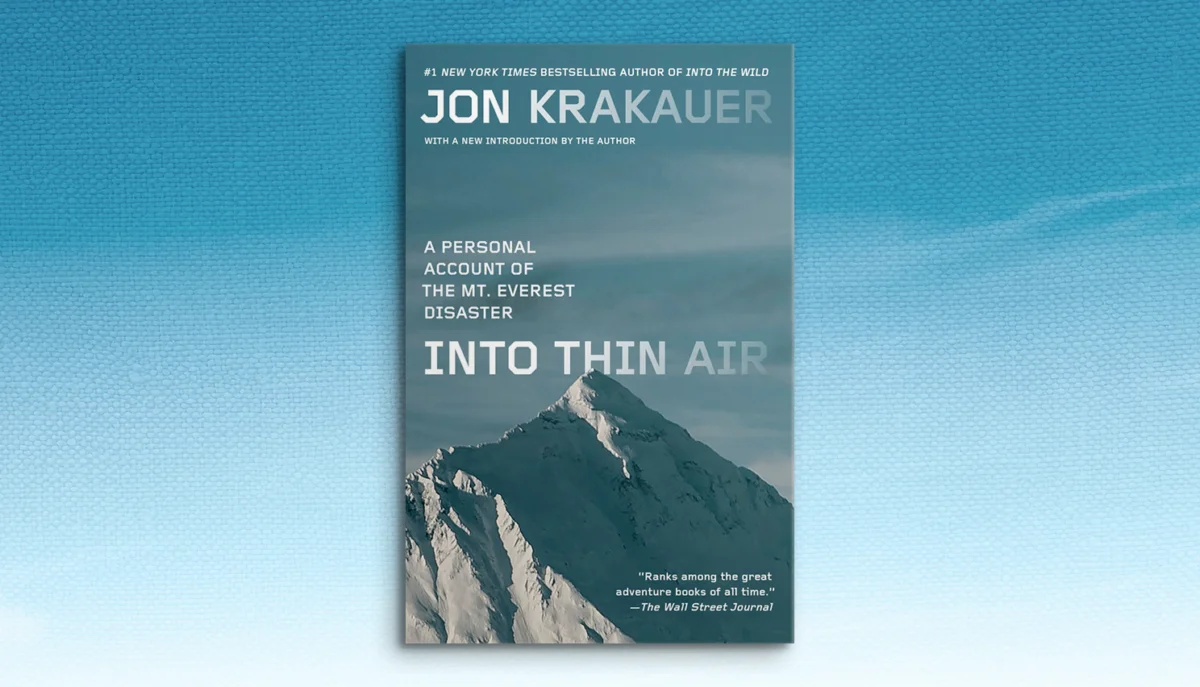
Thirty years after the catastrophic 1996 Mount Everest disaster—an event that forever altered the landscape of high-altitude mountaineering and literary non-fiction—author and journalist Jon Krakauer has returned to the spotlight. In a candid, career-spanning conversation on the Poured Over podcast with host Miwa Messer, Krakauer navigates the complexities of memory, the ethics of investigative reporting, and the enduring psychological toll of his experiences on the "Roof of the World."
This retrospective serves as more than just a promotional bridge for his seminal work, Into Thin Air; it is a profound exploration of how a single, harrowing event can define a writer’s trajectory and force an ongoing confrontation with the ghosts of the past.
The Weight of History: The 1996 Disaster
To understand the gravity of Krakauer’s reflection, one must revisit the tragedy that serves as the crucible of his narrative career. In May 1996, a sudden, violent storm trapped multiple climbing expeditions on the upper reaches of Mount Everest. By the time the skies cleared, eight people were dead, marking the deadliest day in the mountain’s history at the time.
Krakauer, then a journalist on assignment for Outside magazine, found himself documenting not just a sporting endeavor, but a fight for survival that transcended the bounds of conventional adventure journalism. His resulting book, Into Thin Air, became an international sensation, lauded for its visceral detail and unflinching look at the commercialization of Everest. Yet, for the author, the book was never just a product; it was a traumatic exorcism.
"Looking back over the last 30 years," Krakauer noted during the interview, "you don’t just move on from an experience like that. You integrate it." The dialogue between Krakauer and Messer illuminates the thin, oxygen-deprived line between professional detachment and personal involvement—a line that, for many investigative journalists, is the primary source of moral tension.
A Chronology of Consequence
The timeline of the 1996 disaster and its aftermath is a study in the rapid evolution of mountain culture and media scrutiny.
- May 10–11, 1996: The storm strikes. As Krakauer descends to Camp IV, he witnesses the disarray of multiple teams caught in the "Death Zone." The disaster claims the lives of veteran guides Rob Hall and Scott Fischer.
- 1997: Publication of Into Thin Air. The book receives immediate critical acclaim but triggers a fierce debate within the mountaineering community regarding the role of journalists on expeditions and the ethics of commercial guiding.
- Late 1990s–Early 2000s: Krakauer pivots to deeper, more systemic investigations, including Under the Banner of Heaven (2003), which examines the dark intersection of religious extremism and violence.
- 2015: Publication of Missoula, demonstrating Krakauer’s commitment to investigative journalism that exposes societal failures, this time focusing on the handling of sexual assault cases in a university town.
- Present Day: Krakauer continues to reflect on the nature of "chasing a story," acknowledging that the relentless pursuit of truth often demands a personal price, including the long-term management of PTSD.
Data and the Business of Risk
The conversation on Poured Over touches upon the broader context of the books Krakauer has authored—a bibliography that spans the desperate survival of Into the Wild to the systemic corruption addressed in Missoula.
The underlying data of these works suggests a preoccupation with "men in extremity." Whether it is the physical extremity of Everest, the social extremity of the fundamentalist Mormon community in Under the Banner of Heaven, or the moral extremity of war in Where Men Win Glory, Krakauer’s body of work functions as a data set on human behavior under duress.
When asked about the craft of research, Krakauer emphasizes the importance of archival rigor and the human element. "You cannot report on trauma from a distance," he suggests. "You have to be willing to hold the mirror up to your own experiences, even when the reflection is uncomfortable."
Official Responses and the Industry Debate
The publication of Into Thin Air was not met with universal praise within the climbing fraternity. Anatoli Boukreev, a guide present during the 1996 disaster, famously challenged Krakauer’s account, leading to a public and highly publicized disagreement.
This friction highlighted a critical question in the journalistic community: Is the participant-observer capable of true objectivity?
Krakauer’s response over the years has been consistent: absolute objectivity is a myth in high-stakes journalism. Instead, he advocates for "radical transparency." By exposing his own internal state—his fatigue, his misjudgments, and his subsequent guilt—Krakauer provided a template for a new kind of "New Journalism." The industry, and specifically literary critics, largely rallied behind this approach, arguing that the emotional truth of a tragedy is often more vital than the purely clinical sequence of events.
Implications: The Evolution of the Reporter
The implications of Krakauer’s career for contemporary writers are significant. He has effectively bridged the gap between the adventure writer and the social justice journalist. By applying the same intensity of research used to analyze oxygen saturation levels on Everest to the analysis of rape kits and legal proceedings in Missoula, he has elevated the standards of investigative non-fiction.
The Psychological Toll
A core element of the Poured Over interview is the candid discussion of PTSD. Krakauer does not shy away from the reality that the "story" often leaves a permanent mark on the storyteller. For journalists, this represents a shifting paradigm; there is now a greater recognition of the trauma inherent in reporting on disasters, crimes, and injustices. Krakauer’s transparency acts as a beacon for younger writers, encouraging them to prioritize their mental health as a fundamental aspect of their professional longevity.
The Future of "Chasing the Story"
As the media landscape shifts toward faster, digital-first content, Krakauer’s deliberate, years-long approach to research stands as a reminder of the power of deep-dive reporting. His influence remains a gold standard for those who wish to pursue journalism that matters—work that doesn’t just inform, but haunts, challenges, and ultimately, changes the reader.
Curated Reading: The Krakauer Canon
For those looking to explore the themes discussed in the Poured Over interview, the following titles—featured in the episode—provide a comprehensive look at the range of Jon Krakauer’s inquiry:
- Into Thin Air: The definitive account of the 1996 Everest tragedy.
- Into the Wild: A haunting investigation into the life and death of Chris McCandless.
- Missoula: An examination of the legal and social mechanisms of rape in collegiate settings.
- Under the Banner of Heaven: A chilling exploration of fundamentalist faith and the origins of violence.
- Where Men Win Glory: The tragic story of Pat Tillman, the NFL star turned soldier.
Additionally, the episode highlights the works of John McPhee (Looking for a Ship, Irons in the Fire) and Samantha Harvey (Dear Thief, Orbital), underscoring the literary lineage of narrative non-fiction and the importance of precise, observant prose.
As the 30th anniversary of the 1996 disaster approaches, the conversation between Krakauer and Messer offers a rare glimpse into the mind of a writer who has seen the top of the world and the bottom of human nature, and who has somehow found the words to bridge the distance between them. Whether discussing the logistics of a Himalayan climb or the intricacies of the American legal system, Krakauer’s message remains the same: the truth is a difficult climb, but it is the only one worth making.











No comments yet. Be the first to join the conversation!