

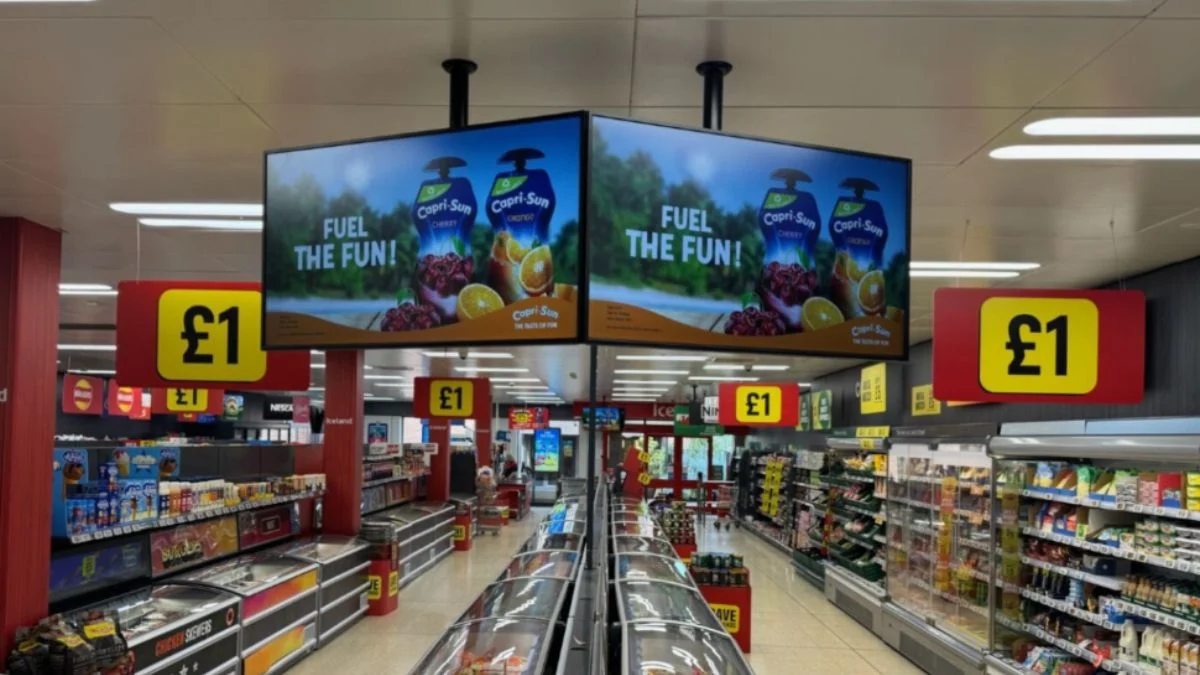
The retail technology landscape is undergoing a profound period of recalibration. As the sector shifts toward more integrated, data-driven omnichannel strategies, some legacy players are finding the path to profitability increasingly difficult to navigate. This week, the industry witnessed a significant contraction as Stratacache, a prominent global provider of in-store digital signage and retail media solutions, announced the liquidation of its United Kingdom operations.
The move marks a notable retreat for the Dayton, Ohio-headquartered firm, which has long been a fixture in the digital signage space. According to public filings, the liquidation process affects both Stratacache U.K. and its subsidiary, PRN U.K., signaling a complete exit from the British market.
Main Facts: The Wind-Down of a Retail Media Entity
On May 13, public records made available through The Gazette confirmed that Stratacache U.K. and PRN U.K. have entered into voluntary liquidation. The filings reveal that the decision was not a sudden pivot but the culmination of a formal insolvency process finalized on May 5.
The primary objective of this process is to facilitate the orderly wind-down of both business entities. Creditors have officially appointed Mark Supperstone and Simon Jagger, both esteemed insolvency practitioners associated with the firm S&W Partners, to oversee the liquidation. Their mandate is clear: identify, value, and sell off the remaining assets held by the companies to satisfy outstanding financial obligations to creditors.
For the retail industry, the implications are immediate. Stratacache has been a critical infrastructure provider, supplying the hardware and software ecosystems necessary for digital displays that populate thousands of retail environments globally. In the U.K., the company’s footprint included high-profile partnerships, most notably with the British grocery chain Iceland Foods. The sudden cessation of operations raises urgent questions regarding the continuity of services for remaining clients and the broader viability of the physical-to-digital retail model in an increasingly cost-sensitive economic climate.
Chronology: A Timeline of the Exit
To understand how Stratacache arrived at this juncture, one must look at the timeline of events leading up to the May filings. While the public announcement was dated May 13, the internal mechanics of the insolvency had been set in motion weeks prior.
- Early 2024: Industry observers noted a cooling in the retail tech sector as inflation and high interest rates pressured retail capital expenditure (CapEx) budgets.
- April 2024: Internal discussions regarding the sustainability of the U.K. arm reportedly intensified as the firm evaluated its global portfolio performance.
- May 5, 2024: The formal appointment of Mark Supperstone and Simon Jagger as liquidators was finalized. This date serves as the legal turning point where control shifted from Stratacache management to insolvency practitioners.
- May 13, 2024: Public notice of the liquidation was officially gazetted, alerting stakeholders, creditors, and the public to the closure of both Stratacache U.K. and PRN U.K.
- Post-May 13: The current phase involves the systematic assessment of assets. S&W Partners are now tasked with the complex job of liquidating hardware inventory, software licenses, and contractual obligations to pay off the U.K. entities’ debts.
Supporting Data: The Retail Media Context
Stratacache’s exit from the U.K. occurs against a backdrop of shifting fortunes in the "Retail Media" space. While the broader industry—encompassing digital advertising on retailer websites—is booming, the physical in-store display segment (often referred to as "In-Store Retail Media") is facing a period of intense scrutiny regarding return on investment (ROI).
Data from recent market research suggests that while digital signage remains a staple of the modern retail experience, the cost of deployment and maintenance has risen sharply. Retailers are increasingly demanding "closed-loop" measurement systems—data that links an in-store screen impression directly to a point-of-sale transaction. Firms that fail to provide this level of granular, data-backed proof of performance are finding it harder to retain their retail partners.
Stratacache’s reliance on PRN—a company known for its sophisticated in-store networks—was intended to bridge this gap. However, the U.K. arm appears to have struggled to maintain the necessary scale to compete with both global tech giants and more agile, localized software-as-a-service (SaaS) providers. The liquidation of these entities reflects the challenges of operating a capital-intensive hardware business in an era where software-first solutions are becoming the industry standard.
Official Responses and Stakeholder Impact
As of the time of writing, Stratacache’s U.S.-based parent company has maintained a relatively low profile regarding the U.K. closure. The appointment of S&W Partners indicates that the process is being handled with the required legal formality to shield the parent organization from the liabilities of its defunct British subsidiaries.
For Iceland Foods, the closure necessitates a rapid assessment of their in-store media infrastructure. Having partnered with Stratacache to manage their digital screen network, the grocery chain is now in a position where it must either migrate its current content management system to a new provider or face the possibility of a "blackout" on their in-store screens. Such transitions are notoriously complex, involving hardware compatibility issues, proprietary software migration, and the renegotiation of ad-sales contracts that previously relied on the Stratacache/PRN network.
Insolvency practitioners Supperstone and Jagger have issued standard notices to creditors, urging any parties with outstanding claims against Stratacache U.K. or PRN U.K. to come forward. The total debt load remains confidential, though the necessity of a full liquidation suggests that the assets of the U.K. arm were insufficient to cover the company’s financial obligations under its existing operating model.
Implications: What This Means for the Future of Retail Tech
The liquidation of Stratacache U.K. serves as a bellwether for the retail technology sector. It suggests several key implications for the market moving forward:
1. The Death of "Hardware-First"
Retailers are moving away from the era of "dumb" screens that merely loop promotional videos. They are looking for intelligent, responsive environments. Companies that focus solely on the hardware aspect of digital signage, without a robust, data-integrated software play, are increasingly vulnerable to obsolescence.
2. Consolidation is Inevitable
The digital signage market has been fragmented for years. The withdrawal of a mid-to-large-tier player like Stratacache from a major market like the U.K. will likely trigger consolidation. Competitors are expected to circle the vacuum left by the company, attempting to win over the abandoned retail contracts and potentially acquiring valuable proprietary technology or talent from the liquidated firm.
3. Increased Scrutiny on ROI
Retail media is no longer a "nice-to-have" marketing expense; it is a profit center. Retailers are now treating their physical stores as premium advertising real estate. Consequently, they are demanding higher standards of transparency and performance metrics. Vendors who cannot provide clear, actionable data on how in-store screens drive sales will find themselves on the losing end of contract renewals.
4. Global Strategy vs. Local Reality
Stratacache’s situation highlights the difficulty of managing a global retail-tech footprint. Local regulations, varying retail customs, and the specific cost structures of U.K. retail made it difficult for the company to maintain the margins required to justify its presence. Global tech firms must now decide whether to operate via local subsidiaries—which are susceptible to regional economic downturns—or to move toward a more centralized, cloud-based delivery model that minimizes local overhead.
Conclusion
The liquidation of Stratacache U.K. and PRN U.K. is a sobering reminder of the volatility inherent in the retail technology sector. While digital transformation remains a top priority for global retailers, the path to achieving a sustainable, profitable model is fraught with challenges.
As Mark Supperstone and Simon Jagger begin the process of untangling the assets and liabilities of these companies, the wider industry will be watching closely. The lessons learned from this exit will likely influence how retail technology firms approach market expansion, contract management, and the crucial intersection of physical retail and digital media in the years to come. For now, the screens at Iceland Foods and other affected retailers serve as a silent testament to a company that, despite its reach, could not survive the changing tides of the U.K. retail landscape.












No comments yet. Be the first to join the conversation!