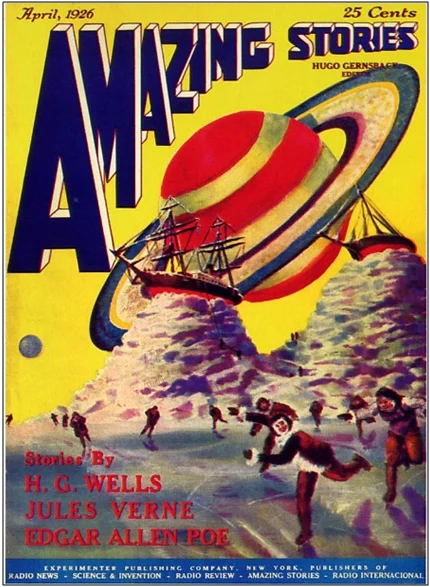
The landscape of modern science fiction, a genre that now dominates global cinema, literature, and digital media, traces its pulse back to a single, audacious vision in April 1926. It was then that Hugo Gernsback published the inaugural issue of Amazing Stories, effectively birthing the "scientifiction" genre and igniting a literary movement that would span generations. As the centennial of this landmark publication approaches, the First Fandom Annual 2026 has arrived as a definitive commemorative tribute, offering an exhaustive retrospective on the magazine that defined the future.
Edited by genre historians John L. Coker III and Dr. Jon D. Swartz, this limited-edition publication serves not merely as a history book, but as a curated archive of the people, the art, and the editorial evolution that transformed speculative fiction from pulp curiosity to a cornerstone of human culture.
The Genesis of the Future: Main Facts and Significance
The First Fandom Annual 2026 is a labor of love, meticulously designed to capture the essence of a publication that survived the Great Depression, World War II, and the digital revolution. Spanning 56 pages of high-quality, laser-printed content, the annual is a testament to the enduring legacy of Gernsback’s experiment.
The publication features a robust collection of photo essays, deep-dive analyses, and, most notably, dozens of full-color reproductions of the iconic covers that defined the aesthetic of early science fiction. From the visionary, otherworldly landscapes of Frank R. Paul to the mid-century dynamism that followed, the annual provides a visual history of how the genre viewed the future across ten decades.
The editorial team, led by Coker and Swartz, has assembled a prestigious roster of contributors, including renowned historian Mike Ashley, prolific author Robert Silverberg, and industry voices such as James Bacon, Steve Davidson, and the husband-and-wife fanzine legends Lloyd and Yvonne Penney. Together, they provide firsthand accounts and scholarly insights into what it meant to write for, edit, and publish the most influential magazine in the field.
A Century in Review: The Chronology of Amazing Stories
To understand the weight of the First Fandom Annual 2026, one must appreciate the trajectory of Amazing Stories. The publication’s history is a microcosm of the 20th century’s own transformation.
1926–1930: The Gernsback Era
The launch in 1926 was a radical departure from mainstream literary expectations. Hugo Gernsback, an inventor and entrepreneur, sought to educate as much as entertain. His vision was to combine "scientific fact" with "prophetic adventure." This era established the tropes of space travel, robots, and advanced electronics that would eventually become reality.
1930–1940: The Pulp Boom and Editorial Shifts
Following Gernsback’s departure, the magazine transitioned through various editors, including T. O’Conor Sloane. This period saw the solidification of the "pulp" aesthetic and the rise of writers who would become the genre’s foundational icons. It was a time of rapid expansion, where the magazine’s readership—the "First Fandom"—began to organize, exchange letters, and foster the communal spirit that still defines the genre today.
1940–1960: The Golden Age and the Atomic Shift
As the world entered the nuclear age, Amazing Stories reflected the profound anxiety and awe of the times. The magazine’s covers shifted from whimsical inventions to gritty, high-stakes narratives of survival and exploration. During this era, the magazine remained a primary incubator for the writers who would define the "Golden Age" of science fiction.
1960–2026: Modernity and Digital Legacy
The latter half of the century saw Amazing Stories navigate the transition from newsstand pulp to a digital-first platform. The Annual chronicles this pivot, highlighting how the magazine managed to retain its brand identity while adapting to a changing readership that grew from paper-bound enthusiasts to global digital communities.
Supporting Data: The Technical Specs of the Annual
The First Fandom Annual 2026 is not a mass-market paperback; it is a collector’s piece. The editorial team has prioritized quality and preservation over scale.
- Production Quality: The document is laser-printed on high-grade 28# paper, ensuring that the color-reproduction of historical covers remains vibrant and sharp.
- Physical Format: It is presented in an 8½ x 11-inch format, saddle-stitched for a professional, classic finish.
- Accessibility and Scarcity: In keeping with the tradition of "First Fandom"—the tight-knit group of early science fiction enthusiasts—the edition is strictly limited to 30 copies. This rarity ensures that the Annual will immediately enter the ranks of sought-after memorabilia for serious collectors of science fiction history.
- Cost and Distribution: The publication is available for $35. Given the limited print run, the editors have instituted a direct-order model, requiring checks or money orders to be sent to John L. Coker III in Orlando, Florida.
Insights from the Architects: Official Responses and Perspectives
The strength of the Annual lies in the diverse perspectives of its contributors. By including both academics and veteran fans, Coker and Swartz have captured a holistic view of the magazine.
Robert Silverberg, a literary giant whose career has been inextricably linked to the evolution of the field, offers a perspective that bridges the gap between the pulp era and the modern literary era. His contributions provide a grounding, humanizing look at the struggles and triumphs of being a working science fiction author in the mid-20th century.
Mike Ashley, whose encyclopedic knowledge of science fiction history is unmatched, provides the necessary context for the magazine’s editorial shifts. His analysis of the "Gernsback influence" reminds readers that Amazing Stories was not just a magazine; it was a pedagogical tool for a generation of scientists and engineers who grew up reading the magazine’s technical sidebars and visionary fiction.
The inclusion of Lloyd and Yvonne Penney—representatives of the vibrant fan culture that emerged from the magazine’s letters section—adds a layer of social history. The Annual documents the transition from solitary reading to the creation of the fandom subculture, which is arguably the magazine’s most enduring legacy.
Implications: Why This Matters Today
The publication of the First Fandom Annual 2026 serves as a poignant reminder of the fragility of media history. As physical archives of early 20th-century magazines degrade and original pulp copies become increasingly rare, the work done by Coker and Swartz to curate and preserve these images and insights is vital.
The Preservation of Genre Identity
Science fiction is a genre that is obsessed with the future, yet it often fails to document its own past. By centralizing the history of Amazing Stories, this Annual prevents the loss of the foundational ethos that propelled the genre into the mainstream. It serves as a bridge for younger generations to understand that their favorite modern films and novels are the direct descendants of the dreams printed in 1926.
The Future of Fandom
The "First Fandom" movement was a precursor to modern online community building. In an era where discourse can be ephemeral and fragmented, the Annual encourages a return to the tactile, long-form appreciation of art. It suggests that the future of science fiction, while digital, must remain rooted in the appreciation of the physical artifacts that started the journey.
A Call to Action for Collectors
With only 30 copies in existence, the Annual is destined to become a historical footnote itself. It acts as a beacon for those who value the history of literature, challenging them to take responsibility for the preservation of their cultural heritage. The directive is clear: to own a piece of this history is to participate in the ongoing conversation about what the future holds—a conversation that began one hundred years ago, in the pages of a slim, colorful magazine that promised us the stars.
Those wishing to secure a piece of this legacy are encouraged to reach out to John L. Coker III at 4813 Lighthouse Road, Orlando, FL, 32808, before the final copies vanish into private collections, potentially marking the end of a physical chapter in the long, amazing story of science fiction.