

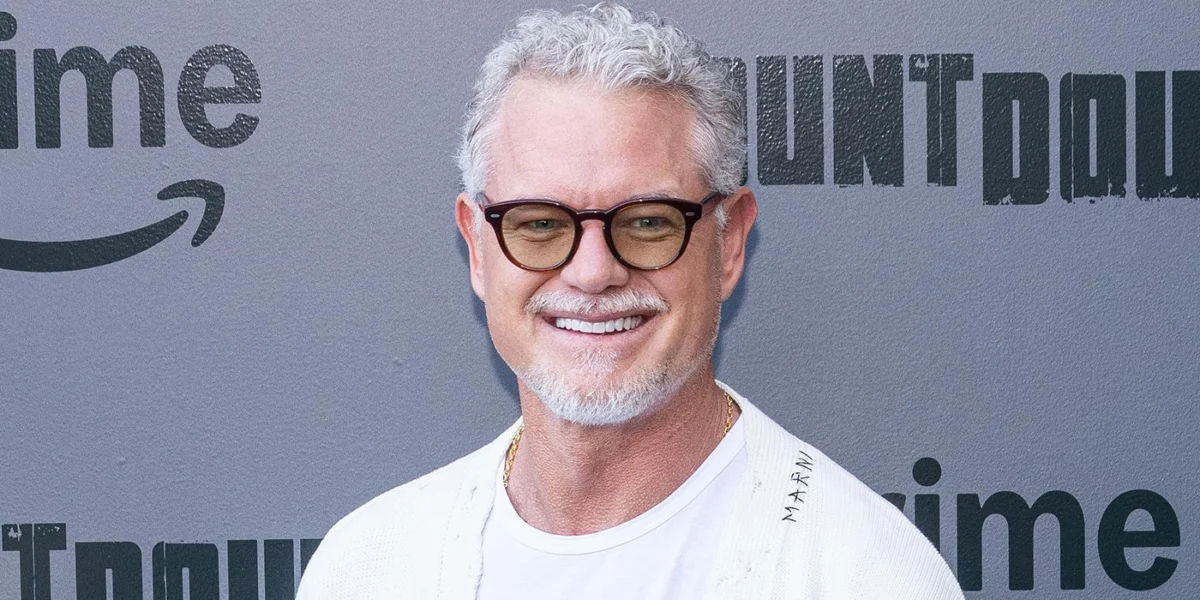
The television landscape in 2026 feels significantly quieter following the tragic passing of Eric Dane earlier this year. At just 53 years old, Dane’s career had reached a remarkable late-stage renaissance, characterized by a versatile string of roles that underscored his range as a performer. From the gritty, high-stakes intensity of Euphoria to his recent contributions in Brilliant Minds and Bad Boys: Ride or Die, Dane had cemented himself as a fixture of modern prestige television. As fans continue to mourn the loss of a talent who could command a screen with both brooding authority and unexpected vulnerability, a piece of his legacy is finding a new life: the action-thriller The Last Ship.
On June 22, Netflix will debut all 56 episodes of the TNT original series, marking the first time the show will be available on the global streaming giant. For audiences who missed the series during its original run, or those wishing to revisit one of Dane’s most iconic roles, the addition serves as a poignant reminder of the actor’s unique ability to ground high-concept, apocalyptic narratives in human stakes.
The Core Narrative: A World on the Brink
The Last Ship, which originally aired from 2014 to 2018, was a quintessential "high-concept" television event. Based on the 1988 novel by William Brinkley, the series presented a chillingly plausible post-apocalyptic scenario: a devastating global pandemic wipes out nearly 80% of the world’s population. In this vacuum of chaos and collapsing government structures, the crew of the USS Nathan James, a fictional Arleigh Burke-class guided-missile destroyer, finds themselves among the few remaining humans unaffected by the virus.
At the center of this storm was Eric Dane’s Commander Tom Chandler. As the captain of the Nathan James, Chandler was tasked with the impossible: navigating a world without rules, protecting his crew from rogue factions, and—most crucially—facilitating the development of a cure. The show excelled by balancing the sheer scale of the global catastrophe with the intimate, often claustrophobic dynamics of life aboard a naval vessel. It was here that Dane truly shone, playing a leader defined by stoicism, strategic brilliance, and an unwavering moral compass that was constantly tested by the demands of survival.
Chronology and Evolution of the Series
To understand the significance of The Last Ship in Dane’s career, one must look at the trajectory of the series itself. When it premiered on TNT in 2014, it was part of a larger push by the network to move into big-budget, cinematic television. With Michael Bay serving as an executive producer, the show brought a distinct aesthetic—one defined by sweeping shots of the open ocean, technical naval precision, and intense, pyrotechnic-heavy action sequences.
Season 1: The Outbreak (2014)
The pilot established the stakes immediately. Commander Chandler and his crew are at sea for a research mission, completely cut off from communications. When they realize the world they left behind is gone, the series evolves into a race against time. The first season focused on the isolation of the ship and the initial struggle to synthesize a vaccine.
Seasons 2-3: Global Reconstruction and Geopolitical Shifts
As the series progressed, the scope expanded. The crew moved from simple survival to the task of trying to rebuild society. They encountered remnants of the U.S. government, faced off against insurgent groups, and grappled with the moral ambiguity of power in a post-viral world. During this period, Dane’s portrayal of Chandler transitioned from a military commander into a reluctant statesman, a role that required him to display a deeper level of gravitas.
Seasons 4-5: The Final Legacy
By its final seasons, The Last Ship had become a sprawling ensemble drama. The cast grew to include Jodie Turner-Smith, LaMonica Garrett, and Titus Welliver, among many others. The narrative stakes reached their zenith as the crew fought to secure the future of the human race. By the time the series concluded in 2018, it had left behind a legacy as one of the most underrated action dramas of the decade—a series that respected its audience’s intelligence while delivering the thrills expected of a major network production.
Supporting Data and Production Context
The production of The Last Ship was an ambitious undertaking. Over its five-season run, the show utilized a massive roster of directors, including Peter Weller, Mario Van Peebles, and Jonathan Mostow, who brought a filmic quality to the television screen. The cast was equally formidable, featuring Rhona Mitra, Adam Baldwin, and Charles Parnell, whose chemistry with Dane was essential to the show’s success.
The show’s move to Netflix is part of a broader, ongoing strategy by Warner Bros. to license its vast catalog to major streaming platforms. While a high-profile merger or acquisition attempt between Netflix and Warner Bros. ultimately failed, the two entities have entered a period of collaborative licensing that has seen several "hidden gems" find new audiences. Alongside The Last Ship, the crime procedural The Closer, starring Kyra Sedgwick, is also arriving on the platform, signaling a renewed interest in prestige cable dramas that defined the 2010s.
Official Responses and Industry Impact
Following the announcement of the series’ arrival on Netflix, critics and industry analysts have pointed to the move as a validation of the show’s enduring quality. While The Last Ship occasionally flew under the radar during its original airing on TNT, its move to a global platform like Netflix suggests that there is a significant appetite for "bingeable" action-dramas that prioritize character development over mere spectacle.
Colleagues of Dane have frequently cited his work on The Last Ship as a formative experience. In his final interviews, including those given for his work on the documentary-style series Famous Last Words, Dane reflected on his career with a sense of pride regarding his time at sea. He noted that the discipline required to lead the cast of The Last Ship helped prepare him for the complex, multifaceted roles he would take on later in his career, such as Cal Jacobs in Euphoria.

Implications for the Audience and Legacy
The arrival of all 56 episodes on Netflix on June 22 is more than just a licensing deal; it is a cultural preservation act. In an era where streaming libraries are often subject to "content scrubbing," ensuring that a body of work as substantial as The Last Ship remains accessible is vital.
For fans, the viewing experience will undoubtedly be bittersweet. Watching Dane navigate the bridge of the Nathan James, delivering orders with the authority of a man who held the fate of humanity in his hands, serves as a powerful reminder of his screen presence. It allows a new generation of viewers to discover why he was one of the most respected actors of his cohort.
Furthermore, the show stands as a testament to the "Golden Age" of cable TV, a time when networks were willing to invest in long-form, serialized storytelling that didn’t necessarily need to chase viral trends to be successful. As we look back on the career of Eric Dane, it becomes clear that his work in The Last Ship was not just a job—it was a definitive chapter in a career that moved from the soap-opera heights of Grey’s Anatomy to the sophisticated, dark character studies of his later years.
Conclusion: A Ship to Keep Sailing
As June 22 approaches, the anticipation surrounding the release of The Last Ship on Netflix is palpable. It provides a unique opportunity to celebrate the life and work of Eric Dane, an actor who consistently challenged himself and his audience. Whether you are a long-time admirer of his work or a newcomer looking for a gripping, high-stakes drama, The Last Ship offers a journey worth taking.
In the end, Commander Tom Chandler was a character defined by his refusal to give up, even when the horizon seemed empty. It is a fitting metaphor for the career of the man who played him. Even though Eric Dane is no longer with us, his performances—commanding, empathetic, and always compelling—remain safely harbored in the digital archives, ready to be discovered, analyzed, and appreciated by audiences for years to come. The voyage of the Nathan James may have concluded its broadcast run years ago, but on Netflix, the journey is just beginning anew.











No comments yet. Be the first to join the conversation!