

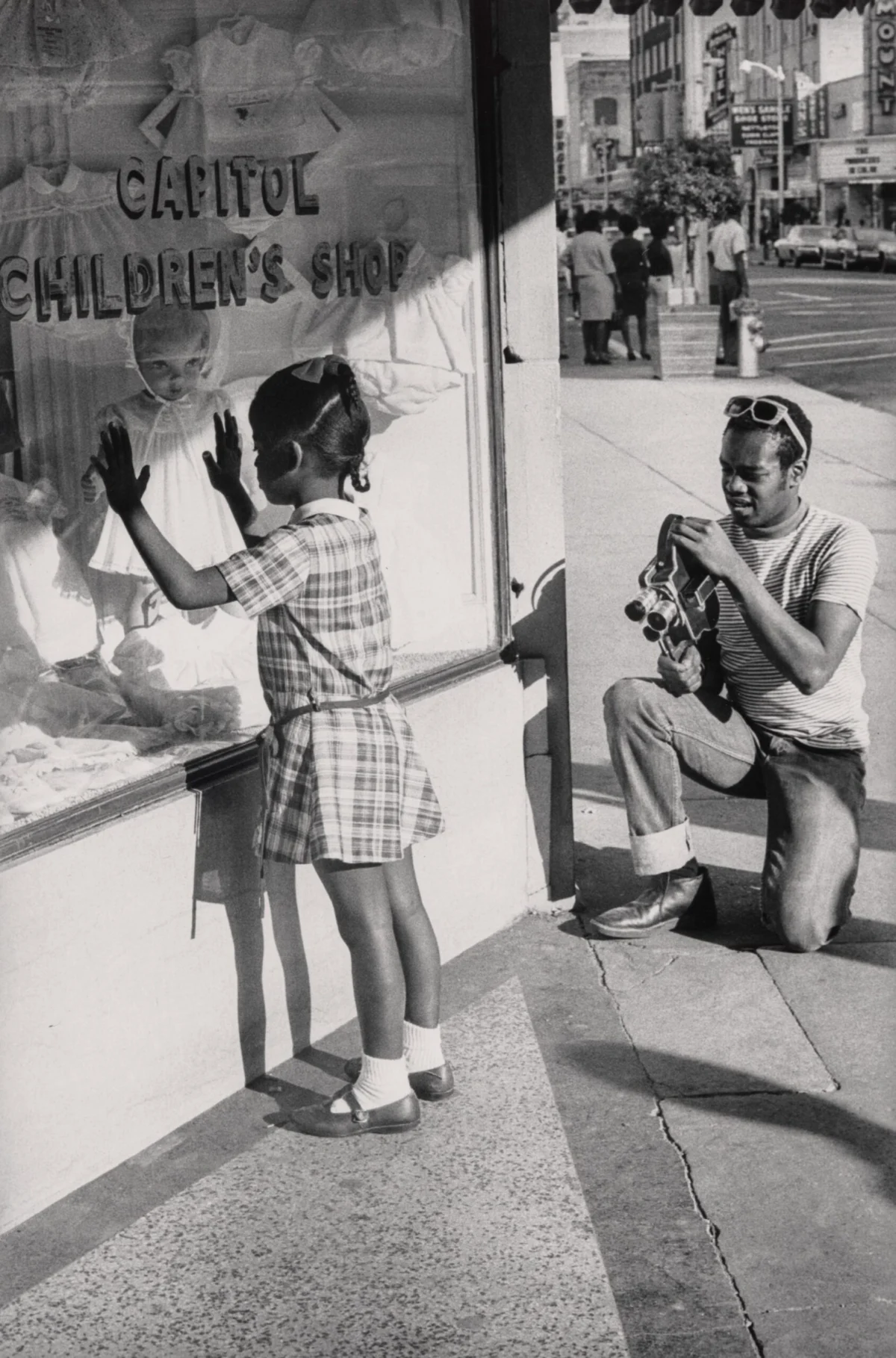
Photography is frequently celebrated as the most democratic of the visual arts. In the modern era, the ubiquity of smartphone cameras has turned the average citizen into a spontaneous documentarian, capable of broadcasting reality to a global audience in real-time. This ease of capture has fundamentally reshaped our cultural landscape, transforming the photograph from a mere aesthetic object into a potent, weaponized tool for social and political transformation.
This profound intersection of artistry and activism serves as the cornerstone for a monumental upcoming exhibition at the Mississippi Museum of Art. Titled Photography and the Black Arts Movement, 1955-1985, the show offers a panoramic view of a pivotal era, transporting viewers back to a time when the camera lens became the primary instrument for organizers, civil rights icons, and avant-garde artists to reclaim the Black narrative.
Main Facts: A Retrospective of Struggle and Vision
The exhibition, which runs from July 25 to November 8 in Jackson, Mississippi, is an expansive undertaking. It features the works of more than 100 photographers, capturing the aesthetic and political breadth of a thirty-year period that redefined the Black experience in America. The collection is far from a monolithic tribute; it is a kaleidoscopic survey that ranges from raw, on-the-ground editorial reportage and commercial commissions to deeply intimate self-portraits and provocative mixed-media social critiques.

At its core, the exhibition seeks to dismantle the visual silence imposed by the state-sanctioned racism of the Jim Crow era. By centering the perspectives of Black creators, the museum provides a vital correction to historical archives that have long been curated by those outside of the communities they documented.
"Pictures told, for those who could not see themselves, of the strength and beauty of the people, of the hostility and anger of the opposition, and of the promise of a world free of racism," noted the late Julian Bond, a titan of the civil rights movement and co-founder of the Student Nonviolent Coordinating Committee (SNCC). His words serve as the thematic North Star for the exhibition.
Chronology: The Evolution of a Movement (1955–1985)
To understand the scope of the exhibition, one must view it as a timeline of resistance. The selected dates—1955 to 1985—are not arbitrary; they bracket a period of intense societal upheaval and creative blossoming.

1955–1964: The Dawning of Direct Action
The mid-1950s marked the transition from passive observation to active documentation. As the Montgomery Bus Boycott and early desegregation efforts gained steam, Black photographers began to view the camera as a defensive mechanism. By documenting the brutality of segregation, these artists transformed domestic incidents into international scandals, forcing a reluctant public to confront the realities of life in the American South.
1965–1974: The Height of the Black Arts Movement
This decade represents the peak of the movement’s creative output. In 1968, a year defined by global protest, the camera became an essential tool of defiance. Ernest Withers’ iconic lens captured the Memphis sanitation workers’ strike, where men—demanding dignity in the wake of tragedy—marched in suits and hats, their bodies acting as a living wall behind signs that read, "I AM A MAN."
During this same period, artists like Ralph Arnold were pushing the boundaries of the medium itself. His collage, Above This Earth, Games, Games (1968), masterfully splices images of football matches with scenes of war and urban destruction, a visceral visual commentary on the hypocrisy of a nation that simultaneously celebrated leisure while perpetrating violence abroad and at home.

1975–1985: The Aesthetic Shift
As the movement matured, the focus shifted from purely documentary work to explorations of identity, style, and cultural philosophy. The exhibition highlights this transition through the work of Ming Smith, whose 1978 photograph of jazz philosopher Sun Ra captures him spinning in a whirlwind of motion, his ornate, glittering costume shimmering like a halo. It is a testament to the movement’s commitment to capturing not just the struggle of Black life, but the joy, the mysticism, and the intellectual complexity inherent in it.
Supporting Data: The Artists and Their Visual Lexicon
The diversity of the exhibition is reflected in the specific techniques and subjects chosen by the artists:
- Documentary Reportage: Figures like Doris Derby utilized the camera to provide the world with an unvarnished look at the youth and daily life of Black Mississippians. Her 1968 image of a child on Farish Street remains a chillingly intimate look at the human cost of the struggle.
- Conceptual Collage: Ralph Arnold’s mixed-media approach challenged the documentary standard, showing that photography could be manipulated to reflect the psychological fracturedness of a nation in turmoil.
- The Power of Persona: Kwame Brathwaite’s portraits of Black beauty and the "Black is Beautiful" movement provide a counter-narrative to the white-washed standards of the era. His portrait of Manasie Ree Horn, featuring a sculptural necklace made of film reels, highlights the marriage of creative fashion and political consciousness.
- Introspective Identity: The late-career inclusion of Barkley L. Hendricks’ Self-Portrait with Red Sweater (1980) serves as a bridge to modern conceptual art, where the photographer turns the lens inward to analyze the gaze itself.
Official Perspectives and Curatorial Intent
The curators of the Mississippi Museum of Art have curated this exhibition not merely as a historical archive, but as a living dialogue. By bringing these disparate voices together—from the street-level activists to the studio artists—the exhibition posits that the Black Arts Movement was an intellectual and aesthetic revolution as much as a political one.

For the museum, the stakes are high. By hosting such a comprehensive retrospective in Jackson, the institution acknowledges the unique position of the American South as both the site of the most intense racial violence and the crucible of the most effective social change. The exhibition invites visitors to see themselves in the faces of the past, reinforcing the idea that the "documentarian" is a role accessible to everyone, provided they have the courage to look at the world clearly.
Implications: The Enduring Power of the Image
The implications of Photography and the Black Arts Movement, 1955-1985 extend far beyond the walls of the museum. In an age of mass surveillance and social media saturation, the exhibition serves as a reminder of the original intent of the camera: to hold power to account.
The photographers featured in this show were not just taking pictures; they were building an archive of evidence against a system that sought to render them invisible. They proved that the image is a form of truth-telling that cannot be easily dismissed by political rhetoric. As we look at the contemporary landscape, where digital documentation continues to play a vital role in movements for social justice, the lessons of the 1960s and 70s remain painfully and beautifully relevant.

The exhibition underscores that the camera is not a neutral device. It is a subjective, intentional tool that, when wielded with purpose, can challenge the status quo, define a new era, and provide a roadmap for future generations. For those who visit the Mississippi Museum of Art this summer and fall, the exhibition will likely serve as a mirror: reflecting the progress made, the battles still being fought, and the enduring, undeniable power of the captured moment.
In summary, this exhibition is a necessary pilgrimage for anyone interested in the intersection of art, history, and human rights. It demands that we not only look at the images but that we interrogate our own roles in the ongoing documentation of our shared, and often divided, reality.










No comments yet. Be the first to join the conversation!