
 Layla Zulfa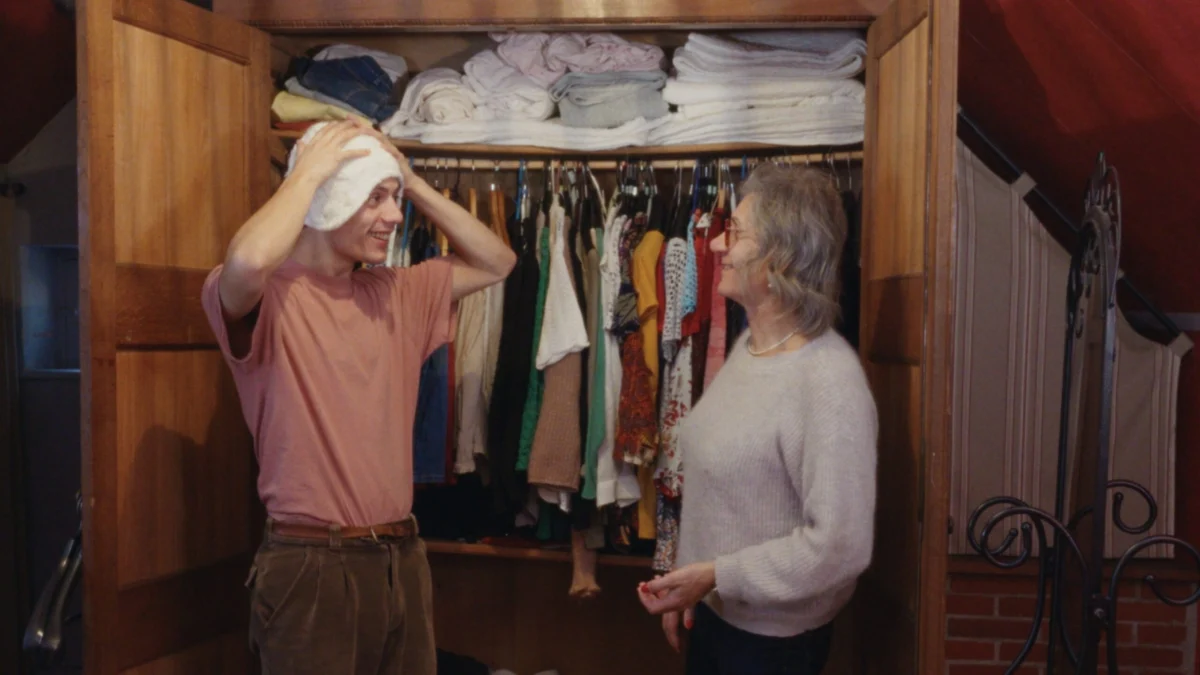
In the hushed, intimate corners of a French family home, a profound transformation was unfolding—one that would eventually reach the global stage. A Secret Heart (Cœur Secret), the poignant directorial debut of 33-year-old filmmaker Tom Fontenille, is set to make its world premiere on Thursday, May 14, at the Cannes Film Festival. Selected for the prestigious ACID (Association du Cinéma Indépendant pour sa Diffusion) sidebar, the documentary captures a raw, four-year odyssey of grief, gender transition, and the courageous reinvention of a family unit.
At the heart of this narrative is Lilou, a 64-year-old woman whose emergence from the shadows of secrecy serves as the film’s emotional anchor. For Fontenille, the project was never intended to be a public document; it began as a desperate attempt to bridge the emotional chasm between himself and his father following the death of his mother. What resulted is a work that critics are already hailing as a rare intersection of humble family chronicle, sweeping melodrama, and epic human portraiture.
The Genesis of an Unintentional Masterpiece
The road to A Secret Heart was paved with domestic silence. Following the loss of his mother, Fontenille found himself unable to communicate effectively with his father. The camera, initially, was a tool of mediation—a way to force a dialogue that words could not sustain.
"In the beginning, the idea was not to make a film," Fontenille shared in an exclusive interview with The Hollywood Reporter. "When I started to film my father, it was because I wanted to address difficult things in my family—my mother’s death, for example. And it was really difficult to communicate with my father. So, I started to just film our conversations, and in the beginning, my father was really reluctant."
The turning point arrived with a discovery that shifted the entire trajectory of the family dynamic. Fontenille and his sister discovered women’s clothing in their father’s cupboard, a realization that he was cross-dressing. Rather than driving a wedge between them, the revelation acted as a catalyst for a shared, albeit fragile, vulnerability.
When the elder Fontenille viewed the early footage his son had captured, he was struck by the aesthetic beauty of the images. "Your images are beautiful," he told his son, granting him permission to document the most private aspects of his life. "You can film me when I’m wearing women’s clothing, too."

This moment of mutual trust transformed a family struggle into a cinematic exploration. "I started to believe there was a film, because of my father’s interest, and because of this new space that was opening to her and to me," Fontenille reflected.
A Chronology of Metamorphosis
The production of A Secret Heart spanned five years, tracking a gradual, irreversible shift. The documentary captures Lilou’s transition not as a sudden event, but as a deliberate, daily practice. The viewer sees a 64-year-old woman navigating the mundane joys of life—DIY projects, gardening, cycling, and the profound role of being a grandmother.
As Pauline Ginot, general delegate of ACID, observed: "We start with a family of four whose lives are set in motion along several storylines: mourning the mother, the father undergoes a revolution, begins a gender transition, and then drags everyone along with him."
The film serves as a time capsule of this evolution. The editorial process, helmed by Marie Bottois, carefully weaves together the candid moments of the family’s readjustment. By the time filming concluded, the family had not only navigated the tragedy of losing a mother but had also embraced the birth of a new identity within their patriarch. Although Lilou passed away before the final cut was completed, she remained an active participant in the film’s development, offering feedback on the footage—occasionally critiquing her son for including "too much dialogue"—until the very end.
The Architecture of the Documentary
A Secret Heart is a testament to the power of independent production. Produced by 5A7 Films, the project represents a collaborative effort between Fontenille, who handled both the directing and cinematography, and his co-writer, Valentine Bonnaz. The film is currently being represented for international sales by Lightdox, the boutique sales agency behind acclaimed projects such as Gabin and Fiume o morte!.
The film’s aesthetic is intentionally unobtrusive. By focusing on the "humble" nature of domestic life, Fontenille avoids the traps of sensationalism. Instead, the documentary relies on the quiet strength of its subjects. As noted on the ACID website: "In this family chronicle, each member is forced to readjust their place and confront what had remained buried and hidden. Little by little, a discreet but irreversible metamorphosis takes hold."

The technical execution of the film mirrors its subject matter: it is patient, observational, and deeply intimate. The cinematography invites the audience into the home not as voyeurs, but as participants in the family’s healing process.
Implications: The Universal Language of Vulnerability
The selection of A Secret Heart for the ACID sidebar—a section of Cannes dedicated to showcasing films that challenge traditional narrative forms and provide a platform for directorial vision—highlights the film’s broader cultural significance.
Fontenille believes the film transcends his own family’s story. "I believed at that time that this was a theme for everyone, because there are universal themes, universal subjects," he says. The documentary touches upon the necessity of confronting one’s own vulnerability as a prerequisite for building a future. For Fontenille, the act of filming was an exercise in introspection that he believes helped reconcile his family’s fractured history.
"You have to understand and to touch on vulnerability to build the future from that," he explains. "I think we knew that, not really consciously, but we felt it. And I knew it was the path I had to take to make me better and make my family better as well."
The Legacy of Lilou
For the director, the premiere at Cannes represents the completion of a promise. Though Lilou is no longer here to walk the red carpet, her presence is felt in every frame of the film.
"I know it was very important for her to show this film, and we had a lot of discussions about this," Fontenille says. "She believed this kind of movie could be a great way to make people aware of the subject and also help the family."

The film serves as a bridge between the past and the present, a way for the family to honor their mother’s memory while celebrating the authentic life Lilou chose to live. As Fontenille looks toward the future, he finds comfort in the impact the film is likely to have on audiences who may be navigating their own family transitions.
"I’m really happy, and I think my father is going to live [on for] a long time now," Fontenille says, gesturing upward. "I know she’s happy somewhere."
By choosing to turn the lens inward, Tom Fontenille has crafted a work that does more than simply tell a story; it serves as a roadmap for empathy. A Secret Heart stands as a reminder that the most significant epics are often found within the walls of our own homes, waiting for the courage of those who are willing to look—and to listen. As the lights dim in the Cannes screening room this May, the audience will be invited to witness a story of love, loss, and the quiet, revolutionary act of becoming one’s true self.


 Pevita Pearce
 Asep Darmawan




