

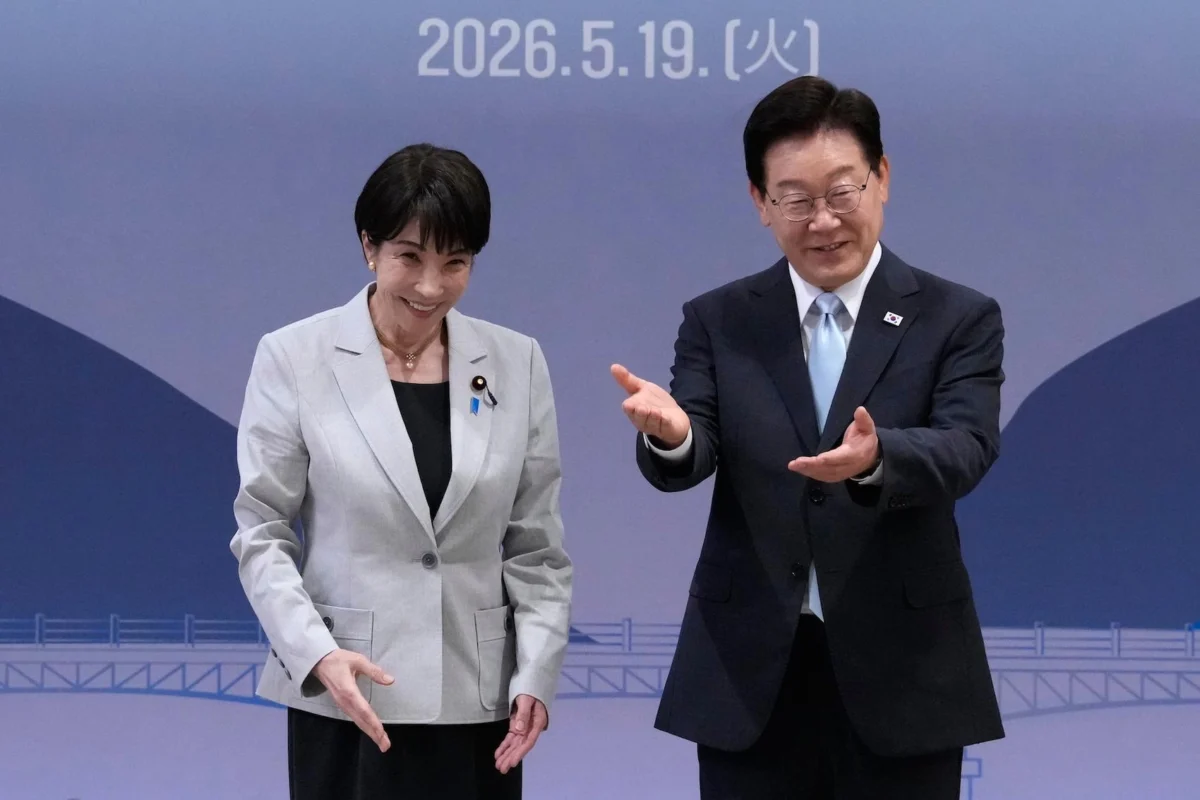
ANDONG, South Korea — In a display of diplomatic intimacy that would have been unimaginable just a few years ago, South Korean President Lee Jae Myung and Japanese Prime Minister Sanae Takaichi convened for their fourth summit in just six months on Tuesday. The meeting, held in the historic southeastern city of Andong, serves as a powerful signal to the international community: the two historical rivals are prioritizing long-term strategic alignment over the baggage of the past to navigate a volatile global landscape.
The summit, hosted in Lee’s hometown—a UNESCO World Heritage site renowned for its traditional folk villages—mirrored a similar diplomatic outreach in January, when the leaders met in Takaichi’s hometown of Nara. This "hometown diplomacy," characterized by personal rapport and unconventional settings, marks the first time in history that sitting leaders of the two nations have engaged in reciprocal visits to their respective origins.
The Strategic Imperative: Navigating a Fractured World
The impetus for this deepening bond is not merely nostalgic or symbolic; it is a pragmatic response to a cascading series of global crises. During a joint press conference, President Lee emphasized that the rapid succession of summits reflects a profound recognition of shared destiny.
"The fact that such meaningful and historic exchanges took place in the span of just four months speaks to the depth and strength of the friendship and bonds that Korea and Japan now share," Lee stated.
The primary catalysts for this urgency are the instability in global supply chains and the energy market shocks precipitated by the ongoing conflict in Iran. The war, which has sent global markets into a tailspin, has forced both Seoul and Tokyo to reassess their energy security. Prime Minister Takaichi confirmed that the talks yielded concrete discussions on the stabilization of critical mineral supplies and the potential for swap arrangements regarding crude oil, petroleum products, and natural gas.
By integrating their economic defenses, the two leaders are attempting to insulate their domestic economies from the inflationary pressures and resource scarcities that have plagued global trade since the outbreak of hostilities in the Middle East.
A Chronology of Rapprochement: From Hostility to Partnership
The current thaw in relations is the culmination of a decade-long evolution, punctuated by significant diplomatic pivots.
- 2023: The Turning Point: Following years of icy relations dominated by disputes over Japan’s 35-year colonial occupation of the Korean Peninsula, the predecessors of Lee and Takaichi initiated a tentative thaw, recognizing that common threats—specifically North Korea’s nuclear proliferation and the intensifying U.S.-China strategic competition—far outweighed historical grievances.
- August 2025: Breaking Tradition: Two months before her formal inauguration, Prime Minister Takaichi hosted President Lee in Japan. In an unprecedented move, Lee selected Japan as his first destination for a bilateral summit, shattering the long-standing protocol of prioritizing Washington or Beijing for initial overseas state visits.
- January 2026: The Nara Summit: The leaders met in Nara, where they famously engaged in a jam session. Takaichi, a noted heavy metal enthusiast and former college drummer, joined Lee in drumming to K-pop hits like BTS’s "Dynamite," signaling a departure from the stiff, formal interactions that defined the era of their predecessors.
- May 2026: The Andong Summit: The current meeting in South Korea underscores the institutionalization of this rapport. The frequency of these meetings suggests that the relationship has shifted from a reactive stance to a proactive, consultative partnership.
Geopolitical Implications: The Trilateral Axis
Beyond bilateral cooperation, the leaders reaffirmed their commitment to the trilateral framework involving the United States. This alliance is viewed as the bedrock of security in the Indo-Pacific region. However, this commitment comes at a time of significant uncertainty regarding the direction of U.S. foreign policy.
Both Seoul and Tokyo have expressed concerns over the "America-First" doctrine championed by President Donald Trump. His transactional approach to international security and the implementation of sweeping protectionist tariffs have introduced a layer of unpredictability that threatens the established order. With both South Korea and Japan having pledged hundreds of billions of dollars in U.S. business investments, the volatility of U.S. trade policy has become a shared anxiety.
"The two countries are realizing that they cannot solely rely on the U.S. umbrella as they once did," says a regional security analyst. "They are building a buffer of bilateral resilience to ensure that, regardless of shifts in Washington, their regional stability remains intact."
Expert Analysis: The Fragility of the "Positive Trajectory"
Despite the optimism surrounding the summits, experts remain cautious. Choi Eunmi, a Japan expert at the Seoul-based Asan Institute for Policy Studies, notes that while the current relationship is on a positive trajectory, it remains susceptible to the ghosts of the past.

"The two countries are currently focused on cooperation rather than contentious issues," Choi observed. "They have reached a tacit understanding that negative bilateral relations are mutually destructive. However, they are effectively ‘kicking the can down the road’ regarding historical disputes."
The "contentious issues" mentioned by Choi include the unresolved grievances regarding Japan’s mobilization of forced laborers and the systematic abuse of women as "comfort women" during World War II. For decades, these issues have been the primary source of diplomatic rupture. Currently, both governments have opted to avoid public discourse on these topics to prevent nationalist fervor from derailing the current economic and security agenda.
"Both sides are not currently negotiating how to settle these disputes or prevent their recurrence," Choi added. "We do not know when such conflicts may arise again, as the underlying wounds have not been formally treated by a definitive, long-term political resolution."
Domestic Political Dynamics: The "Hawk" and the "Liberal"
When Lee and Takaichi assumed office last year, many observers anticipated a clash of ideologies. Takaichi, known for her staunch right-wing security stance, and Lee, a political liberal, seemed destined to clash. There were widespread fears that Lee would pivot toward Beijing to appease his domestic base, while Takaichi would adopt an uncompromising posture on history issues.
The reality has defied these projections. Both leaders have demonstrated an ability to prioritize national interest over partisan rhetoric. Lee has frequently noted that he and Takaichi share a philosophical belief that national leaders must operate above the fray of "ordinary politics."
By choosing to lean into their personal chemistry—evidenced by their public displays of rapport—they have successfully managed to de-escalate tensions that previously required months of high-level ministerial negotiations.
The Road Ahead: Energy and Security
As the summits conclude, the immediate focus turns to the implementation of the discussed energy and supply chain safeguards. The technical teams from both countries are expected to begin work on the energy swap protocols immediately, a move that could provide a critical safety net if the Middle Eastern conflict leads to further supply disruptions.
Furthermore, the trilateral security dialogue with Washington remains a priority. As North Korea continues to advance its nuclear arsenal and regional military posturing, the interoperability of South Korean and Japanese forces—facilitated by their improved political ties—has become a cornerstone of regional deterrence.
Conclusion
The Andong summit represents a pivotal moment in East Asian diplomacy. By successfully decoupling immediate security and economic cooperation from the volatile history of the 20th century, Lee Jae Myung and Sanae Takaichi are charting a new course. While the shadow of history remains, the proactive nature of their current alliance suggests a recognition that in an era of global volatility, silence on the past may be the necessary price for a secure, prosperous future.
Whether this "hometown diplomacy" will be sufficient to withstand the inevitable political pressures of the future remains to be seen, but for now, the Seoul-Tokyo axis has emerged as one of the most stable and consequential partnerships in the modern geopolitical landscape.
This report was compiled with contributions from Associated Press writers Kim Tong-hyung in Seoul and Mari Yamaguchi in Tokyo.












No comments yet. Be the first to join the conversation!