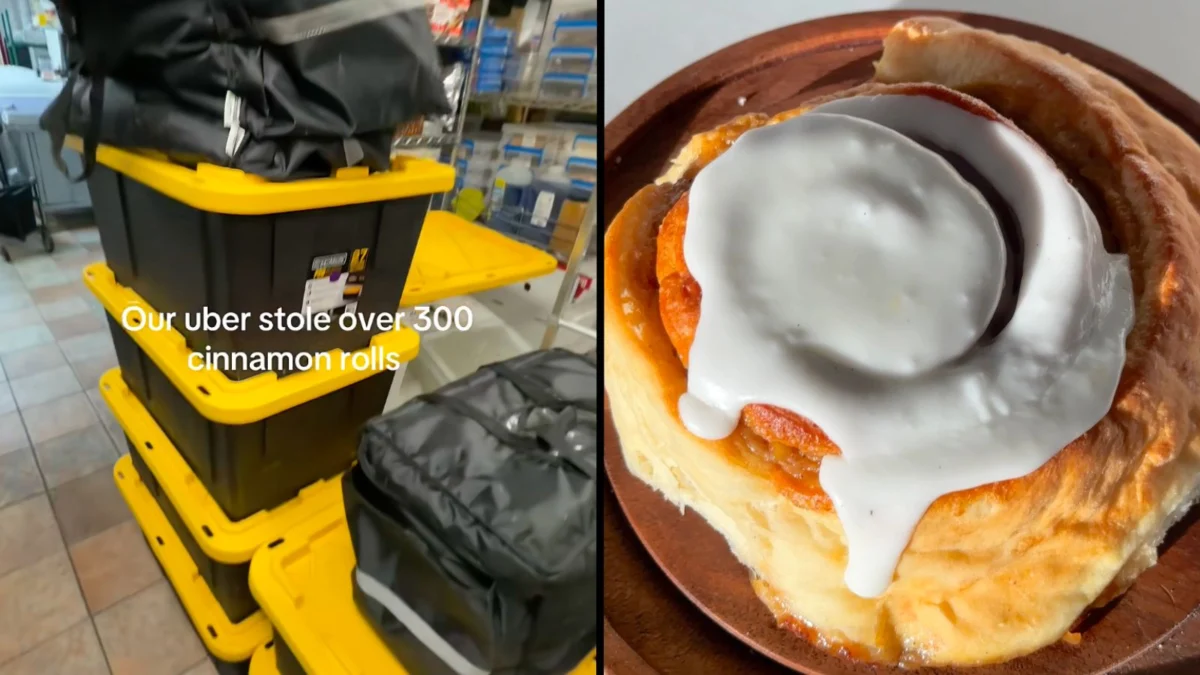
In the world of modern convenience, the delivery economy has become a lifeline for small businesses, enabling local artisans to bridge the gap between their kitchens and their customers. However, for Julie Pierre, the owner of the Florida-based bakery Roll & Dough, this reliance on gig-economy infrastructure turned into a logistical and financial catastrophe. On August 23, 2024, what began as a routine transit for a weekend farmer’s market resulted in the alleged theft of over 350 handcrafted cinnamon rolls—a loss valued at approximately $3,000.
The incident, which has since captured the attention of millions on social media, highlights the precarious nature of the relationship between independent vendors and massive delivery platforms. As the story unfolded, it raised critical questions regarding the accountability of delivery apps, the vulnerability of small business owners, and the collective power of internet communities to rectify corporate oversight.
The Chronology of a Culinary Crisis
For any small bakery, a farmer’s market is a high-stakes event. Success depends on meticulous preparation, precise inventory management, and timely logistics. For Roll & Dough, the morning of August 23 was supposed to be the culmination of hours of labor, with hundreds of cinnamon rolls prepared specifically for the event.
According to Pierre, the bakery utilized Uber’s delivery services to transport the massive order to the event location. The logistical plan was simple: the rolls were to be picked up and delivered by 8:48 a.m. However, the timeline quickly spiraled into chaos. The tracking interface provided by the app showed no movement for hours. By the time an update finally appeared, the delivery was marked as "failed," despite being logged at 1:16 p.m.—over four hours past the scheduled arrival time.
When Pierre attempted to rectify the situation through the app’s support channels, she was met with a frustrating bureaucratic wall. Despite the order’s high value, the initial response from the platform was a meager $100 refund, failing to account for the $205 shipping fee, let alone the $3,000 worth of inventory lost.
"Normally, I don’t get very angry," Pierre shared in a TikTok video that has since surpassed 1.4 million views. "But today was the first day in my life that I think I ever got so angry to the point where I just wanted to sit down and just sit in the sun and cry."
The Economic Impact on Small Business
The loss of 350 cinnamon rolls was not merely a culinary disappointment; it was a significant blow to the bakery’s bottom line. For an independent business, such an inventory loss represents more than just the cost of ingredients—it represents the labor of the staff, the overhead of the kitchen facility, and the projected revenue required to sustain operations.
"This money quite literally pays for my payroll," Pierre explained in a follow-up video. "It pays for the kitchen that we’re using and the bakery that we’re also in the process of building out."
The financial ripple effect of a missing delivery can be devastating for a small business. In the restaurant and bakery industry, profit margins are famously thin. When a delivery platform fails to ensure the safe transport of goods, the vendor is often left to absorb the loss while still managing fixed costs like rent and labor. This incident brought to light the anxiety shared by many small business owners who use gig-delivery platforms as a primary logistical arm, fearing that their livelihood could be jeopardized by a single rogue driver or a lack of robust dispute resolution.
Official Responses and Corporate Accountability
As the video gained traction, the narrative shifted from a local grievance to a public relations crisis for Uber Eats. Faced with mounting pressure and widespread criticism regarding their initial handling of the dispute, the company issued a formal statement to the media.
"The report is very troubling, and not the experience we want users to have," an Uber spokesperson told Axios. "We’re continuing to look into this so we can take appropriate action."
In response to the internal investigation, Uber Eats confirmed that they had suspended the driver’s access to the platform. While the company has since issued a full refund to Roll & Dough, the situation has reignited a long-standing debate about the "gig" model. Critics argue that these platforms prioritize speed and scale over security and vendor support. When a delivery fails, the burden of proof is often placed on the merchant, creating a power dynamic that feels inherently unfair to those operating on thin margins.
Furthermore, Pierre has taken the step of pressing formal criminal charges against the driver. The legal proceedings represent a significant escalation in the dispute, signaling that the bakery intends to hold the individual accountable beyond the internal disciplinary actions taken by Uber.
The Viral Solidarity: A Community Rallies
While the situation was initially sparked by a theft, the conclusion of the story has been defined by the overwhelming generosity of the public. Upon learning of the bakery’s financial distress, the internet community mobilized to support Roll & Dough.
A GoFundMe page, established to help the business recover from the loss and continue its expansion efforts, saw an influx of donations from strangers moved by Pierre’s story. As of the most recent reports, the campaign has raised nearly $4,000—surpassing the value of the stolen goods and providing a much-needed safety net for the bakery.
The comments section of the viral TikTok video became a hub of support and humor. "I really need to know what his evil ahh did with 350+ cinnamon rolls!?!!?" one user joked, attempting to make light of the absurdity of the theft. Another added, "Going to jail over 300 cinnamon rolls is so diabolical. Could y’all imagine?"
The humor, however, masked a deeper point of solidarity. Consumers recognize that when they support a local bakery, they are supporting a person, not a conglomerate. The public’s decision to open their wallets to cover the lost payroll and kitchen costs is a testament to the growing trend of "ethical consumption," where individuals use their spending power to protect local businesses against the perceived indifference of massive corporations.
Broader Implications for the Delivery Industry
The "Cinnamon Roll Incident" serves as a microcosm of the challenges facing the delivery-as-a-service industry. As platforms like Uber Eats, DoorDash, and Grubhub continue to dominate the logistics market, the need for better vendor protection policies has never been more apparent.
The Need for Enhanced Vetting and Security
While gig platforms argue that their vetting processes are sufficient, incidents like this suggest that more robust monitoring may be required, particularly for high-value merchant orders. When a driver is entrusted with hundreds of dollars worth of inventory, the stakes are significantly higher than a standard meal delivery.
Improving Dispute Resolution
The initial $100 refund offered to Roll & Dough underscores a disconnect between algorithmic customer service and real-world business damages. Companies must implement "human-in-the-loop" systems for high-value disputes, ensuring that business owners dealing with major losses are not forced to navigate automated bots and inadequate compensation tiers.
The Vulnerability of Independent Logistics
This story highlights the risks of relying on third-party drivers for B2B (business-to-business) logistics. As bakeries and local shops grow, many are realizing that they may need to invest in dedicated, insured, and professional delivery services rather than relying on consumer-grade gig apps.
Conclusion
The story of Roll & Dough is ultimately one of resilience. While the theft was a traumatic and costly experience, the outcome has strengthened the bakery’s relationship with its community. Julie Pierre’s willingness to be transparent about the struggles of entrepreneurship has earned her a loyal customer base that extends far beyond her Florida storefront.
As Uber Eats continues its investigation and the legal process against the driver proceeds, the industry at large remains under the microscope. For now, the "350 cinnamon rolls" have become a symbol of the fragility of the gig economy—and, perhaps more importantly, the enduring power of community support in the face of corporate failure. For the patrons of Roll & Dough, the bakery is no longer just a place to buy a treat; it is a cause, and the sweet taste of their cinnamon rolls now carries the weight of a hard-won victory.