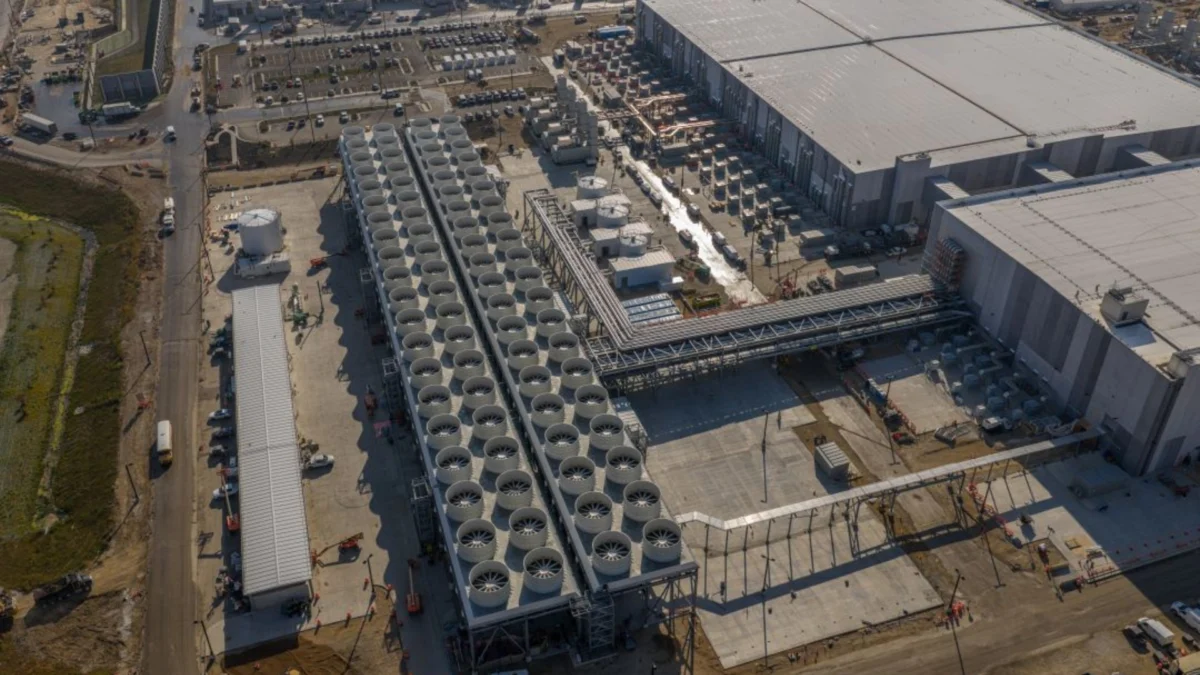
The precarious intersection of global cloud infrastructure and regional military conflict has reached a new, alarming zenith. Amazon Web Services (AWS), the backbone of much of the modern internet, has reportedly seen its data center facility in Bahrain suffer significant damage following a targeted cruise missile strike by the Iranian Islamic Revolutionary Guard Corps (IRGC). This latest act of aggression, which Iranian state media claims was a retaliatory measure for U.S. military strikes on an Iranian nuclear facility, signals a dangerous shift in the nature of modern warfare, where critical digital infrastructure is increasingly treated as a front-line military target.
The Strike: A Targeted Assault on Digital Sovereignty
Reports emanating from Iranian state-affiliated sources suggest that the IRGC successfully struck the AWS infrastructure in Bahrain using multiple cruise missiles. The stated justification for this strike—a direct response to U.S. military operations near the Iraqi border targeting a nuclear site in Darkhovin—frames the attack as a strategic retaliation against Western economic and technological assets.
For the international community, the destruction of a major data center—a cornerstone of the Middle East’s digital ecosystem—is more than just a corporate loss for Amazon. It represents a targeted attack on the "pipes and plumbing" of the global economy. AWS regions are not merely server farms; they are high-availability hubs that support banking systems, government portals, healthcare databases, and telecommunications. By rendering such a facility "hard down," the attackers have successfully demonstrated the vulnerability of centralized cloud computing to kinetic warfare.
Chronology of an Escalating Conflict
To understand the current volatility, one must look at the timeline of the breakdown in regional stability. The relationship between the U.S. and Iran, already strained by years of sanctions and indirect proxy engagements, has entered a period of overt escalation.
The Breakdown of Diplomacy
The situation reached a temporary cooling point on June 17, 2026, when both nations agreed to a tenuous ceasefire. However, the fragile peace was shattered on July 7, 2026, when three commercial vessels were attacked in the Strait of Hormuz, within Omani waters. This event served as the catalyst for a rapid series of retaliatory strikes.
The Escalation Ladder
- Late March – Early April 2026: Initial drone and missile attacks on AWS Middle East regional data centers. Amazon was forced to declare a "hard down" status for multiple availability zones as fire risks and power outages rendered the facilities unusable.
- July 17, 2026: A significant escalation occurred when U.S. service members were killed in an attack in Jordan.
- Post-July 17, 2026: The U.S. Central Command initiated retaliatory air strikes against IRGC forces identified as responsible for the Jordan incident.
- Current Status: The IRGC responded to these U.S. air strikes with the latest barrage against the AWS Bahrain facility (ME-SOUTH-1).
The Resilience of Cloud Architecture: How Amazon Is Managing the Fallout
Despite the catastrophic nature of the missile strikes, the impact on end-users has been mitigated by the inherently distributed nature of the AWS cloud. Amazon’s strategy for "High Availability" has proven its worth under the most extreme conditions imaginable.
Redundancy as a Shield
Modern cloud architecture is designed to handle local failures—ranging from server rack fires to fiber optic cable cuts. When the Bahrain facility went offline, Amazon’s global traffic management systems automatically rerouted workloads to other unaffected regions. This "failover" capability ensures that while the physical infrastructure in Bahrain may be smoldering, the services hosted there—provided they were architected correctly by customers—remain operational.
The "Hard Down" Status
The AWS Health Dashboard currently lists the Middle East (Bahrain) Region as "unavailable." This status is an admission that the facility is no longer capable of serving traffic. While Amazon has not provided a timeline for restoration, industry analysts suggest that the cost of repairing or replacing a Tier-IV data center in an active combat zone is not merely financial, but logistical. Replacing specialized hardware, cooling systems, and high-security power grids under the threat of further missile fire is an undertaking that requires a level of security infrastructure usually reserved for military installations.
The Broader Implications: Big Tech in the Crosshairs
The targeting of AWS is not an isolated incident. It is part of a broader, stated strategy by the IRGC to strike at the heart of U.S. technological dominance. The regime has issued direct warnings to several major players, including Microsoft, Apple, Google, and OpenAI.
The Stargate Threat
Perhaps the most high-profile threat involves OpenAI’s proposed $30 billion "Stargate" data center project in Dubai. The IRGC has released propaganda videos featuring satellite imagery of the proposed facility, coupled with threats of "complete and utter annihilation." This shift in rhetoric indicates that American technology firms are no longer viewed as neutral commercial entities, but as strategic arms of the U.S. government.
The New Battlefield
This development forces a rethink of the "Neutral Tech" doctrine. For decades, companies like Amazon and Google have operated under the assumption that their data centers would be shielded from state-level conflict by international norms. That assumption has been proven false.
Key concerns arising from this shift include:
- Insurance and Risk Modeling: How will insurance companies price the risk of "act of war" clauses when data centers are now primary targets?
- Sovereignty and Data Localization: Governments in the Middle East that mandated data localization (keeping data within their borders) must now weigh the security benefits of local access against the reality that those local facilities are now potential targets for regional adversaries.
- The Arms Race of Defense: We may soon see the emergence of "hardened" data centers, where physical security includes anti-missile defense systems, bunker-style construction, and underground facilities to protect critical digital assets.
Expert Analysis: The Long-Term Outlook
Military analysts and cybersecurity experts alike are watching the Bahrain situation with bated breath. The conflict marks a transition in the "cyber-kinetic" spectrum. Previously, state-sponsored attacks were primarily digital—hacking, DDoS, or ransomware. The shift to using kinetic munitions to destroy digital infrastructure is a qualitative leap.
"We are entering an era where digital infrastructure is the new critical national infrastructure, on par with power plants and oil refineries," says one security researcher. "When you strike a data center, you are effectively conducting a cyber-attack through physical means. It disrupts commerce, government services, and public communication just as effectively as a digital virus, but with the permanence of physical destruction."
Looking Ahead: Can Peace Return?
As of now, the situation remains fluid. The lack of an official statement from Amazon regarding the restoration of the Bahrain site is telling. In a typical outage, companies are quick to provide ETAs (Estimated Time of Arrival) for service recovery. The silence here suggests that the company is grappling with a situation that defies standard business continuity protocols.
For the international community, the focus must remain on the diplomatic channels required to prevent further escalation. However, as the IRGC continues to broaden its threat profile to include more U.S. tech giants, the risk to global infrastructure remains at a critical level.
The digital age promised a borderless, interconnected world. The events in Bahrain are a stark reminder that the physical world—with its borders, conflicts, and weapons—still exerts a heavy, and sometimes violent, influence on the virtual one. As Amazon and other tech titans evaluate their presence in the Middle East, they must now factor in the terrifying variable of kinetic warfare. The era of the "Cloud" being untouchable has officially ended.
For ongoing coverage of this developing situation, including updates on AWS service status and further geopolitical analysis, stay tuned to our continued reporting on the intersection of global technology and national security.