Dwi Wanna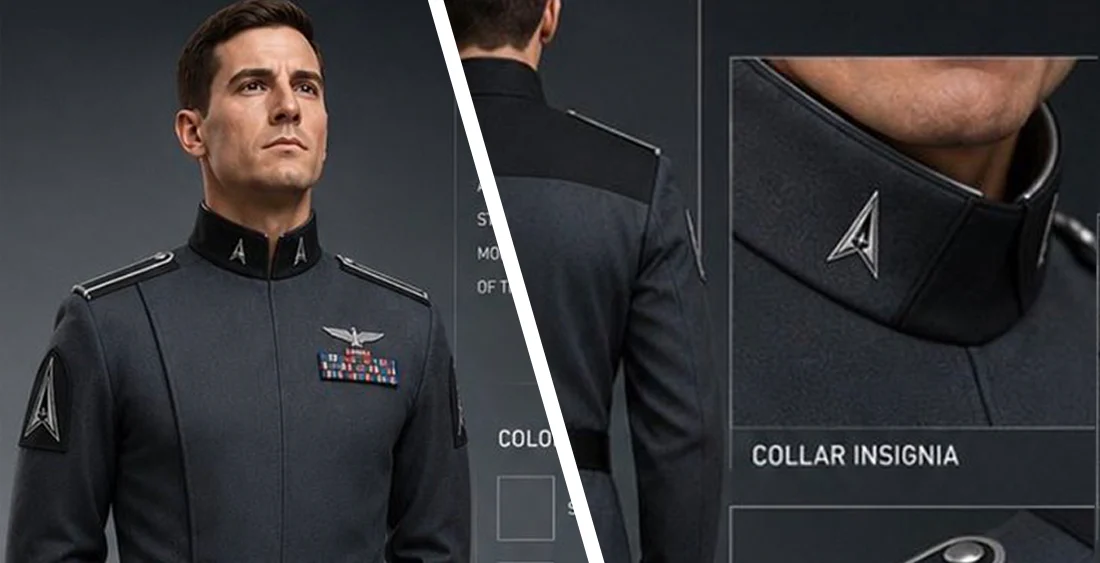
The intersection of national security, military aesthetics, and pop culture has rarely been as contentious as it is today. Following the U.S. military’s recent, landmark confirmation that it has successfully deployed a space-based weapon into Earth’s orbit, the discourse surrounding the U.S. Space Force has shifted from strategic capability to visual branding.
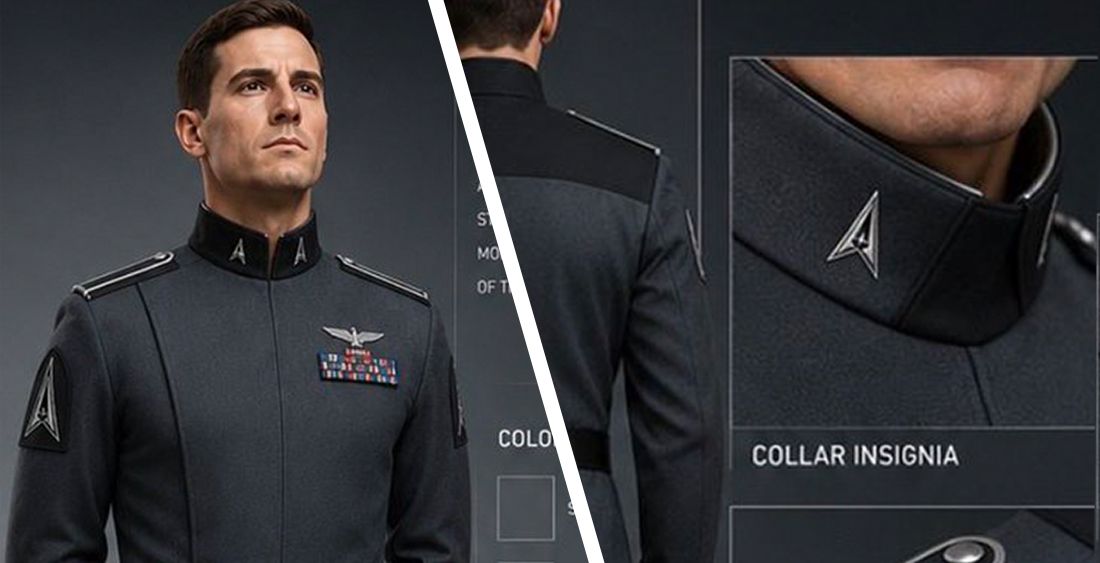
As the military justifies these orbital assets as essential defensive measures against hostile actors, the U.S. Space Force has simultaneously unveiled new uniform designs that have ignited a firestorm of criticism. Shared by Donald Trump on his Truth Social platform, these designs have drawn immediate, sharp comparisons to the aesthetics of the Third Reich and the villainous factions of iconic science fiction franchises. This visual pivot has sparked a broader debate: when a military branch tasked with the final frontier adopts the visual language of fictional oppressors, is it a branding failure, a tonal oversight, or a calculated projection of power?
The Strategic Shift: Militarizing Orbit
The admission that the United States has placed an "on-orbit" weapon system into space marks a definitive end to the era of space as a purely neutral domain. U.S. Secretary of the Air Force Troy Meink has framed the development as a necessary response to the evolving nature of global warfare. According to official briefings, these capabilities are designed to provide both defensive shielding and offensive potential, ensuring that U.S. forces are not left vulnerable to anti-satellite maneuvers or kinetic threats from adversarial nations.
However, the rapid escalation of space-based weaponry has triggered widespread alarm among international policy analysts. Concerns regarding a new space arms race are mounting, as nations compete for dominance in the high-ground of Low Earth Orbit (LEO). In this climate of heightened tension, the symbolic representation of the Space Force—the "Guardians"—takes on a weight that transcends mere fashion.
Chronology of a Design Failure
The controversy began with a social media post on Truth Social. The document, which appeared to be an official design proposal for the next generation of Space Force attire, was presented with a tone of earnest innovation.
- The Announcement: The designs were unveiled alongside claims that the uniforms were "modernized for the guardians of the space domain."
- The Inspiration: Perhaps most controversially, the document explicitly stated that the design was "inspired by the discipline and the functionality of the Starship Troopers uniform."
- The Public Reaction: Within hours, the internet erupted. Critics noted that while the intent may have been to evoke military discipline, the result inadvertently mirrored the aesthetics of fascist regimes.
- Historical Precedent: This is not an isolated incident. The aesthetic trajectory of the current administration’s messaging has frequently leaned into sci-fi tropes, from comparisons of election campaigns to the Death Star to the use of AI-generated imagery depicting political figures with lightsabers.
The Starship Troopers Paradox
To understand why the new uniform designs have caused such a visceral reaction, one must look at the source material cited in the design documents: Paul Verhoeven’s 1997 cult classic, Starship Troopers.
While the film depicts an interstellar war against alien "bugs," its primary purpose is a biting satire of fascism, militarism, and authoritarian propaganda. Verhoeven famously utilized visual motifs directly inspired by the Third Reich to emphasize the hollowness of the film’s central government. However, as noted by film historians, the satire was lost on a segment of the audience that interpreted the film as a straightforward jingoistic action movie.
When the Space Force design team cited this film as their inspiration, they essentially adopted the visual language of a satire designed to mock them. Critics argue that by choosing a uniform that mirrors an aesthetic intentionally crafted to represent "the bad guys," the Space Force has failed to perform the most basic task of military branding: ensuring the image conveyed is one of democratic stability rather than authoritarian menace.
Supporting Data: A History of Sci-Fi Branding
The fascination with science fiction within current political discourse is not merely a stylistic choice; it is a recurring pattern of messaging. The U.S. government and its associated entities have repeatedly utilized pop culture imagery to define their internal identity.
- The Death Star Comparison: In 2020, former campaign manager Brad Parscale explicitly likened the reelection campaign infrastructure to the Death Star, a symbol of unchecked, destructive power in the Star Wars universe.
- AI and the Sith: The Department of Homeland Security’s use of AI-generated content—depicting government officials as Darth Vader—suggests an embrace of "anti-hero" or "villain" aesthetics that prioritize strength and intimidation over traditional symbols of diplomacy.
- The "Trek" Precedent: Even before these latest uniforms, the Space Force logo and insignia were heavily mocked for their striking resemblance to the Star Trek Starfleet emblem. This led to a public relations struggle to distinguish the branch from its fictional counterparts.
Official Responses and Internal Justification
The official line from the Department of the Air Force maintains that the design choices were purely functional. In a statement addressing the backlash, representatives emphasized that the primary requirement for the uniforms was "operational utility." They argue that the focus on "discipline and functionality" is meant to project a sense of order required for the harsh realities of space operations.
However, the silence regarding the cultural baggage associated with the Starship Troopers reference remains conspicuous. Military branding experts suggest that the lack of institutional awareness—or the intentional disregard for it—reflects a disconnect between the technical departments tasked with design and the broader public relations strategy.
Implications for Global Perception
The implications of this design choice extend far beyond the aesthetic realm. For a military branch that is attempting to establish its legitimacy on the global stage, optics are a primary component of power projection.
- International Diplomacy: As the U.S. engages in delicate negotiations regarding the "Rules of the Road" for space, the appearance of being "on-brand" with fictional fascist regimes weakens the moral high ground.
- Domestic Trust: Domestically, the use of imagery that mirrors authoritarian regimes complicates the Space Force’s mission to recruit the next generation of "Guardians." If the aesthetic identity is perceived as villainous, it risks alienating the very demographic the military needs to attract.
- The "Evil Empire" Narrative: By repeatedly aligning themselves with the aesthetics of the Galactic Empire or the Starship Troopers federation, the administration has inadvertently fueled the narrative that the Space Force is an instrument of dominance rather than a force for peacekeeping.
Conclusion: The Burden of Symbolism
The U.S. Space Force finds itself at a unique historical juncture. It is tasked with the monumental responsibility of managing the security of a new frontier, yet it is currently struggling with the most basic elements of its own identity.
The controversy surrounding the uniforms serves as a reminder that in an age of hyper-connectivity, branding is inseparable from policy. Whether the design team intended to evoke the cold precision of a futuristic military or simply failed to recognize the sinister connotations of their source material, the result is the same: the public sees a reflection of cinematic evil.
Moving forward, the Space Force will need to decide whether it wants to be viewed as a professional, defensive branch of the U.S. military or as a collection of real-world iterations of science fiction villains. If the goal is to secure the space domain, they may need to look closer at the history of their own branding and consider if the "evil bad guy" aesthetic is truly the look that a global superpower should be projecting. Until then, the "Guardians" will continue to face the scrutiny of a public that understands, perhaps better than the designers, exactly what those uniforms represent.


 Nana Muazin
 Neng Nana