Ammar Sabilarrohman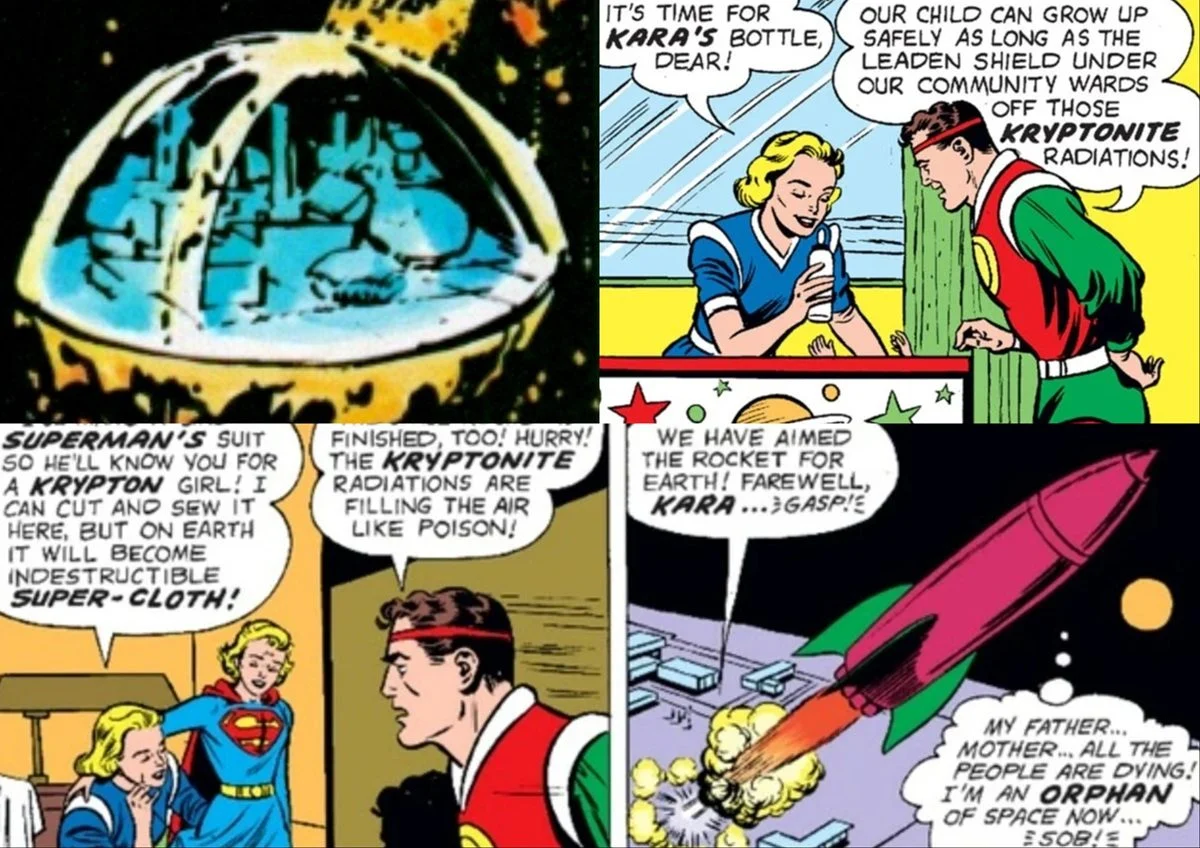
For nearly seven decades, the Girl of Steel has stood as a cornerstone of the DC Comics pantheon. While her cousin, Kal-El, has enjoyed a relatively stable origin story—a child of Krypton, rocketed to Earth, and raised in the heartland of Kansas—Kara Zor-El’s history has been anything but consistent. As DC Studios prepares to bring Milly Alcock’s iteration of the character to the big screen under the direction of Craig Gillespie, fans are finding themselves at a crossroads of comic book history.
In a bold move that favors thematic resonance over modern revisionism, director Craig Gillespie has chosen to anchor the upcoming Supergirl film in the character’s "Silver Age" roots, intentionally sidelining the gritty, modernized reboots that have defined the character in the 21st century. This decision raises a fundamental question for audiences: which version of Kara are we actually meeting, and why does her origin story keep shifting?
A Chronology of Crisis: How Kara Zor-El Evolved
The history of Supergirl is a testament to the fluid nature of comic book continuity. To understand the significance of the upcoming DCU adaptation, one must trace the timeline of her origins through the decades.

The Silver Age Genesis (1959)
When Supergirl made her debut in Action Comics #252 in 1959, she brought with her a story of tragedy and survival unique to her environment. Kara did not flee a doomed Krypton in the same manner as her cousin. Instead, she hailed from Argo City, a domed metropolis that survived the initial planetary explosion. Thanks to a protective dome and the foresight of her father, Zor-El, the city drifted through space, keeping its citizens alive long after their homeworld had vanished.
However, this was not a permanent sanctuary. As the bedrock of Argo City began to turn into Kryptonite, poisoning the population, a desperate final evacuation was initiated. Fifteen-year-old Kara was launched toward Earth, where she was finally reunited with the now-adult Kal-El. This version of the character was defined by her status as a refugee of a second, slower extinction—a poignant detail that highlighted her isolation.
The Post-Crisis Eras and the "Spiritual Cousin"
The 1985 landmark event Crisis on Infinite Earths fundamentally altered the DC landscape, resulting in the tragic death of Kara Zor-El. For nearly two decades, the mantle of Supergirl was occupied by various entities, including a protoplasmic artificial lifeform from another dimension.

During the 1990s, the acclaimed Superman: The Animated Series introduced a variation that would influence a generation of fans. In this iteration, Kara was not a biological cousin of Kal-El, but the sole survivor of a neighboring planet destroyed by Krypton’s demise. She was "adopted" into the House of El, creating a bond based on choice rather than blood.
The 21st Century "Older Cousin" Trope
In 2004, writers Jeph Loeb and artist Michael Turner orchestrated a massive return to form for the character in the Batman/Superman arc, "The Supergirl from Krypton." This version, which heavily influenced the Smallville television series and the CW’s Supergirl, introduced a new dynamic: Kara was a teenager on Krypton when Kal-El was born. She was meant to be his guardian and caretaker. However, a series of space-time anomalies and celestial accidents resulted in her ship arriving on Earth long after her ward had already established himself as the world’s greatest hero. This shifted her identity from a "little sister" figure to an "older cousin" who arrived too late to fulfill her original purpose.
The New 52 and the Russian Exile
With the 2011 Flashpoint reboot, DC experimented with a more jarring origin. Kara was again the older cousin, but her arrival on Earth was marked by a crash-landing in the frozen wastes of Siberia. This darker, more insular take—later reflected in the 2023 The Flash film—emphasized the trauma of her displacement, portraying her as a prisoner of state experiments rather than a welcomed guest of the House of El.

Restoring the Classic: The Influence of ‘Woman of Tomorrow’
The tide began to turn in 2021 with the release of the critically acclaimed graphic novel Supergirl: Woman of Tomorrow by Tom King and Bilquis Evely. The series served as a masterclass in re-centering the character’s core traits: her resilience, her cosmic perspective, and her deep, unyielding connection to the legacy of Krypton.
By leaning into the classic 1959 origin, Woman of Tomorrow effectively stripped away the baggage of the New 52 and the "older cousin" confusion. It is this specific tone and history that Craig Gillespie and the DC Studios team are currently championing. By bypassing the "stuck in a time-loop" or "raised as a secret agent" tropes, the filmmakers are opting for a version of Kara that is inherently heroic and rooted in the high-concept, wondrous storytelling of the Silver Age.
Implications for the New DC Universe (DCU)
The decision to adopt the 1959 origin for the big screen has significant implications for the future of the DCU.

- Brand Clarity: By selecting a definitive origin, DC Studios avoids the "confused continuity" that plagued previous film iterations. Audiences will not be forced to untangle why Kara is older or younger than Superman; they will be presented with a clear, established history that allows the narrative to focus on her current struggles rather than her past trauma.
- Thematic Consistency: The Silver Age origin offers a more expansive canvas. It allows for the exploration of Argo City, a location that feels distinct from the typical portrayal of Krypton. It frames Kara not just as a sidekick, but as a survivor of a unique, distinct civilization.
- The Ripple Effect on Print: While the current 2026 canon of the comics (as dictated by Mark Waid’s New History of the DC Universe) still suggests the "time warp" origin, the entertainment industry often acts as a catalyst for comic book publishing. Should the film prove successful, it is highly probable that the mainline comics will pivot to align with the film’s classic origin, reinforcing the idea that the "original" was, in fact, the most effective.
The Verdict: Why It Matters
The character of Supergirl has long been a mirror for the era in which she was written. In the 1950s, she represented the optimism of space exploration and the survival of the family unit. In the 2000s, she reflected a more cynical, complex world.
By reaching back to the beginning, director Craig Gillespie is not merely being nostalgic; he is acknowledging that the most powerful version of Kara Zor-El is the one that emphasizes her capacity for hope in the face of absolute loss. The choice to utilize the 1959 origin allows Milly Alcock to portray a character who is not defined by her proximity to Superman, but by her own journey from the ruins of a floating city to the skies of Earth.
As we look toward the future of the DCU, the return to the classic origin is a welcome sign. It suggests a studio that understands the value of legacy. By honoring the roots of the character, DC is ensuring that the Girl of Steel will continue to soar for another seventy years, grounded in a history that is as compelling as it is timeless. Whether you are a long-time reader of Action Comics or a newcomer to the DCU, the message is clear: the classic version of Kara Zor-El is ready to take flight once more.


 Siti Muinah
 Azzam Bilal Chamdy