

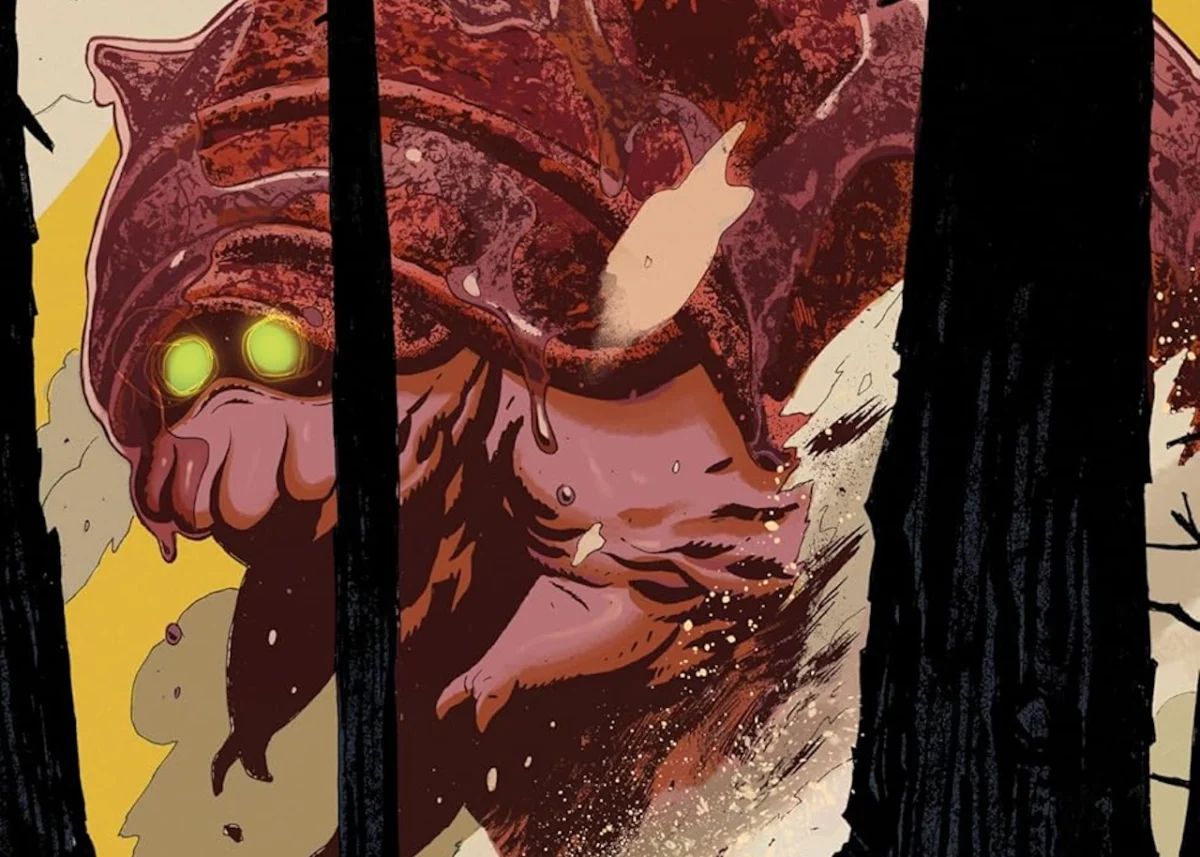
The giant monster genre—the storied realm of kaiju—has long been defined by urban destruction, military industrial complexes, and the existential dread of the atomic age. From the tragic, allegorical roots of the original Godzilla to the neon-drenched spectacle of Pacific Rim, we are conditioned to expect massive entities to level cities while humanity scrambles to survive. However, the debut issue of Dark Horse Comics’ Hidden Springs #1, written by Rob Williams with art by Nil Vendrell, dares to pivot away from the apocalypse. Instead, it offers a poignant, hilarious, and deeply human examination of life’s third act, proving that the most interesting stories often happen in the shadows of the giants.
The Core Premise: A Retirement Home for Hollywood Royalty
The narrative of Hidden Springs #1 centers on the residents of a nursing home—the titular Hidden Springs. But these are not your average retirees. They are a motley crew of former Hollywood legends: the chain-smoking, eyepatch-wearing former director Loretta Tide; the once-iconic leading man Brock D’Angelo, who is navigating the difficult realities of Alzheimer’s; the washed-up rock star Bazza Wild; and the enigmatic, silent Bob.

The catalyst for their unexpected journey is a simple, mundane day trip meant to provide the residents with "fresh air." What begins as a routine outing quickly devolves into a high-stakes adventure when the group discovers a massive, slug-like kaiju. Unlike the typical predatory behemoths of the genre, this creature forms a sudden, inexplicable psychic connection with the retirees. The stakes are immediately raised: the group learns that if the military discovers the creature, it will result in an apocalyptic event. The burden of saving the world—or at least, hiding a giant monster—falls on the shoulders of people who usually struggle to get through a game of bingo.
A Chronology of Chaos: From Screen Legends to World-Savers
The pacing of the debut issue mirrors the unexpected nature of the cast’s situation.

- The Introduction: Readers are first introduced to the stifling atmosphere of the Hidden Springs facility. Through sharp, character-driven dialogue, Williams establishes the internal struggles of the cast. We see Brock’s memory lapses and Loretta’s simmering resentment toward an industry that discarded her.
- The Discovery: The transition from the nursing home to the wilderness marks the shift in tone. The discovery of the monster is handled with a sense of wonder rather than immediate terror. It is here that the psychic link is established, grounding the sci-fi element in a personal, emotional experience.
- The Escalation: The realization that the creature’s survival is linked to the fate of the world creates an immediate "ticking clock" scenario. The characters must pivot from their sedentary lives to an active, clandestine mission to return the beast to the ocean before military intelligence tracks them down.
- The Climax: The issue culminates in a visually arresting sequence where the psychic bond between Brock and the kaiju manifests as a surreal, psychedelic vision of the future. This serves as both a narrative anchor and a showcase for the artistic team’s capabilities.
Supporting Data: The Anatomy of a Genre Subversion
To understand why Hidden Springs works, one must look at how it deconstructs the traditional kaiju framework.
Character-Driven Narrative
Rob Williams, perhaps best known for his acclaimed Suicide Squad tenure, excels at managing an ensemble cast where every member serves a narrative purpose. In Hidden Springs, the characters are not defined by their physical prowess—a rarity in a genre dominated by soldiers and scientists—but by their pasts. Their history as actors and performers allows them to approach the "kaiju problem" with a perspective that is fundamentally different from a typical military response.

Artistic Identity
The visual language of the book, provided by Nil Vendrell, is essential to the tone. The character designs lean into the archetypes of "Hollywood types"—Loretta’s black turtleneck and eyepatch evoke a mid-century auteur, while Tyrone Gleeson’s dapper three-piece suit provides a sharp contrast to the rugged outdoors. The creature itself is a brilliant design choice: moving away from the lizard-like or insectoid tropes of Godzilla or Cloverfield, it resembles a gentle, roly-poly-inspired beast with a massive red shell, which makes the audience more sympathetic to its plight.
Color Theory as Narrative
The work of colorist Berta Sastre cannot be overstated. When the psychic connection occurs, the palette shifts from the grounded, muted earth tones of the nursing home trip to a vibrant, hallucinogenic explosion of red and orange. This shift signifies that the story is moving beyond the physical realm and into the emotional and psychological connection between man and monster.

Perspectives and Official Commentary
While the creative team has been relatively quiet regarding specific plot twists for future issues, early critical reception highlights the book’s "wit and grit." Industry observers note that Dark Horse has found a "fresh, funny take" on the genre. By positioning the story as a comedy-drama, Hidden Springs creates a low barrier to entry for readers who may feel burned out on the darker, more nihilistic interpretations of giant monster fiction.
The juxtaposition of the characters’ physical frailty against the backdrop of a world-ending threat is the "secret sauce" of the comic. The creators lean into the irony that these "washed-up" stars are actually the most equipped to deal with a creature that communicates through emotion rather than violence.

Implications for the Kaiju Genre
The success of Hidden Springs #1 suggests a shift in the landscape of monster media. There is a clear appetite for stories that prioritize character development over mass destruction.
- Humanizing the "Monster": By making the creature a misunderstood, almost childlike entity, the series moves toward a "buddy-comedy" dynamic that is largely absent from the kaiju genre.
- The Aging Demographic: The book highlights the potential for stories featuring elderly protagonists. In a medium often obsessed with youthful vitality, the, "you’re never too old to go on an adventure" ethos provides a refreshing, inclusive narrative arc.
- Genre Blending: Hidden Springs proves that sci-fi horror can coexist with character-driven dramedy. It invites other creators to look at the "monster in the woods" trope and ask, "What if the monster just needs a ride home?"
Conclusion: A New Standard for Unexpected Heroism
Hidden Springs #1 is a masterclass in tone management. It balances the high-concept premise of a kaiju-led apocalypse with the intimate, often heartbreaking realities of aging and memory loss. While the story begins with a slow, deliberate pace, it is clearly laying the groundwork for a larger, more complex mystery that extends well beyond the confines of the nursing home.

For those who have grown weary of the repetitive cycles of destruction found in contemporary monster movies, Hidden Springs offers a much-needed breath of fresh, albeit slightly radioactive, air. It is a story about legacy, redemption, and the extraordinary things that can happen when you finally stop trying to perform for the cameras and start living for the moment. Whether you are a die-hard kaiju fan or simply a reader looking for a sharp, funny, and deeply human comic, this is an essential addition to your pull list. As the series progresses, it will be fascinating to see how the bond between these Hollywood veterans and their gargantuan friend evolves—and whether they can truly keep their secret in a world that is always watching.









No comments yet. Be the first to join the conversation!