

By Tech Analysis Desk
June 1, 2026
In a move that underscores the sheer scale of the ongoing artificial intelligence revolution, Google parent company Alphabet Inc. announced on Monday that it intends to raise $80 billion through a massive equity sale. The capital infusion is specifically earmarked to fund an unprecedented expansion of the company’s AI infrastructure and global compute capacity. As the tech industry pivots from the experimental phase of generative AI to a full-scale industrial buildout, Alphabet’s maneuver signals a new, high-stakes chapter in the corporate race for dominance in the digital intelligence era.
The announcement, which sent ripples through the financial markets, confirms that Alphabet will offload $80 billion in stock. A cornerstone of this strategy is a significant partnership with Berkshire Hathaway, the legendary conglomerate, which has agreed to purchase $10 billion of the offering. This investment serves as a major vote of confidence in Alphabet’s long-term roadmap, even as the company faces the daunting reality of the staggering capital expenditures required to keep pace with the surging demand for AI services.
The Chronology of an Escalating Arms Race
To understand the magnitude of Alphabet’s decision, one must look at the rapid acceleration of AI capital expenditure (capex) over the past eighteen months.
- Early 2025: Tech giants, including Microsoft, Amazon, and Google, began signaling that existing server farms and data centers were insufficient for the next generation of large language models (LLMs).
- Late 2025: The "compute crunch" intensified as enterprise adoption of AI agents moved from pilot programs to production-level integration.
- April 2026: Industry reports indicated that the collective capex spend of major U.S. technology companies had surpassed $700 billion for the year, a figure that would have seemed science-fiction only a few years prior.
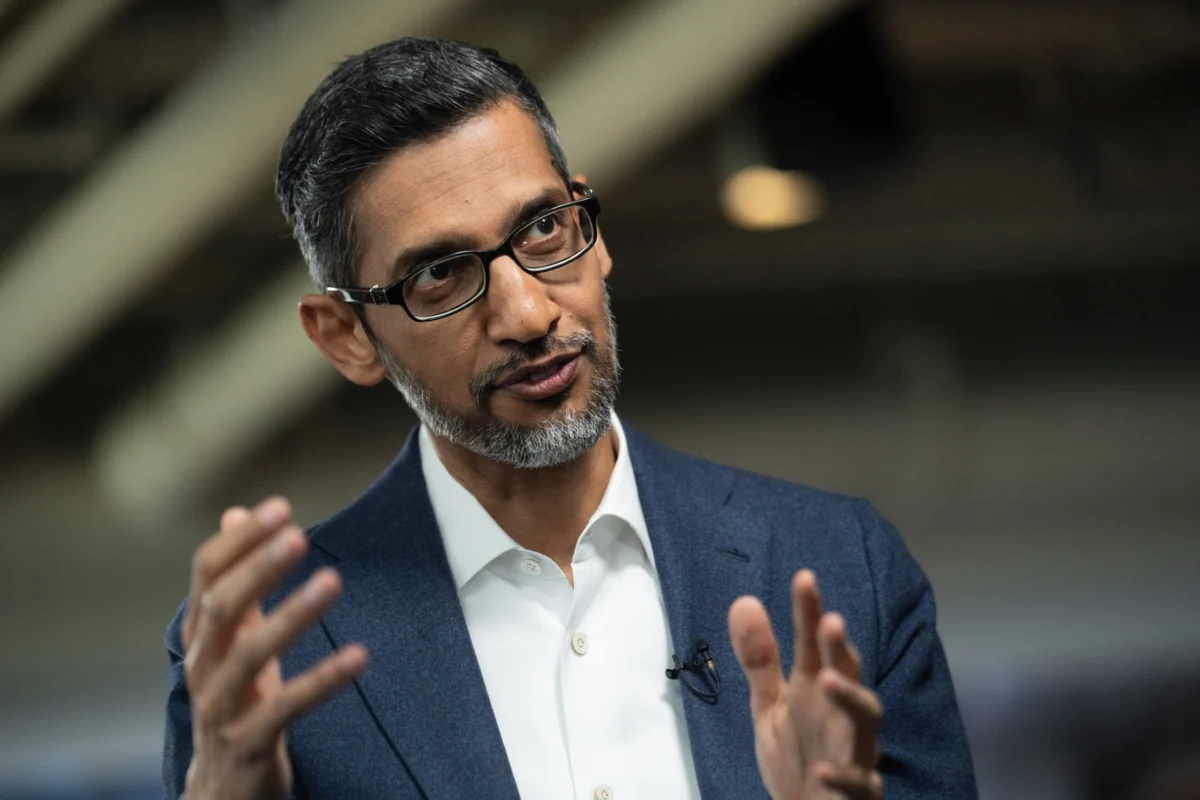
- May 2026 (Google I/O): CEO Sundar Pichai delivered a keynote outlining a shift in search architecture and AI-native product delivery, during which he hinted at a projected capex spend of $180 billion to $190 billion for 2026 alone.
- June 1, 2026: Alphabet officially announces the $80 billion equity raise, formalizing its commitment to securing the necessary hardware, power, and connectivity to support its AI vision.
Supporting Data: The Economics of Scale
The financial data underlying Alphabet’s decision paints a clear picture of an industry operating under extreme pressure. According to official statements, Alphabet is currently struggling to keep up with demand. "The company is experiencing strong demand for its AI solutions and services from enterprises and consumers, at levels that are exceeding the company’s available supply," the company noted in its press release.
When a company of Alphabet’s size cites supply-side constraints as a limiting factor for growth, it implies that the bottleneck is not software engineering or talent, but physical infrastructure—specifically the specialized GPUs, high-density server racks, and the massive amounts of electricity required to power the next generation of neural networks.
To put the $180 billion to $190 billion annual capex figure into perspective, it represents nearly double the entire annual budget of many national governments. This spending is directed toward:
- Hyperscale Data Centers: Building modular, climate-controlled, and energy-efficient facilities capable of housing hundreds of thousands of AI-optimized chips.
- Specialized Silicon: Expanding internal custom-silicon development (TPUs) while maintaining large-scale purchasing contracts with chip manufacturers.
- Global Connectivity: Enhancing subsea cables and edge computing nodes to ensure that the latency of AI-driven search and creative tools remains negligible for global users.
Official Responses and Strategic Rationale
Alphabet’s leadership has been deliberate in framing this raise not as a sign of desperation, but as a "balanced" approach to growth. The company’s CFO and executive team emphasized that the equity sale is designed to fund investments while maintaining a "healthy balance sheet." By choosing to raise capital through equity rather than solely relying on debt, Alphabet is protecting its credit rating and ensuring it retains the agility to pivot should the competitive landscape shift.
The inclusion of Berkshire Hathaway as a $10 billion anchor investor is particularly telling. Known for its conservative, value-oriented investment philosophy, Berkshire’s involvement suggests that the most sophisticated market observers view the AI infrastructure buildout as a foundational utility—much like the electricity grids or railroads of the 20th century—rather than a fleeting speculative bubble.

In his remarks following the announcement, Sundar Pichai emphasized that the company’s future is intrinsically linked to its ability to provide AI-first experiences. "By scaling its investments, the company seeks to expand its foundational infrastructure to support the significant growth opportunity ahead," Pichai stated. The implication is clear: Google Search as it was known for the last two decades is undergoing a fundamental metamorphosis, and the infrastructure must be built to support an era where "answering" replaces "listing."
Implications for the Tech Ecosystem
The ramifications of an $80 billion cash injection into AI infrastructure will be felt far beyond Mountain View.
1. The Supplier Power Shift
The massive capital influx will directly benefit the semiconductor and hardware supply chain. Companies specializing in liquid cooling, power distribution, and high-performance computing (HPC) hardware are likely to see their order books swell. However, this also creates a concentration risk, where the entire global economy becomes tethered to the production capacity of a handful of specialized chip foundries.
2. The "AI Divide"
As Alphabet, Microsoft, and Amazon double down on their infrastructure spending, the gap between the "AI haves" and "have-nots" will widen. Smaller startups and mid-tier technology firms may find it impossible to train their own foundational models, leading to a landscape where innovation is funneled through the API ecosystems of the dominant cloud providers.
3. The Energy Transition
The massive power requirements of this buildout are forcing tech giants to become energy producers. We can expect to see Alphabet and its peers increasing their investments in small modular reactors (SMRs), fusion research, and massive renewable energy portfolios. The $80 billion is not just for chips; it is for the energy required to make those chips useful.
4. Market Expectations
For investors, the bar has been raised. Alphabet is effectively telling the market that the "AI tax"—the massive upfront cost required to remain competitive—is not a short-term hurdle but a permanent feature of the business model. The market will now be looking for clear evidence that this infrastructure spend is converting into high-margin revenue through enterprise adoption and consumer subscription services.
Conclusion: The Long View
Alphabet’s decision to raise $80 billion is a watershed moment for the technology sector. It marks the transition of AI from a buzzword to a capital-intensive utility. By securing a massive war chest and aligning itself with institutional heavyweights, Alphabet is signaling that it intends to lead the next decade of digital evolution.
The company is betting that the demand for AI—the "new electricity"—will be so vast that the current massive buildout will eventually look like a conservative estimate. As the industry watches this capital flow into the data centers of the future, one thing remains clear: the race to define the intelligence of the future is no longer just about software algorithms; it is about the physical reality of global compute capacity. The $80 billion raised today is the down payment on the infrastructure that will define the rest of the 21st century.












No comments yet. Be the first to join the conversation!