

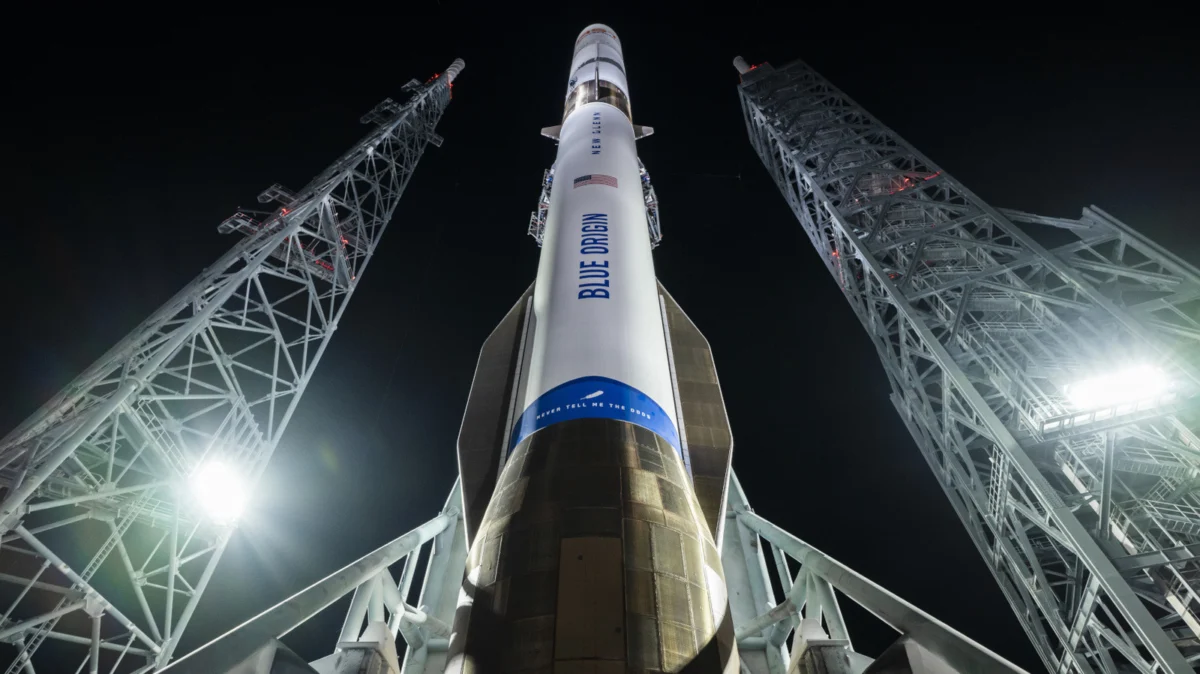
The aerospace industry is currently gripped by a high-stakes disagreement between federal oversight and private ambition. Following a catastrophic explosion at Blue Origin’s Launch Complex 36 (LC-36) at Cape Canaveral on May 28, the timeline for the company’s heavy-lift vehicle, New Glenn, has become the subject of intense speculation. While NASA stakeholders have expressed concerns that the facility could remain crippled for years, Blue Origin leadership remains defiantly optimistic, promising a return to flight before the close of 2026.
The Anatomy of the Incident
The explosion, which occurred during a high-pressure hotfire test, sent shockwaves through the space community. The test was intended to serve as a critical validation step for New Glenn’s fourth mission, a flight meant to cement the rocket’s reliability following a rocky start to its operational life.
Instead of a routine verification of engine performance, the site was rocked by a detonation that resulted in significant structural damage to the launch support infrastructure. The incident came at a particularly sensitive time; Blue Origin had only recently resumed operations following an extensive grounding by the Federal Aviation Administration (FAA). That previous hiatus was triggered by a failed third mission, where a cryogenic leak prevented the rocket from reaching its intended orbit—a failure that necessitated a transparent, if grueling, investigative process.
Chronology: From Grounding to Ground Zero
To understand the current crisis, one must look at the timeline of Blue Origin’s recent operational challenges:
- Early 2026: Blue Origin completes an exhaustive investigation into its third mission failure. The FAA identifies a "cryogenic leak" as the culprit, clearing the company to resume flight testing after safety protocols are updated.
- May 28, 2026: During a hotfire test at LC-36, an explosion destroys critical portions of the launch support tower and integration facilities.
- May 29, 2026: NASA administrator Jared Isaacman conducts a site visit to LC-36. Following his inspection, he suggests that restoration could take until 2028.
- June 2, 2026: Blue Origin CEO Dave Limp takes to social media, confirming that initial assessments show the "propellant farm" and primary storage tanks remain intact. He asserts that the company will fly again before the year ends.
The Great Debate: 2026 or 2028?
The central conflict in this narrative lies in the disparity between the administrative outlook and the executive promise. Jared Isaacman, speaking to CNBC, characterized the damage as a "serious setback," noting that the complexity of modern launch facilities means that even seemingly minor structural repairs require extensive safety re-certification. His estimate of a 2028 return to full capacity reflects the cautious, risk-averse nature of government-contracted aerospace logistics.
Conversely, Dave Limp’s assessment is rooted in the "Gradatim Ferociter" (Step by step, ferociously) philosophy of the company. Limp’s post-incident update was notably specific, highlighting that while the support tower sustained damage, it is "repairable in place." By avoiding the need to tear down and rebuild the entire structure, Limp believes he can bypass the multi-year timeline that typically accompanies the construction of new space-port infrastructure.
Supporting Data: Why LC-36 is Irreplaceable
Launch Complex 36 is not merely a concrete pad; it is the heartbeat of Blue Origin’s medium-to-heavy lift capability. The site is equipped with sophisticated fueling systems for liquid hydrogen, oxygen, and LNG.
The fact that the propellant farm remained unscathed is, in industry terms, a stroke of immense luck. Had the storage tanks been compromised, the timeline for sourcing specialized parts and conducting environmental and safety impact studies would have almost certainly pushed the return-to-flight date well into 2027 or 2028. Because the "long-lead items"—the components that take months or years to manufacture—are intact, the company’s claim that they can expedite repairs becomes theoretically plausible, provided the FAA is satisfied with the structural integrity of the remaining support tower.
The Broader Implications for NASA and Amazon
The fallout of the explosion extends far beyond the borders of Cape Canaveral. Blue Origin is currently a keystone provider for two of the most significant initiatives in modern spaceflight:
1. The Artemis and Moon Base Programs
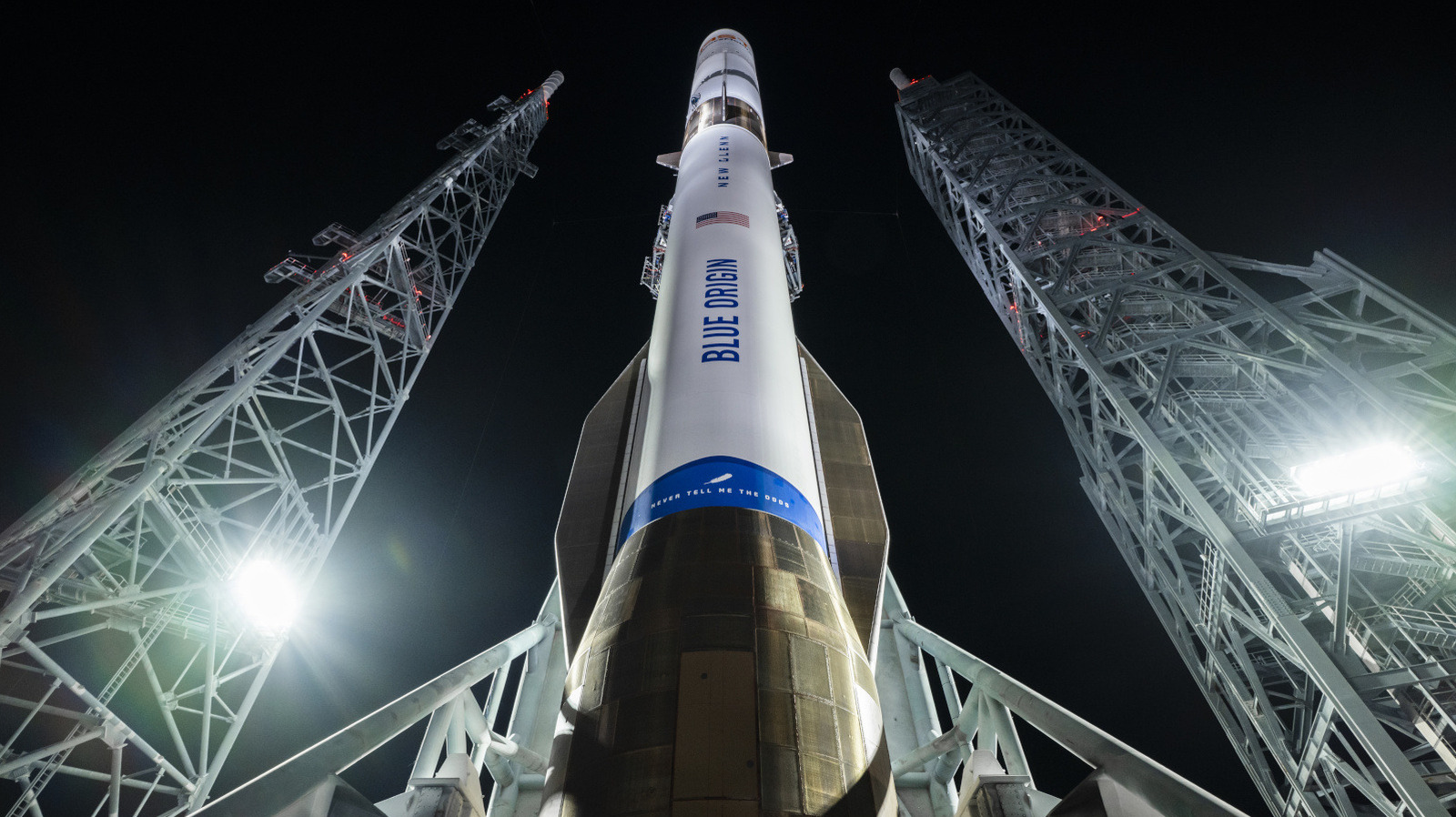
NASA’s plans for the upcoming "Moon Base I" mission, scheduled for later this year, are heavily dependent on New Glenn. The rocket is slated to be the workhorse for lunar logistics, and any delay in its availability forces NASA to reconsider its mission cadence. If Blue Origin cannot meet its commitments, the agency may be forced to rely on other commercial partners, potentially shifting the delicate balance of the space launch market.
2. Project Kuiper and Satellite Internet
The implications for Amazon are equally severe. The e-commerce and cloud giant is racing to deploy its satellite-internet constellation—a direct competitor to Starlink. New Glenn was scheduled to carry 48 of these satellites into orbit on its fourth mission. A prolonged grounding of the launchpad threatens to delay the commercial rollout of the service, potentially costing the company billions in lost market share and delayed operational revenue.
The Vandenberg Contingency: A Long-Term Pivot
While all eyes are on the Florida coast, Blue Origin is quietly diversifying its footprint. The company recently secured a lease for Space Launch Complex 14 (SLC-14) at Vandenberg Space Force Base in California.
However, this site offers no immediate relief for the current crisis. Negotiated as a long-term strategic asset, the facility requires roughly two years of heavy construction and retrofitting to handle the unique specifications of the New Glenn vehicle. Even under the best-case scenario, the Vandenberg facility is not expected to be operational before 2028. This underscores the reality that, for the next 18 to 24 months, Blue Origin has no "Plan B." Its entire immediate future is tied to the successful repair of the Florida site.
Analysis: The FAA’s Role in the Recovery
The ultimate arbiter in this drama is the Federal Aviation Administration. Following the May 28 explosion, the FAA has launched a formal investigation. The agency’s history with Blue Origin suggests a rigorous, exhaustive process. Even if Dave Limp and his engineering team manage to fix the physical infrastructure in record time, the "paperwork" phase—the safety audits, the hazard analysis, and the final approval to fuel the rocket again—could prove to be the most significant bottleneck.
The industry will be watching closely to see if the FAA views the incident as a localized failure or a symptom of broader systemic issues within the launch program. If the investigation concludes that the rocket design itself was compromised, the path to flight will be significantly longer than a few months.
Conclusion: A Test of Corporate Resilience
Blue Origin finds itself at a critical juncture. The company’s ability to pivot from a catastrophic failure to a successful launch within six months would be a monumental achievement, signaling to the aerospace community that it has moved past its "start-up" phase and into a period of mature, industrial-grade reliability.
However, should the recovery prove as difficult as NASA officials fear, the company faces the risk of losing the trust of its primary customers and falling behind in the global race to populate low-Earth orbit. As it stands, the battle for LC-36 is a high-stakes gamble where the only currency is time, and the margin for error has effectively vanished. Whether Blue Origin flies by year-end or is forced to wait until 2028, the outcome of this saga will define the next decade of American space exploration.












No comments yet. Be the first to join the conversation!