WEST HOLLYWOOD — In the sprawling, high-stakes ecosystem of Hollywood blockbusters, few bonds are as uniquely tethered as those shared by the men who have donned the iconic red-and-blue spandex of Spider-Man. However, for Andrew Garfield, the fraternal bond he shares with Tom Holland does not necessitate a performative celebration of box office statistics.
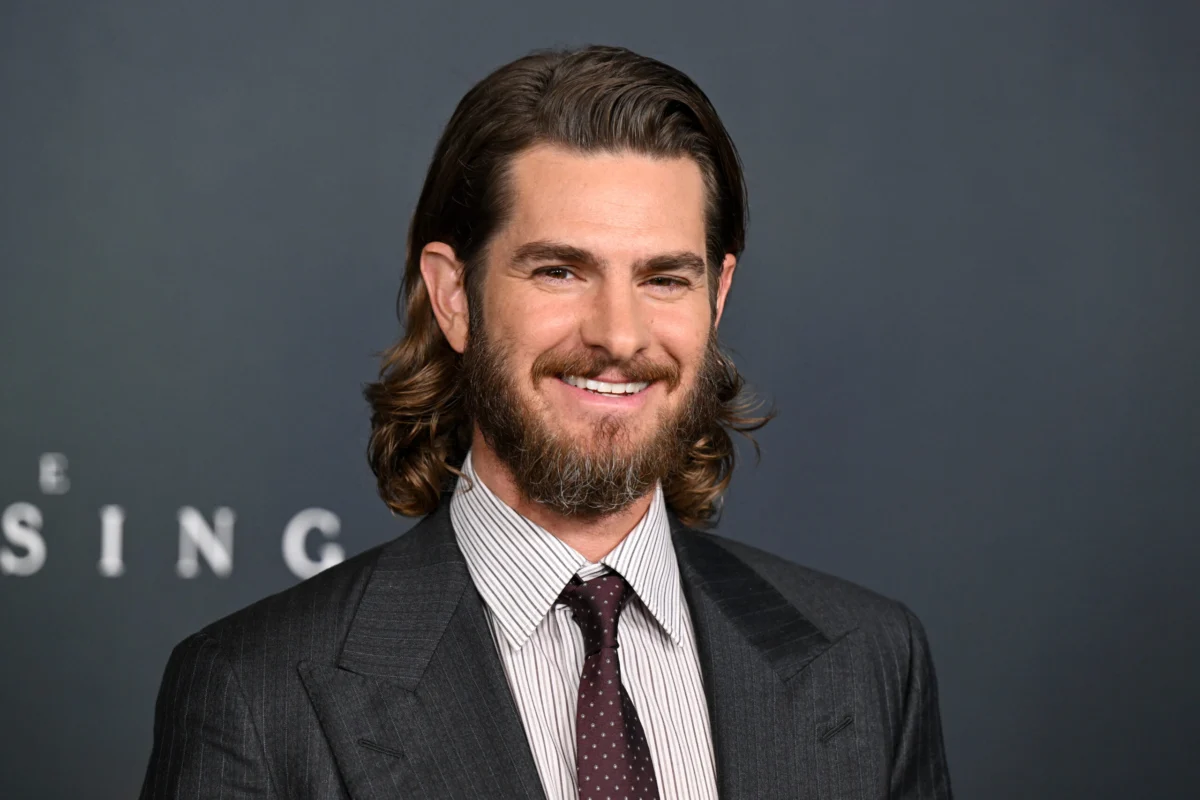
Speaking at the Directors Guild of America (DGA) in West Hollywood during the high-profile premiere of his latest project, the historical action drama The Uprising, Garfield addressed why he has yet to reach out to Holland regarding the record-shattering performance of the actor’s latest outings, Spider-Man: Brand New Day and The Odyssey. His reason, delivered with the characteristic earnestness that has defined his career, was surprisingly simple: he hasn’t seen the films yet.
The Integrity of a Peer: Why Garfield Holds Back
"I don’t want to be disingenuous," Garfield explained, navigating the red carpet with the poise of a seasoned veteran. "A movie making money and people going to see it is an incredible thing, but I will reach out to him once I’ve seen the work. I’m very excited to see them, but I haven’t managed to catch them yet. I’ll send him a message when I’ve actually seen the craft he has put into the performance."
Garfield, who famously navigated the precarious secrecy surrounding the multi-generational Spider-Man: No Way Home, remains deeply protective of the sanctity of the acting process. For him, a congratulatory text based solely on gross revenue would feel like a hollow gesture—an industry formality he clearly prefers to avoid.
A Legacy of Webs: Chronology of the Spider-Man Phenomenon
The history of the Spider-Man franchise is one of the most storied arcs in modern cinematic history. It began with the foundational trilogy directed by Sam Raimi, which established the character as a cultural titan. Garfield’s own tenure, which saw him portray a more kinetic, introspective Peter Parker in two The Amazing Spider-Man films, provided a bridge to the current iteration.

Following the reboot of the character within the Marvel Cinematic Universe (MCU), Tom Holland took up the mantle, bringing a youthful, burgeoning energy to the role. The convergence of these timelines in No Way Home—where Garfield, Holland, and original star Tobey Maguire appeared together—cemented the character’s position as a singular entity that transcends individual performances.
With Spider-Man: Brand New Day currently tearing through the record books, industry analysts are looking at a domestic haul of $891 million. The film is currently tracking to become the first in North American history to break the $1 billion barrier in domestic revenue alone, a feat that would fundamentally shift the landscape of theatrical distribution.
The Cultural Ownership of a Hero
When asked about the staggering success of the latest installment, Garfield exhibited a lack of surprise, pointing toward the inherent nature of the character itself. "Everyone has ownership over him," Garfield noted. "He’s everybody’s. He’s decent, he’s good, he’s ordinary, and he’s extraordinary—just like all of us. It’s impossible not to see yourself in that character."
This sentiment underscores the reason why Spider-Man continues to dominate the global consciousness. Unlike other superheroes defined by god-like power or unimaginable wealth, Peter Parker’s struggles—balancing rent, relationships, and the moral weight of his choices—are grounded in a human experience that remains universally relatable.
The "Doomsday" Question: A Master of Disinformation?
Despite his genuine appreciation for the character, Garfield continues to face intense scrutiny regarding his potential return to the Marvel Cinematic Universe. With the upcoming Avengers: Doomsday looming on the horizon, fans and journalists alike are desperate to know if Garfield will return to the multiverse.

When the subject was broached, Garfield was characteristically evasive. "I’m not," he said firmly when asked if he would appear in the movie.
However, his reputation precedes him. After he famously and repeatedly denied his involvement in No Way Home, only to appear on screen to the delight of millions, his current denials are taken with a heavy dose of skepticism. When reminded of his past "deception," Garfield simply smiled. "You’ll find out, I suppose, one way or another."
Transitioning to the Grit of "The Uprising"
While the world continues to clamor for more of his web-slinging, Garfield has shifted his focus to a far more grounded and visceral challenge: Paul Greengrass’s The Uprising.
The film, which serves as a stark departure from the comic-book spectacle, follows a fictional protagonist who rises to lead a rebellion of thousands of commoners against the oppressive rule of King Richard II in the year 1831. It is a period piece that demands intense physical and emotional labor, a far cry from the green-screen-heavy environments of his previous work.
The Physicality of Rebellion
Director Paul Greengrass, known for his relentless, documentary-style approach to action, insisted that the realism of the film required his lead actor to be in the trenches. Garfield, true to his commitment to the craft, performed the vast majority of his own stunts during the film’s complex and violent fight sequences.

"He allowed me to do what my body could manage," Garfield said with a laugh. "I’m not a young guy anymore. It was a lot of ice packs on the knees by the end of the day."
This dedication to physical acting speaks to the actor’s evolution. After years of playing figures defined by their speed and superhuman agility, Garfield is now gravitating toward roles that emphasize the toll of history, the weight of leadership, and the fragility of the human body.
Implications for the Industry
The success of The Uprising at the box office, coupled with the continued dominance of the Spider-Man franchise, highlights a bifurcated industry. On one hand, audiences are flocking to massive, shared-universe tentpoles that provide a communal sense of belonging. On the other, there remains a deep, abiding hunger for character-driven dramas that challenge the viewer’s perception of historical power dynamics.
Garfield occupies a unique position in this landscape. He is a bridge between the blockbuster world and the prestige drama world. His ability to move between the two with such fluid grace—while maintaining a standard of personal integrity that forbids him from "phoning in" his public support—is exactly what has made him one of the most respected actors of his generation.
Conclusion: Looking Forward
As The Uprising prepares for its wide release, the discourse surrounding Garfield continues to evolve. Whether he is suiting up as Spider-Man or embodying the grit of a 19th-century revolutionary, his focus remains on the work itself.

For the fans, the message is clear: whether or not he appears in the next Avengers film is a mystery he intends to keep, and his relationship with his peers is built on the foundation of genuine, earned respect. As for Tom Holland and the monumental success of the current Spider-Man cycle, Garfield will give his verdict in his own time—once he has had the chance to sit in a theater and witness the magic for himself, just like everyone else.
In an industry defined by spin, marketing, and the pressure to perform, Andrew Garfield remains a rare breed: an actor who values the truth of the experience over the expediency of the moment. And for that, the audience remains as captivated by the man as they are by his roles.