Nana Muazin
The landscape of consumer networking in the United States has undergone a seismic shift throughout 2026. Following a series of aggressive regulatory actions by the Federal Communications Commission (FCC) aimed at mitigating perceived national security risks, the market for foreign-manufactured routers has been in a state of flux. This week, however, brought a significant development: Asus, the Taiwanese technology giant, has secured conditional approval from the FCC, effectively reopening the U.S. market for its comprehensive line of wireless networking hardware.
This decision, detailed in an official commission notice, serves as a vital lifeline for Asus, ensuring the company can continue to distribute its cutting-edge networking gear to American consumers. As the industry stands on the precipice of the Wi-Fi 8 transition, the timing of this regulatory clearance could not be more critical.
The Regulatory Climate: Why 2026 Was a "Trying Year"
To understand the magnitude of this announcement, one must look at the broader regulatory environment that defined the first half of 2026. Citing "unacceptable risks" to U.S. national security, the FCC implemented a series of stringent oversight measures and outright import bans on consumer routers not manufactured domestically. The policy was designed to curtail the potential for foreign-made hardware to serve as backdoors for espionage or cyber-sabotage.
For companies like Asus, Netgear, and Amazon Eero, this meant months of navigating a labyrinthine compliance process. The FCC’s strategy was not merely to block access but to force a higher standard of transparency and technical verification. By implementing a "Covered List" of approved hardware, the commission sought to distinguish between manufacturers that could demonstrate verifiable security protocols and those that remained under a cloud of suspicion.
The FCC’s latest notice confirms that Asus has satisfied the "necessary hoops," providing sufficient assurances to the Department of War and the FCC that its devices do not pose a threat to U.S. interests. This "conditional approval" provides a reprieve, valid until March 2028, allowing the company to maintain its momentum in the highly competitive U.S. retail sector.
Chronology of a Market Shake-up
The journey toward this conditional approval has been characterized by rapid technological advancement and cautious regulatory maneuvering.
- Early 2026: The FCC announces a broad crackdown on foreign-made networking equipment, sending shockwaves through the consumer electronics industry.
- January 2026 (CES): Despite the looming regulatory storm, Asus unveils its ambitious "ROG NeoCore" Wi-Fi 8 concept router at CES, signaling its intent to lead the next generation of wireless standards.
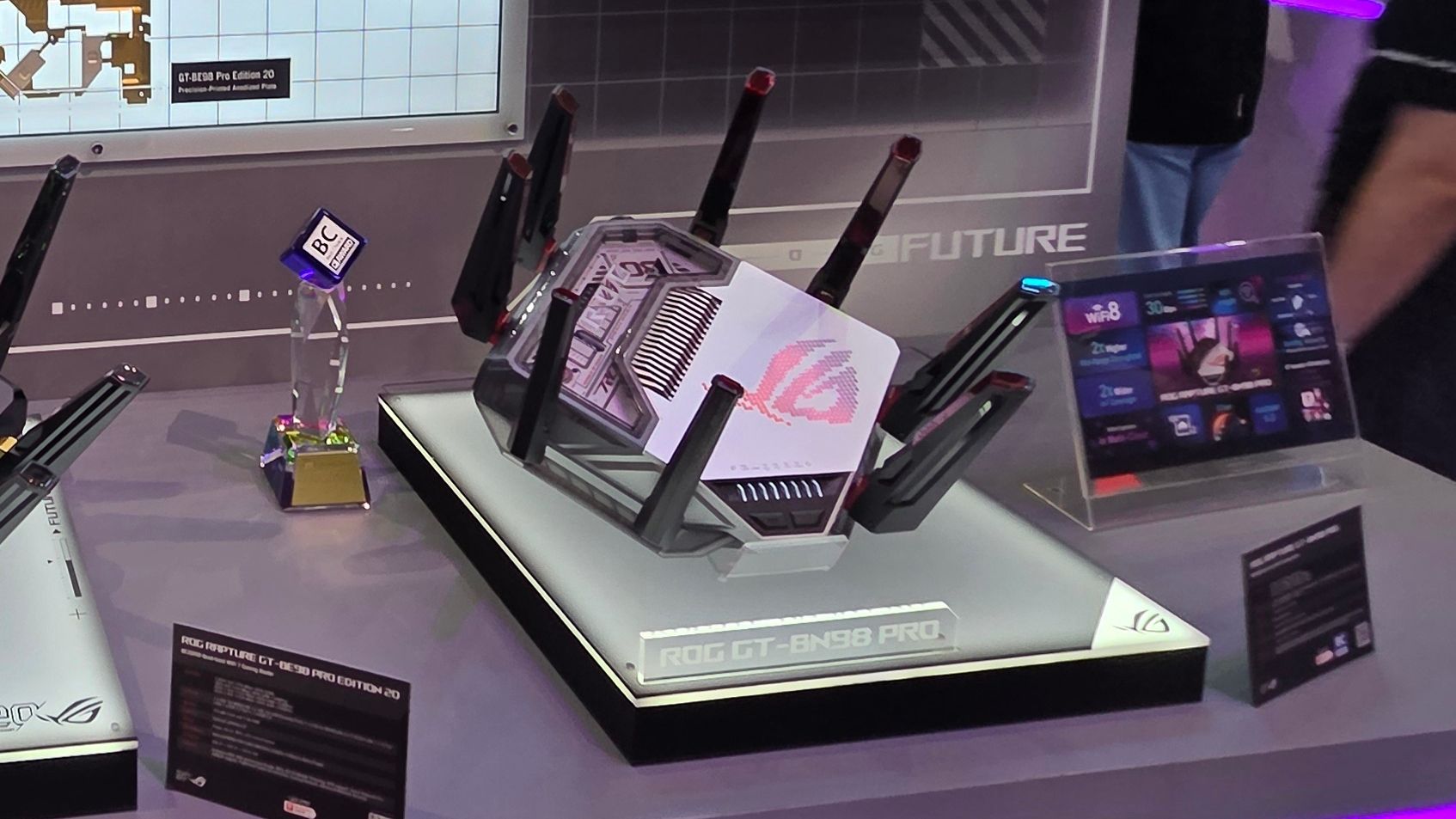
- June 2026: Asus formally announces the ROG Rapture GT-BN98 Pro, its first consumer-ready Wi-Fi 8 router, promising a 2x throughput uplift over existing Wi-Fi 7 models.
- Late Summer 2026: The FCC grants conditional approvals to Netgear and Amazon Eero, leaving other major players in a state of limbo.
- September 2026: Asus secures its own conditional approval, cementing its position in the U.S. market for the next 18 months.
This timeline illustrates the dual pressure faced by manufacturers: the need to innovate at breakneck speed to stay ahead of the Wi-Fi 8 curve, while simultaneously engaging in high-stakes diplomacy with federal regulators to ensure those innovations can actually reach the consumer.
The Wi-Fi 8 Frontier: A Technological Leap
The significance of the FCC’s approval is amplified by the industry’s transition from Wi-Fi 7 to Wi-Fi 8. While Wi-Fi 7 brought improvements in latency and speed, Wi-Fi 8 is positioned as the standard that will redefine reliability in an increasingly dense, smart-home-dominated environment.
The ROG Rapture GT-BN98 Pro, the flagship of Asus’s current efforts, is a testament to what the company hopes to achieve. With promises of a 2x real-world throughput increase, the device is designed to handle the growing demands of 8K streaming, low-latency cloud gaming, and the myriad of IoT devices that currently saturate home networks.
By securing this approval, Asus avoids being locked out of the U.S. market at the exact moment this new technology begins to reach mainstream adoption. For the consumer, this means that the "next big thing" in connectivity will remain accessible, rather than being restricted to markets outside the United States.
Competitive Landscape and the "TP-Link" Problem
The current regulatory landscape has created a clear divide in the networking market. Asus, Netgear, and Amazon have successfully navigated the FCC’s compliance hurdles, securing their ability to ship product. However, not all players have been as successful.
The most notable outlier remains TP-Link, the largest player in the U.S. wireless router market. Despite its massive market share, the company has yet to gain FCC approval. The U.S. government’s reluctance to grant such status to TP-Link is rooted in lingering uncertainty regarding the company’s corporate governance and its alleged ties to the Chinese government and military.
This disparity has created a massive competitive vacuum. While Asus is ramping up its marketing for the GT-BN98 Pro, TP-Link remains unable to confirm release dates for its own "Ultra" line of Wi-Fi 8 routers. This regulatory-induced bottleneck could permanently alter the market hierarchy, allowing companies that have successfully engaged with the FCC to capture the share previously held by their less-transparent competitors.
Implications for the Future of Networking
The FCC’s move to grant conditional approval to Asus, while still holding the line on other manufacturers, suggests a new era for technology imports in the United States.
1. Increased Compliance Costs
The "hoops" that companies must jump through—which include deep-dive audits of supply chains, firmware verification, and, in some cases, shifting manufacturing nodes—will become a permanent fixture of doing business in the U.S. networking sector. These costs will likely be passed on to the consumer, potentially driving up the price of high-end routers.
2. Supply Chain Diversification
The regulatory pressure is forcing manufacturers to rethink their reliance on centralized, foreign-based production. We are already seeing a trend toward "friend-shoring," where networking hardware is assembled in countries with more favorable geopolitical standing with the United States.
3. A Focus on Transparency
The "Covered List" is effectively a blacklist/whitelist hybrid that forces companies to be more transparent about their ownership and data handling. For the consumer, this is a double-edged sword: it potentially increases the security of the hardware they buy, but it also limits the diversity of choices available on store shelves.
4. The Race for Wi-Fi 8 Dominance
With the approval hurdle cleared, the focus returns to the race for technological supremacy. As Wi-Fi 8 matures, the companies that can prove their hardware is not only fast but inherently secure will win the favor of both the government and the consumer. Asus, by securing this approval, has ensured it remains a primary contender in this race.
Final Thoughts
The FCC’s decision to grant Asus conditional approval is a victory for the company, but it is also a victory for the American consumer who relies on the high-performance hardware that Asus is known for. As we move through the remainder of 2026 and into 2027, the focus will shift from regulatory survival to market execution.
The transition to Wi-Fi 8 represents the most significant change in wireless networking in years. By ensuring that major manufacturers like Asus have a seat at the table, the FCC is balancing its national security mandates with the practical necessity of keeping the U.S. consumer on the cutting edge of global technology. Whether the "conditional" nature of this approval will eventually lead to full, unrestricted access remains to be seen, but for now, the path is clear: the next generation of routers is coming to your home, and Asus will be there to provide it.


 Laily UPN
 Nana
Nana