
 Ali Ikhwan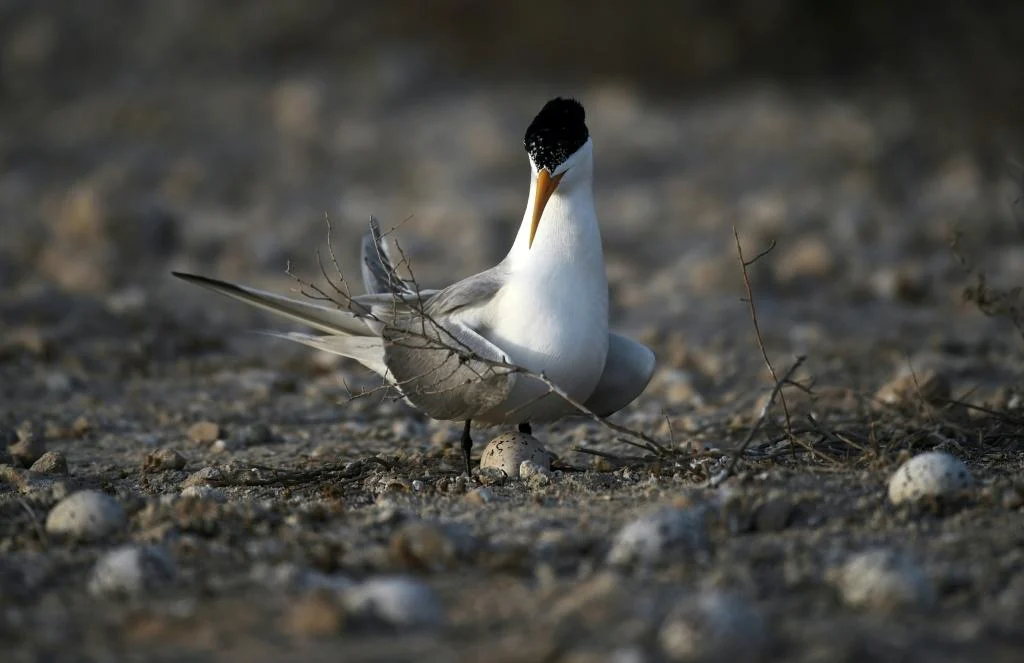
By Editorial Staff
October 2026
For decades, Australia stood as a global anomaly—a vast, isolated continent that served as the final fortress against the relentless march of the H5 avian influenza strain. This status, however, has been officially compromised. In a development that has sent ripples through the scientific and agricultural communities, government officials confirmed on Friday that the highly contagious virus has been detected in a resident Australian seabird for the first time.
While Australia has dealt with imported cases of the virus since June, this latest discovery marks a critical shift: the virus has moved from migratory visitors to the local wildlife population, signaling that the continent’s geographic insulation may no longer be enough to hold the pathogen at bay.
The Turning Point: A Shift in Viral Landscape
The confirmation came following rigorous laboratory testing of a greater crested tern discovered in the coastal town of Robe, South Australia. Until this week, Australia’s official bird flu tally—which stood at 12 confirmed cases—was comprised entirely of migratory species that had traveled from infected regions. The infection of a greater crested tern, a species that occupies the Australian coastline as its primary home, represents a significant breach in the nation’s biosecurity defense.
For years, the H5 strain has wreaked havoc across the globe, causing catastrophic mortality rates in both commercial poultry operations and wild bird populations. Its arrival on the Australian mainland, while anticipated by many epidemiologists, poses a complex challenge for a nation whose biodiversity is among the most unique and vulnerable on the planet.
Chronology of the Outbreak
The trajectory of the virus into Australian territory has been a subject of intense surveillance since the strain began its rapid migration through the Southern Hemisphere.
- Early 2024: Global concerns escalate as H5 outbreaks intensify in the sub-Antarctic regions.
- June 2026: Australian officials report a devastating mortality event in the sub-Antarctic territory of the Heard and McDonald Islands. Over 13,000 elephant seal pups perished, a grim testament to the virus’s lethality in marine environments.
- Mid-June 2026: The first detections of the H5 strain are recorded within Australia’s borders. However, these are strictly limited to migratory seabirds arriving from overseas.
- July–September 2026: Enhanced surveillance programs are rolled out across the Australian coast to monitor migratory flyways.
- October 2026: A greater crested tern in Robe, South Australia, tests positive. This marks the first instance of a resident, non-migratory Australian bird contracting the virus.
Supporting Data: The Scope of the Threat
The H5 strain is characterized by its extraordinary ability to jump species barriers. While primarily an avian disease, the global experience has shown that the virus does not discriminate. From domestic cats and goats to alpacas and pigs, the virus has demonstrated a concerning degree of environmental persistence.
In Australia, the stakes are exceptionally high. The nation is home to an ecosystem that is, in many ways, an evolutionary island. Nearly 50% of the country’s wild bird species and 83% of its mammals are endemic—found nowhere else on Earth. The potential for the H5 virus to decimate these populations is not merely an agricultural concern; it is a potential ecological catastrophe.
Experts have pointed to the migratory pathways from the sub-Antarctic as the most likely vector. The virus, having already established a stronghold in the remote island colonies of the Southern Ocean, likely hitched a ride on the wings of birds moving north for the season. Once these birds intermingled with resident species—such as the greater crested tern—the transmission window opened.
Official Responses: Managing Public and Ecological Anxiety
In a press conference held in Hobart, Tasmania, Agriculture Minister Julie Collins sought to balance transparency with the need to prevent public panic.
"While this, of course, is a concerning development, it is not unexpected," Collins stated. She emphasized that despite the detection, there is currently no evidence of mass mortality events occurring in the wild. "I do want to reiterate, though, that at this time there is still no evidence of any mass mortality due to the H5 bird flu."
The federal government, in coordination with the South Australian state government, has immediately triggered enhanced surveillance protocols in the Robe region. These measures involve increased testing of water samples, monitoring of local bird colonies, and strict reporting requirements for poultry farmers in the vicinity.
Minister Collins also addressed the risks to human health, noting that "there remains a low risk to human health" at this time. Officials are quick to emphasize that the current focus is on containment and gathering data to understand the precise pathways the virus is taking to integrate into the local population. The scientific community is currently conducting genomic sequencing on the virus found in the tern to determine if it has mutated in a way that makes it more transmissible between resident species.
Implications for Agriculture and Biodiversity
The implications of this development are two-fold: the protection of the multibillion-dollar poultry industry and the preservation of Australia’s endemic wildlife.
The Agricultural Front
Australia’s poultry sector has benefited for decades from a clean bill of health regarding H5 influenza. The introduction of the virus into the resident wildlife population threatens to upend trade agreements and force strict biosecurity lockdowns. Poultry farmers have been urged to tighten their "biosecurity bubbles," ensuring that domestic flocks have zero contact with wild birds. The fear is not just the virus itself, but the economic fallout of potential export bans should the virus jump from wild terns to a chicken farm.
The Ecological Front
The extinction risk to Australian fauna is perhaps the more haunting implication. Unlike poultry, which can be protected by fences and indoor housing, wild seabirds, waterfowl, and birds of prey are exposed to the environment 24/7.
"The overlap of coastal ranges is the primary vector we are observing," Minister Collins noted. By sharing the same nesting and feeding grounds, migratory birds that carry the virus are inadvertently acting as carriers for the local population. If the virus establishes an endemic presence in Australia’s resident wildlife, it could become a permanent, lethal feature of the landscape, similar to how it has behaved in parts of Europe and North America.
Future Outlook: A New Era of Biosecurity
As the Australian summer approaches, bringing with it warmer temperatures and increased bird movement, the vigilance of both the government and the public will be tested. The detection in Robe is likely only the beginning of a long-term struggle to manage the disease.
Scientists are currently analyzing the migratory maps of the greater crested tern to determine how far the virus may have already traveled through the coastal population. Furthermore, collaboration with international partners in the sub-Antarctic is ongoing, as Australia seeks to understand the origins of the strain that devastated the elephant seal population earlier this year.
For a continent that has defined itself by its isolation, the arrival of H5 bird flu is a stark reminder of the globalized nature of modern biological threats. The task ahead for Australian authorities is monumental: balancing the preservation of a unique biological heritage with the pragmatic necessities of agricultural stability.
For now, the country waits and watches, holding its breath as the scientific community races to understand the full extent of this breach. The message from the government remains clear: stay alert, report sick wildlife, and maintain strict biosecurity. The era of Australia as a H5-free zone has concluded; the era of managing a permanent, endemic threat has begun.
Copyright © 2026 AFP. All rights reserved. This report was compiled using data from the Australian Department of Agriculture, Fisheries and Forestry and independent veterinary reports.


 Neng Nana
 Asro
Asro





