Muslim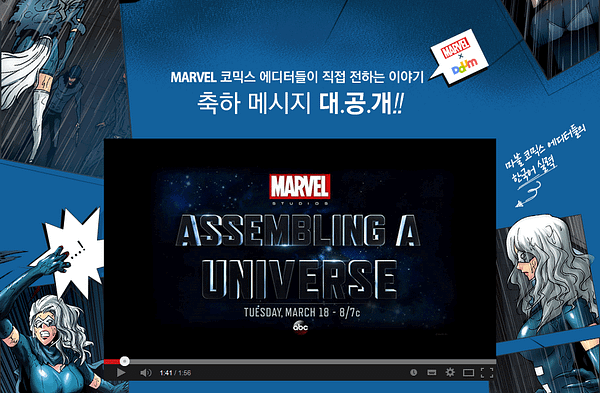
In a landmark collaboration that bridges the gap between American superhero mythology and the cutting-edge digital landscape of South Korean manhwa, Marvel Entertainment joined forces with Daum—one of South Korea’s largest web portals—to launch Avengers: Electric Rain. This project, spearheaded by visionary artist Younghoon Ko, marked a significant pivot for Marvel, moving beyond traditional print comics to embrace the scrolling, vertical-format webtoon culture that dominates the Korean entertainment industry.
The series, set against the bustling, neon-drenched backdrop of Seoul, serves as more than just a localized translation of Western IP; it is a creative expansion that introduces a brand-new character into the Marvel pantheon, signaling a new era of globalized storytelling for the Avengers.

The Genesis: Understanding the Webtoon Cultural Shift
To understand the magnitude of Avengers: Electric Rain, one must first appreciate the medium. Unlike the standard left-to-right, panel-based structure of Western comics, webtoons are serialized digital comics designed for mobile consumption. They utilize a "vertical scroll" format, allowing for seamless storytelling that takes advantage of the way modern readers interact with their smartphones.
By partnering with Disney Korea and Daum, Marvel sought to tap into a massive, tech-savvy demographic that consumes narrative content on the go. The collaboration represents a strategic entry into a market where digital readership has long eclipsed print. This was not merely a licensing deal; it was an artistic fusion intended to prove that the Avengers—a quintessentially American team—could resonate within a distinctly Korean cultural context.

Chronology of the Collaboration
The road to Electric Rain was paved by the growing international influence of K-pop and K-drama, which prompted major Western studios to reconsider their footprint in the region.
- The Early Planning Phase (2013-2014): Discussions between Marvel, Disney Korea, and the publishing platform Daum began with the intent to localize the Avengers franchise. The goal was to build a bridge between Western superheroes and the aesthetic preferences of the Korean audience.
- The Appointment of Younghoon Ko: The selection of Younghoon Ko as the lead artist was a turning point. Known for his dynamic style and deep understanding of manhwa aesthetics, Ko was tasked with redesigning the Avengers to fit the Electric Rain narrative.
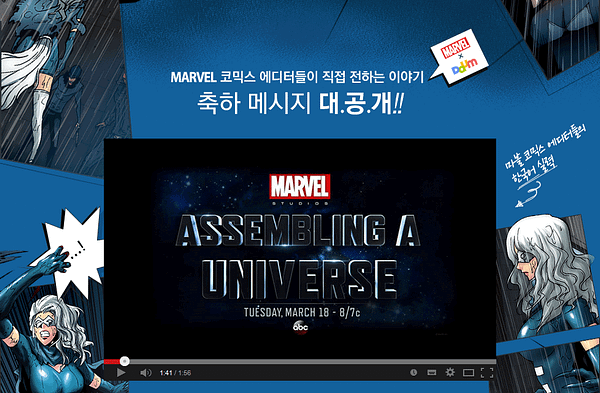
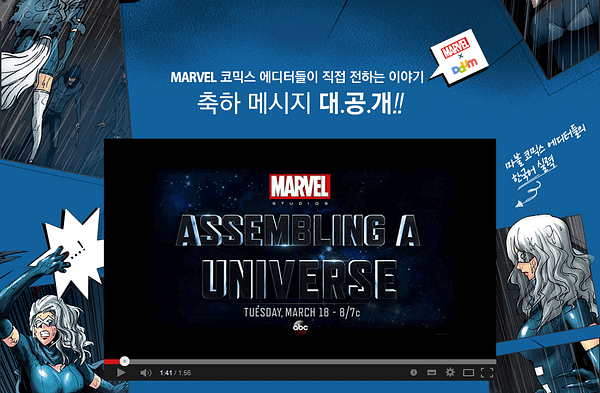
- The Official Announcement and Teasers: Throughout the summer of 2014, buzz began to circulate via industry outlets like Bleeding Cool. Short promotional videos were released, featuring Marvel editorial heavyweights—including CB Cebulski, Axel Alonso, Tom Brevoort, Ellie Pye, Jordan White, and Nick Lowe—discussing the project.
- The Launch: Avengers: Electric Rain debuted on Daum, quickly garnering millions of views. The release of the first chapters confirmed that the story would focus on a new, original character, integrating them into the existing Marvel canon while exploring the fallout of the Avengers’ presence in a modern, high-tech Korea.
Supporting Data: The Digital Consumption Revolution
The data supporting the move toward webtoons is staggering. By 2014, the Korean webtoon market had already matured into a multi-million-dollar industry. Platforms like Daum and Naver had transformed how content was created, distributed, and monetized.

- Format Accessibility: The vertical scrolling format reduced the barrier to entry for casual readers. Data showed that mobile users in Korea spent upwards of 60 minutes a day on reading-based entertainment apps, with webtoons being the primary category.
- Global Export: Electric Rain was a litmus test for "glocalization"—the practice of tailoring global products to local markets. Marvel’s internal metrics indicated that by utilizing a local artist like Younghoon Ko, they could bypass the "foreign product" stigma often associated with imported American comics.
- Engagement Rates: Unlike static print, webtoons provide immediate feedback through reader comments and "likes" per chapter. This allowed the creative team to adjust pacing and character focus in real-time, a luxury that print-bound editors in the US had not previously experienced.
Editorial and Creative Responses
The reception to the project was a blend of professional curiosity and cross-cultural experimentation. In promotional material released by Marvel, editors such as Axel Alonso and Tom Brevoort emphasized the importance of the project as an experimental endeavor.
However, the tone of these early promotional videos was lighthearted. The Marvel editorial team’s attempts to navigate the Korean language during interviews became a point of discussion among fans, highlighting the friction between the American creators and the Korean medium. In contrast, the work of Younghoon Ko stood out for its technical proficiency. Fans and critics noted that Ko’s ability to blend the classic "Marvel look"—muscular, heroic, and cinematic—with the fluidity and vibrant color palettes of manhwa provided a refreshing take on the team.

The consensus from those involved was that Electric Rain was a learning experience. It was not just about the Avengers; it was about the mechanics of digital storytelling in the 21st century.
Implications: The Future of Global Comics
The implications of Avengers: Electric Rain are still felt in the comic book industry today. The project laid the groundwork for what has become a global "Webtoon Boom."

1. The Death of Geographic Borders
Before Electric Rain, Western comics were largely viewed as an export product. Post-project, Marvel and other publishers realized that collaborating with local talent to produce original stories for local platforms was the most effective way to capture international audiences. This model has since been adopted by major publishers who now produce localized webtoons in countries ranging from Japan to Brazil.
2. The Rise of the "Vertical" Aesthetic
The success of the vertical scroll format has influenced how even traditional publishers think about digital releases. Many US-based digital comic platforms have begun offering "webtoon-style" readers for their legacy content, acknowledging that the mobile-first reader is now the dominant consumer profile.

3. Character Integration
The introduction of a new, Korean-centric character into the Avengers lineup provided a blueprint for diversity within the Marvel Universe. It demonstrated that characters do not always need to originate in New York City to be "true" Avengers. This inclusivity has allowed for a broader exploration of the Marvel Universe, leading to a richer, more diverse roster of heroes in subsequent years.
Conclusion
Avengers: Electric Rain remains a fascinating footnote in comic history—a moment where a massive American powerhouse paused to listen to the rhythm of a different creative culture. While the editorial team may have stumbled over the linguistics, the artistic success of Younghoon Ko and the structural success of the Daum partnership proved that the Avengers are, indeed, a universal concept.
By embracing the webtoon format, Marvel didn’t just tell a new story; they changed the way they understood the global market. The project stands as a testament to the idea that in the modern digital age, the most powerful tool a hero can have isn’t a shield or a suit of armor—it is the ability to adapt to the medium of the future. As we look at the current state of digital entertainment, the legacy of this collaboration continues to influence the way stories are scrolled, shared, and celebrated across the globe.

 Evan Lee Salim
 Nana
Nana