Dwi Wanna
As the summer sun wanes and the crisp air of autumn approaches, a familiar ritual begins in classrooms and studios across the globe. The "Back-to-School" season, traditionally dominated by discussions of laptops, stationery, and textbooks, has evolved into a significant period for the creative industry. For art students, professional illustrators, and hobbyists alike, this time of year represents a strategic window to refresh toolkits, upgrade equipment, and invest in high-quality materials at a fraction of their usual cost.
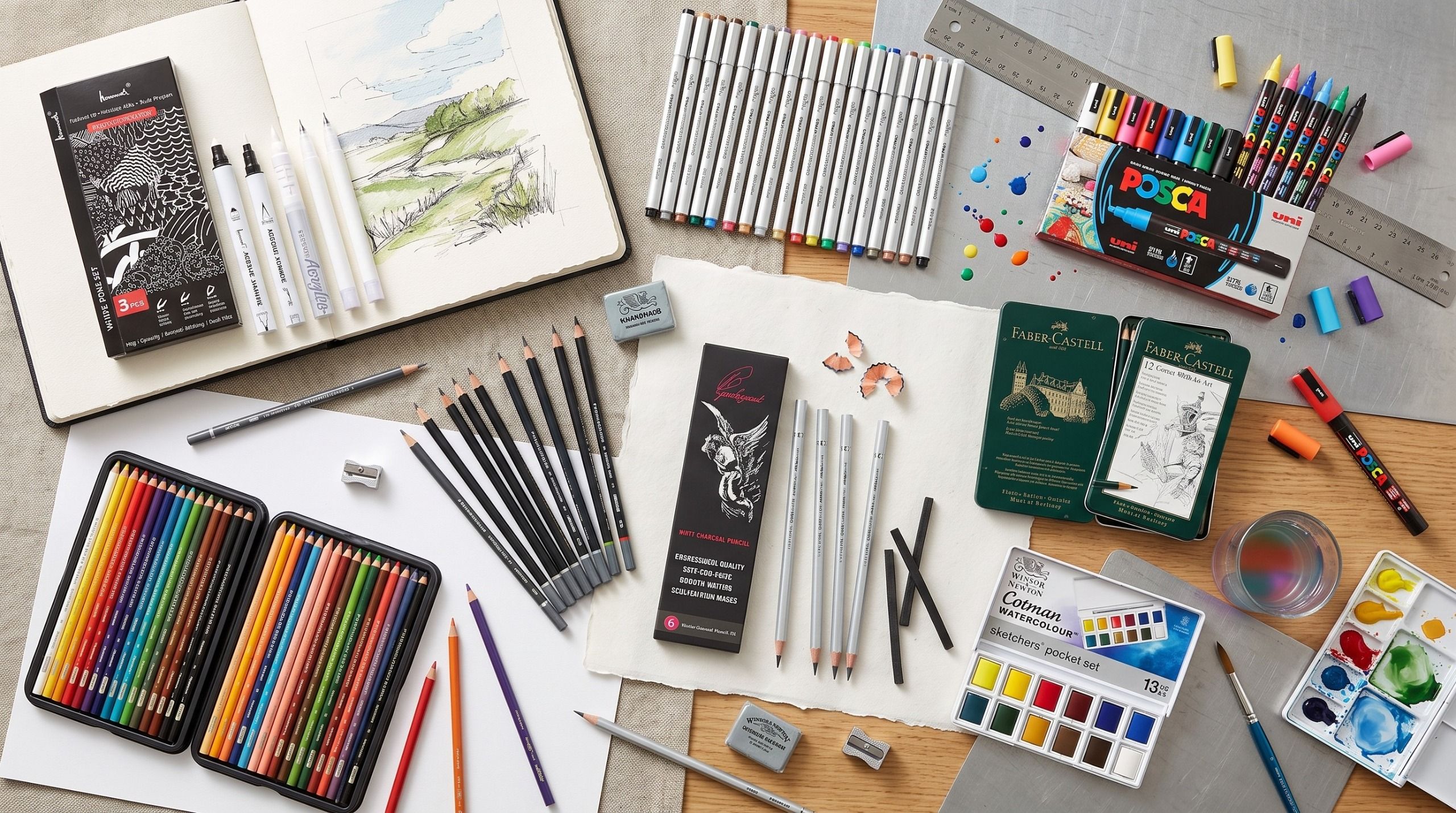
This year, retailers are seeing an unprecedented surge in demand for professional-grade art supplies. From the tactile precision of Prismacolor pencils to the versatile vibrancy of Posca markers, the market is currently saturated with competitive pricing that signals a broader shift in how we approach creative education and self-care.
The Main Facts: Why This Season Matters
The current retail landscape for art supplies is driven by a convergence of two factors: the academic calendar and a post-pandemic renaissance in analog creativity. Whether you are a student heading into an undergraduate fine arts program or a remote worker seeking an offline hobby to balance "screen fatigue," the availability of discounted professional supplies is not merely a convenience—it is an invitation to experiment.
Major retailers, led by platforms like Amazon and specialized art supply boutiques, have begun discounting core essentials. This shift is particularly notable in the professional-grade sector. Brands that historically held firm price points, such as Winsor & Newton, Faber-Castell, and Posca, are currently seeing aggressive promotional activity.
For the serious artist, this is the prime time to restock "high-burn" consumables—items like heavy-weight archival paper, gesso, and professional-grade pigments—which can become a significant financial burden throughout the academic year. By securing these materials during the back-to-school rush, creators can effectively lower their cost-per-project for the remainder of the year.
Chronology: The Evolution of the "Creative Refresh"
To understand the current market, one must look at the last decade of retail trends. Historically, art supplies were treated as niche commodities, sold primarily through specialized local art shops.
- 2014–2018 (The Pre-Digital Dominance): Retailers focused heavily on standard stationery. Art supplies were relegated to smaller sections of big-box stores, often limited to student-grade kits.
- 2019–2021 (The Pandemic Shift): As the world entered lockdown, there was an explosion in the "crafting economy." Sales of watercolor sets, sketchbooks, and acrylics skyrocketed as people sought creative outlets. Retailers struggled to keep inventory in stock, leading to a period of inflated prices and supply chain bottlenecks.
- 2022–2023 (The Stabilization Phase): Supply chains normalized. However, the appetite for high-quality art supplies remained, with consumers having developed a more sophisticated understanding of brands and materials.
- 2024 (The Current Landscape): We are now seeing a "Value-First" approach. Retailers are leveraging the back-to-school sentiment to move large volumes of premium stock, acknowledging that the modern student and hobbyist are more discerning about the tools they use.
Supporting Data: Investment in Quality
Data from consumer research suggests that artists are moving away from "disposable" supplies toward "investment" pieces. A survey of creative professionals indicated that 68% of respondents prefer to buy a single high-quality set of professional-grade pens or paints over multiple cheaper alternatives, provided they can find a seasonal deal.
| Product Category | Average Price Reduction (Back-to-School) | Popularity Index |
|---|---|---|
| Professional Pencils | 15–25% | High |
| Acrylic & Oil Sets | 20–30% | Moderate |
| Precision Markers | 10–20% | Very High |
| Archival Paper/Canvas | 10–15% | High |
This data confirms that the most successful retail strategies currently involve bundling. By grouping pens, sketchbooks, and specialized surfaces, retailers are helping students curate a "starting kit" that covers the essential foundation of any creative discipline.
Official Responses and Industry Sentiment
Industry leaders suggest that the shift toward professional-grade materials at entry-level prices is a win-win.
"We’ve noticed that students are no longer satisfied with ‘student grade’ materials," says a spokesperson for a leading international art supply distributor. "They are looking for longevity and professional-level pigment density from the moment they start their foundation courses. Our back-to-school strategy this year reflects that. We are working with manufacturers to bring professional kits into the price range that was previously reserved for basic supplies."
Educators also weigh in on this trend. Professors at several prestigious design colleges have noted that the quality of tools has a direct impact on the learning curve. "When a student uses a pen that skips or a paint that lacks pigment, they spend more time fighting their tools than learning the technique," says one senior fine arts lecturer. "Seeing these brands offer discounts makes professional-level quality more equitable, which is vital for student development."
Implications: The Long-Term Creative Outlook
The current trend of discounting premium art supplies has significant implications for the creative industry at large.
1. The Democratization of Skill
When high-quality tools become more accessible, the barrier to entry for fine arts and design decreases. This allows for a more diverse range of voices to enter the industry, as the financial burden of "starting out" is mitigated.
2. The Rise of the "Pro-Hobbyist"
There is no longer a sharp divide between the professional artist and the hobbyist. Many people currently working in tech or finance are utilizing professional-grade art supplies as a primary form of mindfulness. The back-to-school sales cycle is no longer just for the classroom; it is for the home studio, the kitchen table, and the digital creator looking for a tactile break.
3. Sustainability and Waste Reduction
There is a growing environmental argument for buying better, more durable tools. Professional-grade materials often last longer, produce better results, and reduce the need for constant replacement. By purchasing high-quality items during these sales events, consumers are making a more sustainable choice compared to the "fast-stationery" culture that relies on cheap, single-use plastics.
Conclusion: How to Build Your Toolkit
As you approach the current sales period, the best advice is to be strategic. Do not simply buy what is cheap; buy what serves your creative goals. If you are starting from scratch, focus on the "Holy Trinity" of the artist’s desk:
- The Surface: Invest in acid-free, heavy-weight paper or pre-primed canvases.
- The Medium: Choose a core set of professional pigments (primary colors, white, and black) that you can mix to create a full spectrum.
- The Precision Tool: A set of quality liners or pencils that provide consistent line weight and archival ink.
Whether you are a seasoned professional looking to restock your studio or a student preparing for the first day of class, the current market offers a rare opportunity to invest in your craft. By taking advantage of these seasonal deals, you aren’t just buying supplies; you are investing in the quality of your work for the year to come.
For those looking for a comprehensive breakdown of what to buy, our Guide to the Best Art Supplies serves as an essential roadmap. As the season progresses, stay tuned to industry newsletters and retail updates to ensure you don’t miss the final wave of markdowns. After all, the best art is created when the mind is free—and that freedom begins with having the right tools in your hand.


 Asro
Asro
 Reynand Wu