Sagoh
Sagoh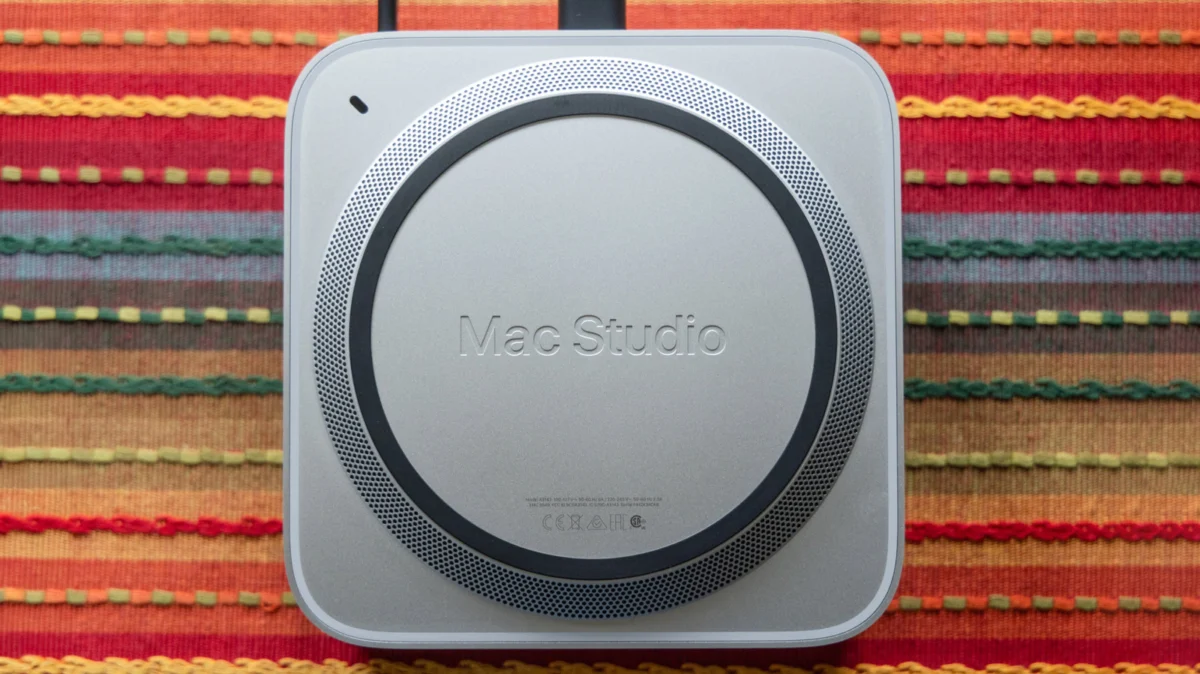
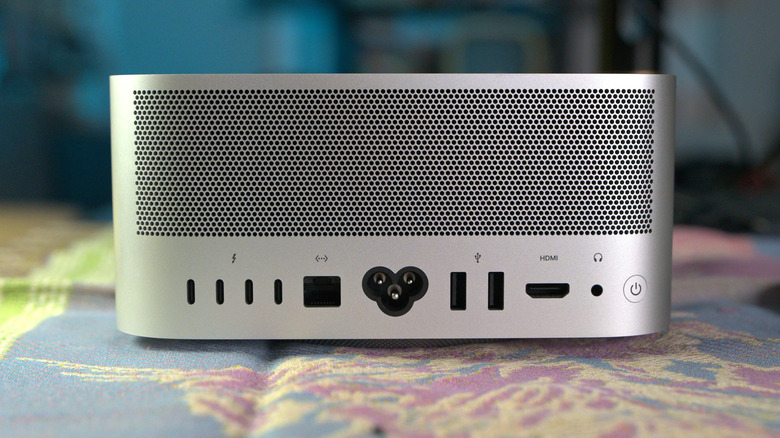
For creative professionals, AI researchers, and high-end video editors, the Apple Mac Studio has long been the gold standard for compact, desktop-class performance. Positioned as the bridge between the consumer-grade Mac Mini and the now-discontinued Mac Pro, the Studio promised—and delivered—a workstation capable of handling complex 8K workflows and massive machine learning models.
However, the latest iteration of the Mac Studio, powered by the M5 Max and M5 Ultra chips, has arrived with a price tag that has sent shockwaves through the tech community. With the entry-level M5 Max model seeing a $500 increase and the flagship M5 Ultra surging by a staggering $1,500 over its predecessor, the barrier to entry has moved from "premium" to "exclusive." As users grapple with these costs, a complex picture emerges involving global supply chain instability, the skyrocketing cost of LPDDR5X memory, and Apple’s own aggressive profit-margin strategies.
The Reality of the Cost Shift
The pricing architecture for the new Mac Studio is unprecedented. The base M5 Max model now starts at $2,500, while the M5 Ultra—the powerhouse designed for training large language models (LLMs) and rendering massive VFX simulations—begins at $5,500. When fully kitted out with 256GB of unified memory and 2TB of storage, the cost balloons to $11,299. For context, the M3 Ultra-equipped Mac Studio with an identical configuration retailed for $7,499 at launch. This represents a nearly $4,000 increase for essentially the same tier of hardware, an outlier in Apple’s typically incremental pricing strategy.
A Chronology of the "RAMageddon" Crisis
To understand why the Mac Studio has become so expensive, one must look at the timeline of the global semiconductor market. The term "RAMageddon" has become a shorthand for the severe supply-demand imbalance that has plagued the industry throughout 2026.
- Early 2026: Reports began circulating regarding a massive supply shortage in the high-speed LPDDR5X memory market, driven primarily by the global explosion in AI development.
- June 2026: Apple officially signaled a shift in its pricing strategy during a MacBook refresh cycle. The company publicly acknowledged that it could no longer absorb the escalating costs of components, marking the first major indicator that consumer prices would be forced to climb.
- August 2026: As the M5 generation of silicon rolled out, demand for the Mac Studio caught Apple off guard. The professional market, hungry for the M5 Ultra’s ability to store massive datasets locally, put immense pressure on an already strained supply chain.
- Late 2026 to Present: Current market analysis indicates that Apple has entered into high-premium supply agreements for 2027, locking in memory prices at rates 30% to 40% higher than the historical average.
Supporting Data: The Anatomy of the Price Hike
The "unified memory" architecture—where the CPU and GPU share a massive, high-bandwidth pool of RAM—is the primary engine of the Mac Studio’s performance, but it is also the primary driver of its cost.
The LPDDR5X Factor
The M5 Ultra utilizes LPDDR5X memory integrated directly onto the processor package. This design allows for an astonishing 1.2TB/s of memory bandwidth. However, this level of integration is expensive to manufacture. Estimates suggest that Apple is currently paying between $10 and $11 per gigabyte for this memory, compared to approximately $6 earlier in the year.
For a 256GB machine, the memory cost alone represents roughly $2,500 to $2,800 of the total BOM (Bill of Materials). When paired with the high-end PCIe 5.0 NAND storage, which has also seen its market price double since the M3 era, the hardware costs for Apple have increased significantly. However, even accounting for a $2,500 increase in manufacturing costs, there remains a gap between these expenses and the final retail price hike, suggesting that Apple is not just passing costs to the consumer, but also protecting its long-term profit margins.
Official Responses and Corporate Strategy
Apple has been characteristically opaque regarding specific profit margins, but their public statements provide a window into the corporate logic. When questioned about the broader trend of rising costs, the company’s official stance has been one of reluctantly acknowledging market reality: "We’ve never seen component prices increase this much, this quickly. We’ve worked hard to absorb these costs… but the current environment has made that unsustainable."
Industry analysts suggest two main drivers for the extra margin:
- Hedging Against Volatility: By pricing high now, Apple is creating a financial buffer to avoid having to raise prices again in six months if the RAM shortage continues to worsen through 2027 and 2028.
- Margin Protection: Historically, Apple maintains a 40% gross margin on hardware. By pushing the Mac Studio into the $10,000+ range, the company is ensuring that its high-end professional tier remains a significant driver of service and hardware revenue, even if the total unit volume decreases.
The Implications for the Creative Industry
The shift in pricing has profound implications for the professional market.
AI and Data Science
For researchers training Large Language Models (LLMs), the Mac Studio M5 Ultra is currently the most viable local solution. The ability to load massive models entirely into memory—avoiding the latency of cloud-based training—is invaluable. However, the price hike effectively pushes this capability out of reach for smaller startups and independent researchers, potentially centralizing AI innovation within larger, better-funded corporations.
Filmmaking and VFX
For high-end studios, the Mac Studio is a "clusterable" asset. Because these units can be linked via high-speed Thunderbolt 5 ports to create a render farm, the $11,299 price tag is a significant capital expenditure. Smaller production houses may find themselves forced to stick with older hardware or transition to less-integrated, potentially less-efficient Windows-based PC builds.
The "Wait or Buy" Dilemma
For those considering a purchase, the outlook is grim. Historically, Apple rarely lowers the price of a product once it is on the market. Given that analysts project the memory crisis to persist through at least 2028, there is little statistical reason to believe that the Mac Studio will become cheaper in the near term.
In fact, the trend suggests that as current supply contracts expire and are renegotiated at higher rates, future revisions of these machines could see further price adjustments. If an organization or a professional requires the specific capabilities of the M5 Ultra—such as the 1.2TB/s memory bandwidth—the consensus among industry experts is to "bite the bullet" and purchase sooner rather than later.
Conclusion
The Mac Studio’s transformation into a luxury-priced workstation is a reflection of a broader, more volatile tech economy. While the performance gains of the M5 series are undeniable, the cost to access that power has become a defining characteristic of the platform. For the average user, the Mac Mini remains a formidable alternative. But for the power user, the Mac Studio has moved into a category where it is no longer just a computer; it is a significant, long-term capital investment that requires a cold-eyed calculation of return on investment in an era of unprecedented hardware costs.

 Raul Delapena Setiawan
 Asep Darmawan